

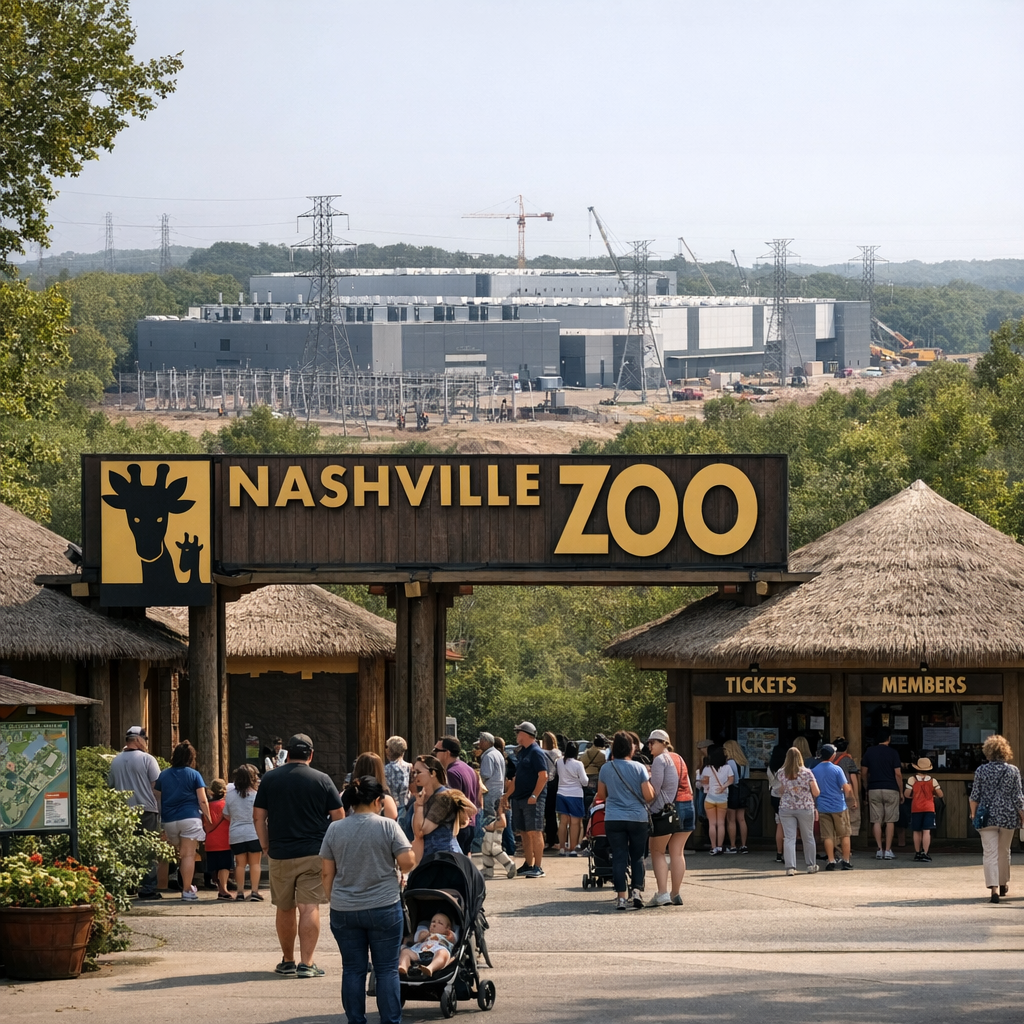
Nashville is at a crossroads, grappling with the rapid expansion of data centers and the accompanying community concerns. The proposed construction of a data center near the Nashville Zoo has ignited a citywide debate on balancing technological growth with environmental and community well-being.
Community and Political Response
The Nashville Zoo, home to over 3,000 animals, has been at the forefront of opposition against the proposed data center by DC BLOX, planned just 50 yards from its premises. Zoo officials and animal rights advocates have raised alarms about potential noise and light pollution adversely affecting the animals, particularly the clouded leopards involved in critical conservation efforts. A petition opposing the project has garnered over 500,000 signatures, reflecting widespread public concern.
Mayor Freddie O’Connell has taken decisive action by filing eminent domain legislation to acquire the land intended for the data center, emphasizing the city’s commitment to protecting public interests. Additionally, the Metro Council has initiated a temporary moratorium on new data centers, allowing time to assess and establish appropriate regulations for such developments.
Broader Implications
This situation underscores the need for comprehensive policies that address the placement and impact of data centers within urban settings. The Metro Council is considering legislation to regulate data center development, focusing on application procedures, location restrictions, and emission controls to ensure community and environmental safety.
Looking Ahead
As Nashville continues to grow as a technological hub, it is imperative to find a balance between embracing innovation and preserving the quality of life for its residents and the environment. The ongoing discussions and legislative actions will play a crucial role in shaping the city’s approach to sustainable development.