

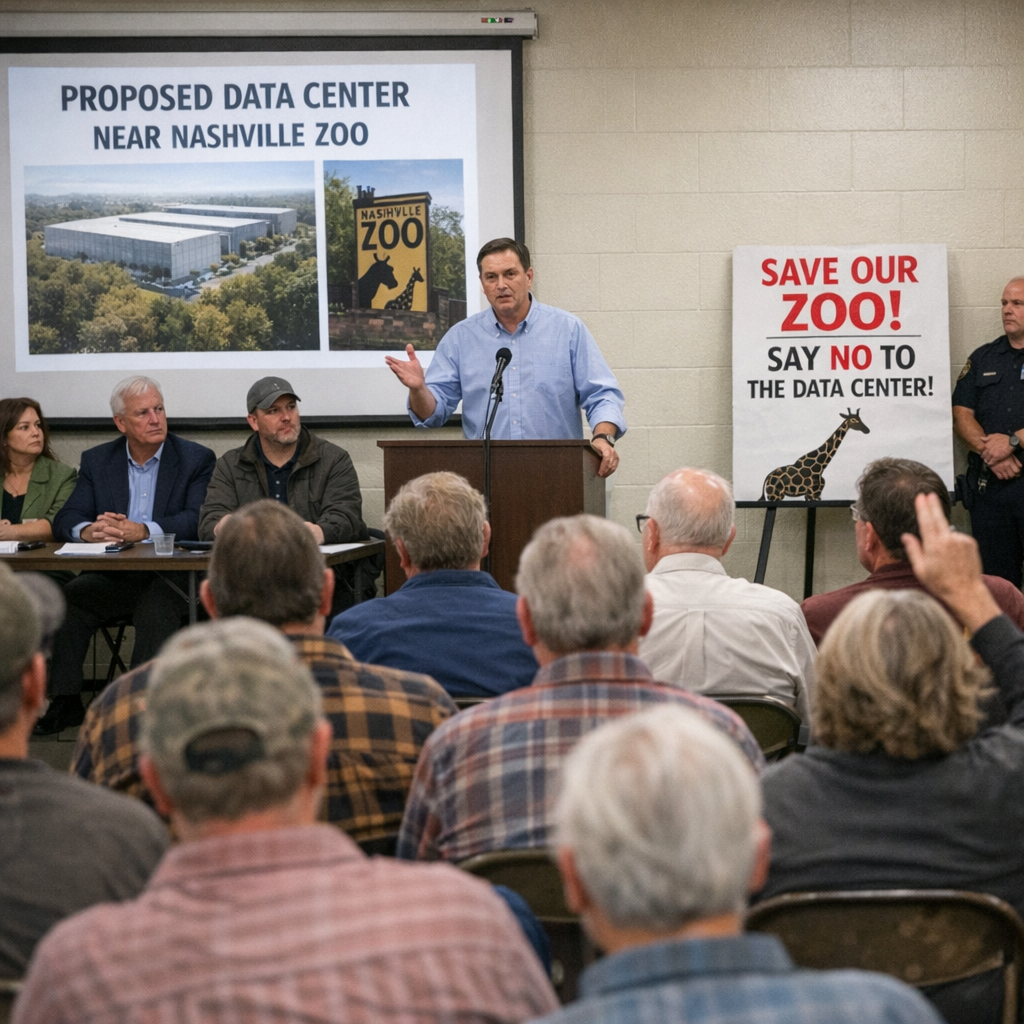
Nashville is at a crossroads, grappling with the rapid expansion of data centers and the accompanying community concerns. The proposed construction of a data center near the Nashville Zoo has ignited a citywide debate on balancing technological growth with environmental and community well-being.
Community and Political Response
The planned data center by DC BLOX, situated just 50 yards from the Nashville Zoo, has raised alarms among zoo officials and animal rights advocates. They fear that noise and light pollution could adversely affect the zoo’s 3,000 animals, particularly the clouded leopards involved in critical conservation efforts. In response, the zoo initiated a petition that has amassed over 500,000 signatures, reflecting widespread public apprehension.
Mayor Freddie O’Connell has taken decisive action by filing eminent domain legislation to acquire the land intended for the data center. This move underscores the city’s commitment to addressing community concerns and preserving public interests. Additionally, the Metro Council is considering a temporary moratorium on new data centers to allow time for comprehensive regulations to be developed.
Broader Implications
The controversy extends beyond the zoo’s vicinity. Nashville currently hosts nine operational data centers, with a tenth under construction. This rapid proliferation has prompted city officials to reevaluate zoning laws and consider implementing stricter regulations on data center locations, sizes, and emissions. Councilmember Rollin Horton has proposed legislation to establish clear guidelines, including restricting large data centers to industrial zones and prohibiting on-site power generation that causes emissions.
Looking Ahead
As Nashville continues to grow as a technological hub, the city faces the challenge of fostering innovation while safeguarding community interests and environmental health. The ongoing discussions and proposed regulations aim to strike a balance that supports economic development without compromising the quality of life for residents and the well-being of local wildlife.