

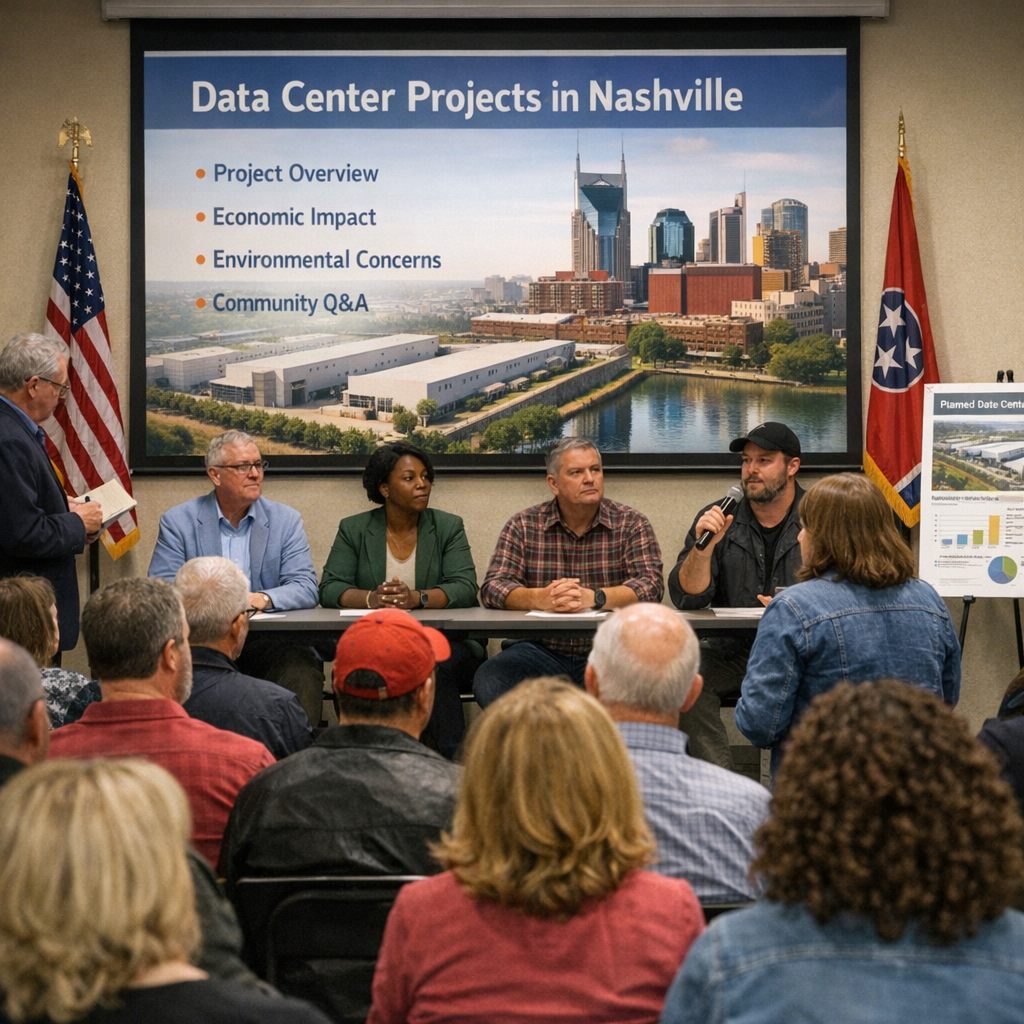
Recent developments in Nashville’s data center projects have ignited significant community discussion and action. Two proposed facilities—one adjacent to the Nashville Zoo and another near Fisk University—have become focal points of concern for residents and city officials alike.
Community Concerns and City Response
The proposed data center near the Nashville Zoo has faced substantial opposition from both the community and political figures. Mayor Freddie O’Connell has taken a decisive step by filing eminent domain legislation to acquire the land intended for the data center, citing a legitimate public need and acknowledging widespread community apprehension. This move aligns with broader efforts to pause permits for such facilities, reflecting the city’s commitment to addressing resident concerns.
Legislative Actions and Legal Challenges
In response to the growing unease, the Metro Council has advanced an ordinance declaring a temporary moratorium on the acceptance, processing, approval, and issuance of zoning, building, or grading permits for data centers across Davidson County. This measure aims to provide the city with time to assess the impact of these facilities and develop appropriate regulations. The moratorium has passed its first reading with significant support, indicating a collective effort to address the issue.
Simultaneously, a new lawsuit has been filed against the city by a group of residents aiming to halt the construction of a new parking structure at Cheekwood Estate & Gardens. This legal action escalates a longstanding dispute over traffic and land use surrounding the historic botanical garden, which has grown into a major Nashville attraction. Cheekwood initiated the construction project after receiving Metro approval, prompted by the upcoming expiration of an overflow parking arrangement on Metro Parks property. The lawsuit follows a prior unsuccessful zoning appeal and seeks to enforce zoning, noise, and traffic regulations. In response, Cheekwood has mounted a “Save Cheekwood” campaign, arguing the legal actions threaten visitor access and could potentially shut down the institution. Cheekwood denies intentions of expansion, citing a 15% decline in attendance over the past five years from a pandemic-era high of 435,000 visitors annually.
Broader Implications
These developments underscore the complexities of urban planning in a rapidly growing city like Nashville. Balancing technological advancement with environmental preservation and community well-being remains a critical challenge. The city’s proactive measures reflect a commitment to thoughtful growth that considers the diverse needs and concerns of its residents.