

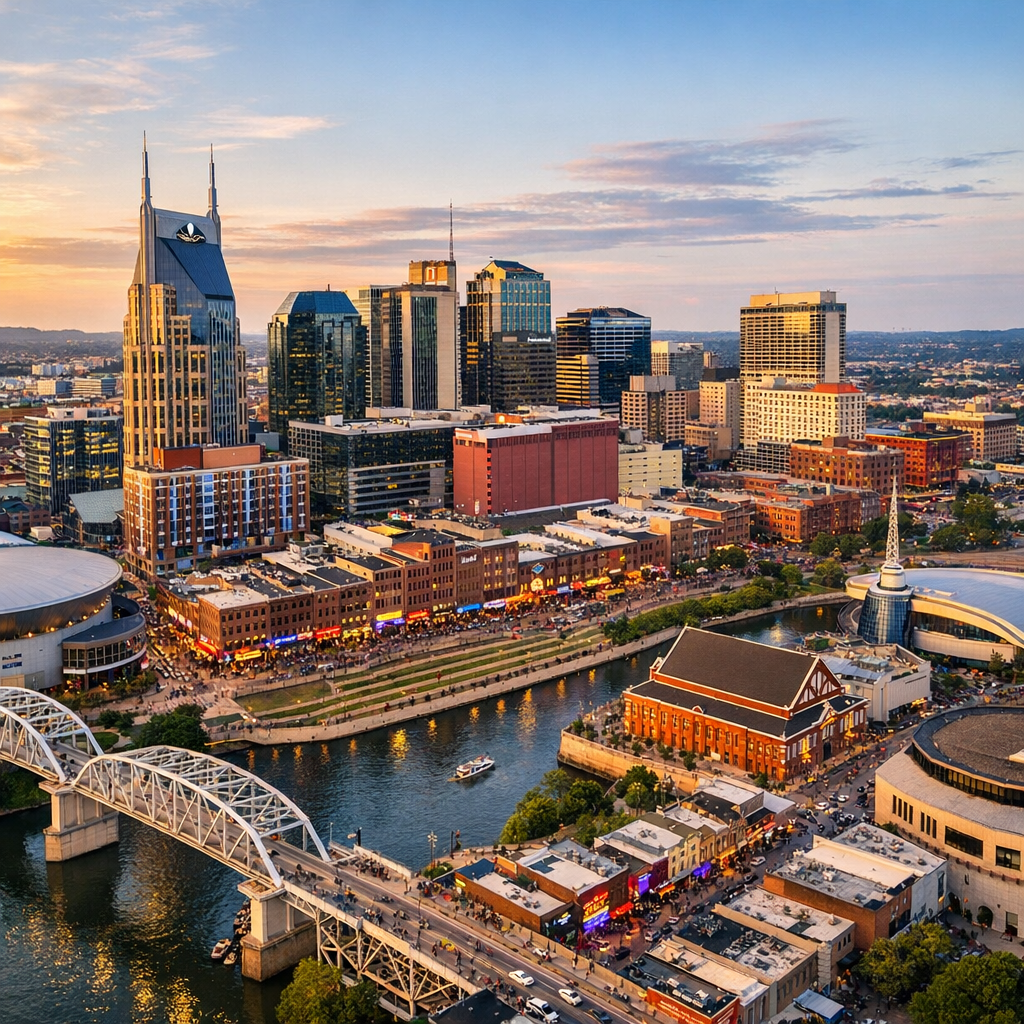
Nashville, long celebrated as the heart of country music, has undergone a remarkable transformation into a burgeoning business hub. This evolution is marked by significant population growth, economic diversification, and strategic investments in infrastructure and education.
Population Growth and Economic Impact
The Nashville metropolitan area has experienced rapid population growth, surpassing 2 million residents during the pandemic. This surge is attributed to both domestic migration and international immigration, positioning Nashville as a focal point for new residents seeking economic opportunities.
Vanderbilt University and Vanderbilt University Medical Center have been pivotal in this growth, contributing a combined $22.13 billion annually to Tennessee’s economy. As the largest private employer in the Nashville area, Vanderbilt’s influence extends beyond education and healthcare, fostering innovation and attracting a skilled workforce.
Infrastructure and Development
To accommodate its expanding population and economic activities, Nashville has invested heavily in infrastructure. The ‘Choose How You Move’ initiative, launched in 2025, allocated $104 million for transit projects, including sidewalk improvements, smart traffic signals, and enhancements to public transportation. These efforts aim to improve mobility and support sustainable urban development.
Additionally, the city is preparing to host Super Bowl LXIV in 2030, with plans to invest $60 million into the event. This investment is expected to yield substantial returns, with projections estimating $386 million in direct spending and a total economic impact of $706 million. Such events not only boost the local economy but also elevate Nashville’s profile on the national stage.
Challenges and Opportunities
Despite its successes, Nashville faces challenges common to rapidly growing cities. The housing market has seen significant price increases, making affordability a concern for many residents. Efforts to address this include expanding public transportation and investing in community development projects.
Education remains a key focus, with initiatives like Tennessee Reconnect offering tuition-free community or technical college education to residents aged 25 and older. These programs aim to equip the workforce with skills necessary for the evolving job market, particularly in sectors like healthcare and technology.
Conclusion
Nashville’s journey from a music-centric city to a dynamic business hub exemplifies the potential of strategic planning and investment. By leveraging its cultural heritage while embracing economic diversification, Nashville continues to thrive as a vibrant and resilient city.