

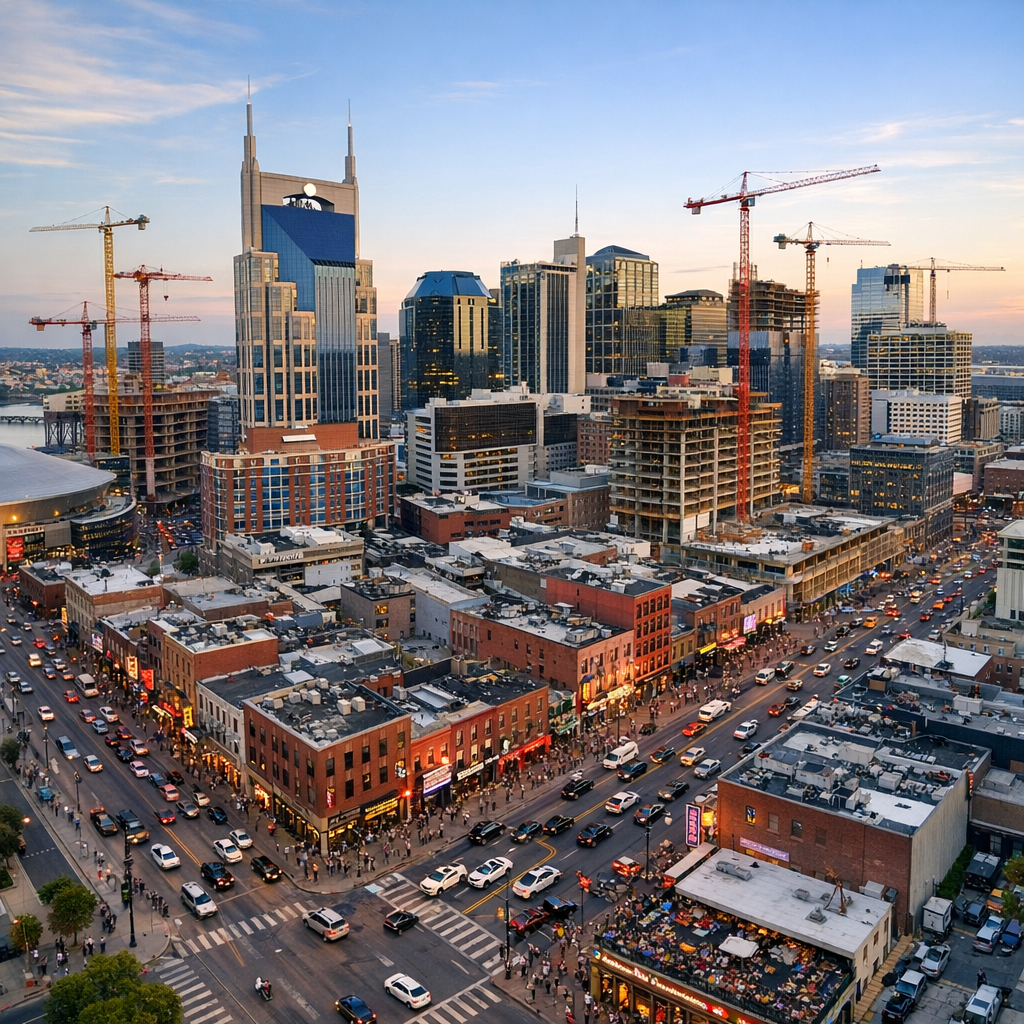
Nashville has long been celebrated for its vibrant music scene and rich cultural heritage. In recent years, however, our city has also emerged as a significant economic hub, reflecting and contributing to broader national economic trends.
Population Growth and Economic Expansion
Between 2019 and 2024, Vanderbilt University and Vanderbilt University Medical Center made a $22.13 billion economic impact on Nashville and Tennessee. As the largest private employer in the Nashville area and the second-largest in the state, Vanderbilt’s influence extends beyond its campus, shaping the region’s economy and future growth. This substantial contribution underscores the symbiotic relationship between our local institutions and the broader economic landscape.
Housing Market Dynamics
The COVID-19 pandemic drastically reshaped Nashville’s housing market, creating lasting impacts. Home prices in Nashville and across Tennessee soared due to a mix of historically low borrowing costs and the rise of remote work, which ignited a homebuying boom. This price surge rendered homeownership increasingly unattainable for many residents. Middle Tennessee, in particular, saw some of the sharpest price increases, with anecdotal evidence showing home values in areas like East Nashville increasing by 50% since 2020. At the same time, mortgage interest rates spiked after historic lows in 2021, discouraging potential buyers and prompting many current homeowners to stay put to preserve their favorable rates. As housing became more expensive, prospective buyers began to look farther into the suburbs in search of more affordable options. This shift in buying behavior and price increases reflect larger national real estate trends observed over the past five years.
Education and Income Correlation
A recent analysis of 2024 Census data reveals that in Nashville, a college education continues to significantly influence income levels. Adults aged 25 or older without college education earned a median income of $41,393, underscoring the wage gap between high school graduates and those with higher education. This comes as national sentiment grows skeptical about the value of college, with polls reflecting declining perceptions of its importance.
However, the individuals who could benefit most from a college degree often face the greatest barriers, such as rising tuition, student debt, and a challenging job market influenced by AI. To combat these obstacles, Tennessee has introduced initiatives like Tennessee Reconnect, which offers tuition-free community or technical college education to residents aged 25 and older. About 11,000 people have taken part in the program’s coaching services, which guide students through financial and personal hurdles to complete their degrees. This highlights the importance of accessible support systems in helping adult learners succeed in higher education and improve their economic outcomes.
Infrastructure and Transportation Initiatives
In October 2025, within a year of the referendum passing, Mayor O’Connell announced $104 million in funding for transit projects in the Choose How You Move program. This funding included sidewalk improvement projects, smart signals to be installed at over 100 intersections, improvements to transiting to the airport, street redesigns, and WeGo improvements. WeGo and the mayor’s office also rolled out a free bus fare program for qualifying low-income residents called the “Journey Pass”.
By January 2026, WeGo announced that they added 12 new buses to their fleet and that ridership increased 7.3% from the previous year.
Looking Ahead
As Nashville continues to grow and evolve, it is imperative that we remain attuned to both the opportunities and challenges presented by national economic trends. By fostering inclusive growth, investing in education, and enhancing our infrastructure, we can ensure that our city not only reflects the broader economic landscape but also sets a precedent for sustainable and equitable development.
In conclusion, while national policies and trends undoubtedly influence our local economy, Nashville’s proactive initiatives and resilient community spirit position us to navigate these changes effectively. By staying informed and engaged, we can collectively shape a prosperous future for all Nashvillians.