

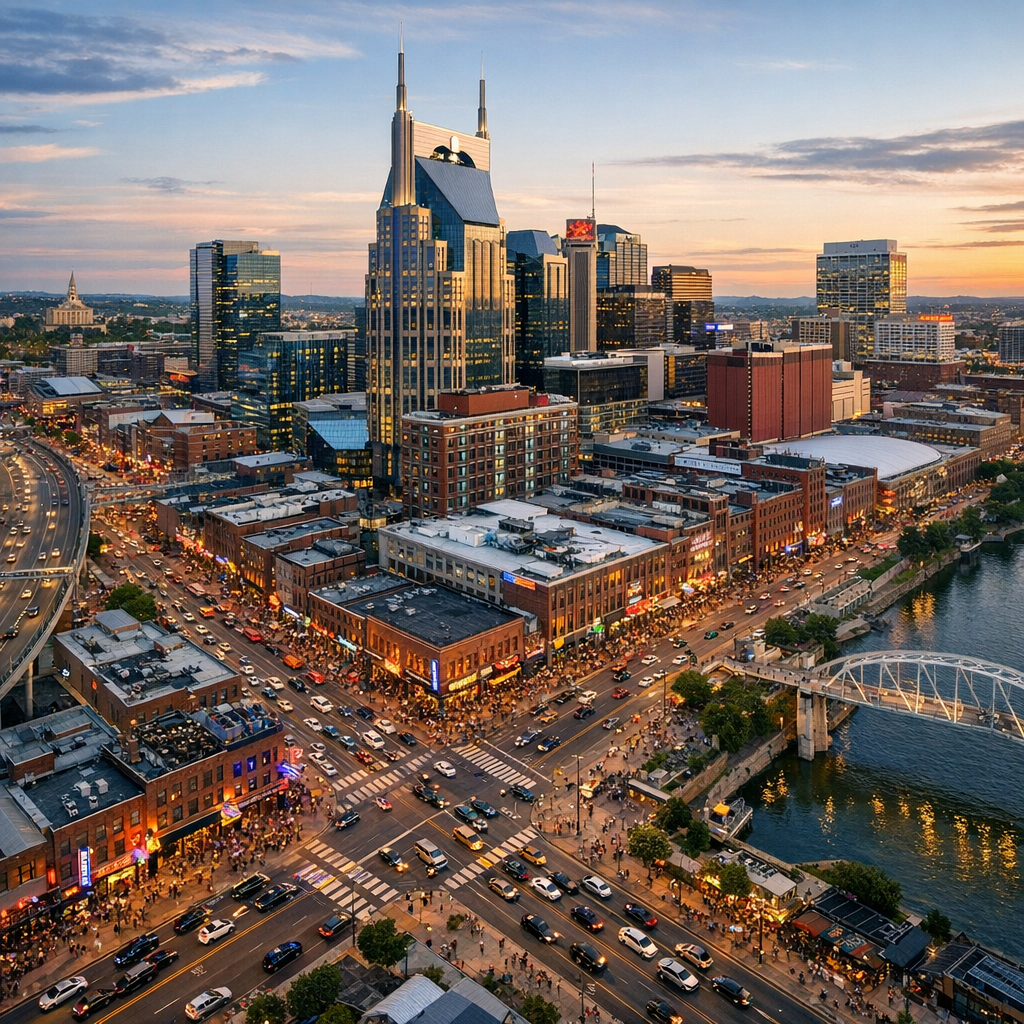
Nashville’s economic landscape has undergone significant transformation in recent years, reflecting broader national trends in urban development, education, and infrastructure investment.
Population Growth and Economic Impact
In 2025, Davidson County led Tennessee’s population growth, adding nearly 9,300 residents—the highest increase among the state’s 95 counties. This surge underscores challenges such as rising home prices and increased traffic, while also presenting opportunities in innovation and job creation.
Educational Attainment and Income Levels
Data from 2024 indicates a strong correlation between higher education and income in Nashville. Adults aged 25 or older without a college degree earned a median income of $41,393, highlighting the economic benefits of higher education. Initiatives like Tennessee Reconnect aim to make college more accessible, addressing barriers such as tuition costs and student debt.
Infrastructure and Major Events
Looking ahead, Nashville is preparing to host Super Bowl LXIV in 2030, with plans to invest $60 million into the event. This investment is expected to yield substantial returns, with projections estimating $386 million in direct spending and a total economic impact of $706 million. Such events not only boost the local economy but also enhance Nashville’s national profile.
Conclusion
Nashville’s economic trajectory serves as a microcosm of national trends, illustrating the interplay between population growth, education, and strategic investments in infrastructure and events. As the city continues to evolve, it offers valuable insights into the dynamics shaping urban economies across the United States.