

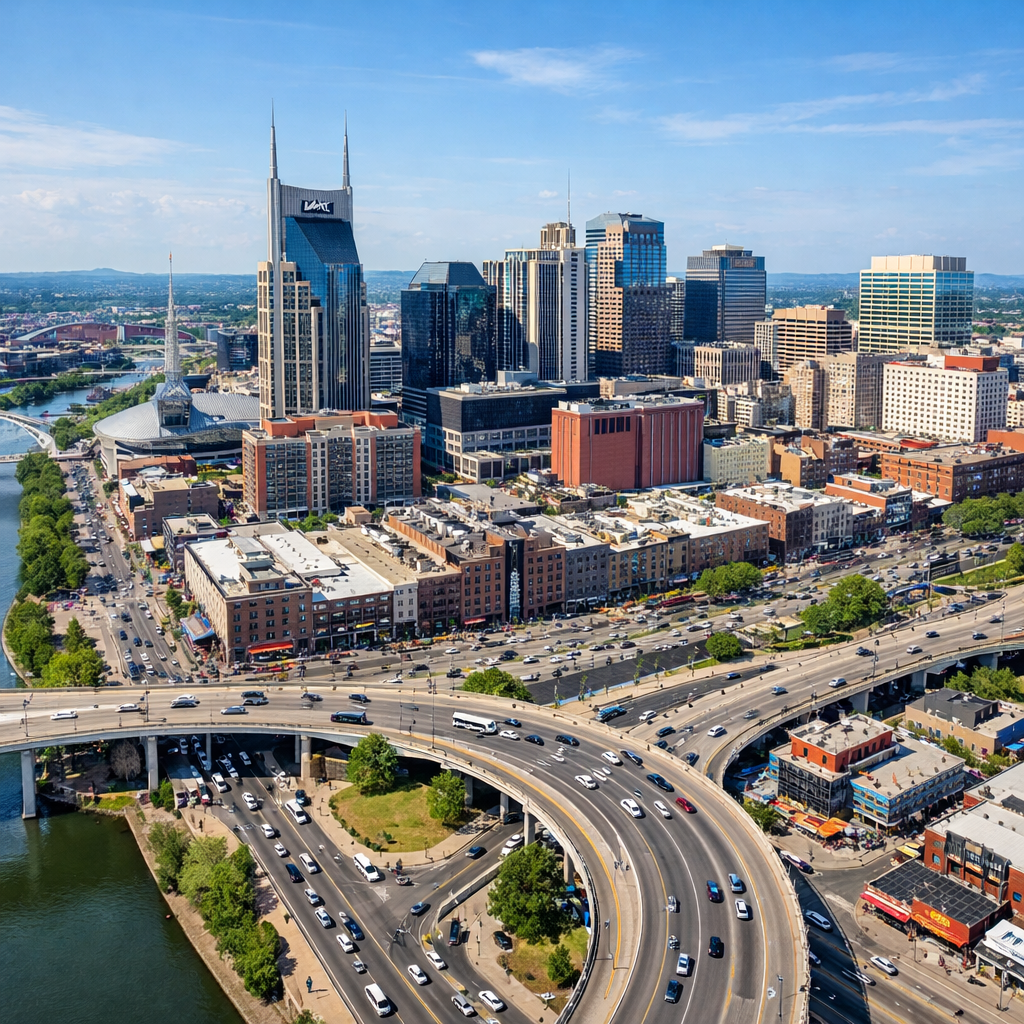
Nashville’s economic trajectory offers a compelling reflection of broader national trends, underscoring the city’s integral role in the U.S. economy.
Population Growth and Housing Market Dynamics
In recent years, Nashville has experienced significant population growth, particularly in Davidson County, which added nearly 9,300 residents in 2025. This surge has intensified housing demand, leading to rising home prices and increased suburban expansion. These patterns are emblematic of national urbanization and housing market trends.
Educational Attainment and Income Correlation
Data from 2024 indicates a strong correlation between higher education and income levels in Nashville. Adults without a college degree earned a median income of $41,393, highlighting the economic advantages of higher education—a trend consistent across the United States.
Infrastructure Investments and Economic Impact
Major infrastructure projects, such as the ‘Choose How You Move’ transit initiative, have been pivotal in Nashville’s development. The program’s $104 million investment in transit projects, including sidewalk improvements and smart traffic signals, mirrors national efforts to enhance urban mobility and stimulate economic growth.
Institutional Contributions to the Economy
Vanderbilt University and Vanderbilt University Medical Center have significantly bolstered Nashville’s economy, contributing $22.13 billion between 2019 and 2024. As the largest private employer in the area, their impact exemplifies how educational and medical institutions can drive economic prosperity on both local and national scales.
National Events and Economic Projections
Looking ahead, Nashville’s hosting of Super Bowl LXIV in 2030 is projected to generate substantial economic benefits, with estimates of $386 million in direct spending and a total economic impact of $706 million. While such projections are ambitious, they align with the economic boosts observed in other cities hosting major national events.
In summary, Nashville’s economic developments serve as a microcosm of national trends, illustrating how local growth and initiatives contribute to and reflect the broader U.S. economic landscape.