

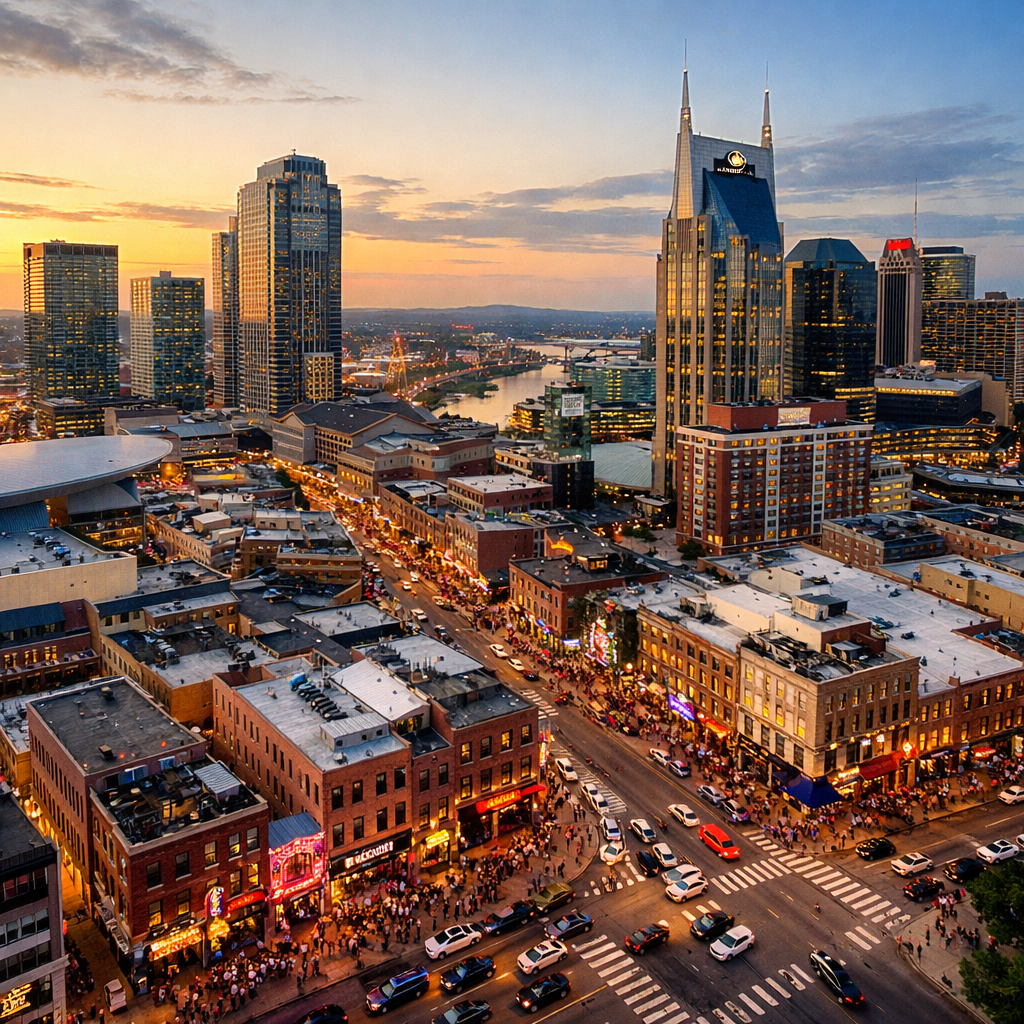
Nashville’s economic landscape has undergone significant transformation in recent years, reflecting broader national trends in urban development, education, and housing.
Population Growth and Economic Impact
In 2025, Nashville, particularly Davidson County, led Tennessee’s population growth by adding nearly 9,300 residents—the highest increase among the state’s 95 counties. This surge underscores challenges such as rising home prices, increased traffic, and higher tax bills, while also presenting opportunities in innovation and job creation.
Educational Attainment and Income
Data from 2024 indicates that in Nashville, adults aged 25 or older without a college education earned a median income of $41,393. This highlights the wage gap between high school graduates and those with higher education, emphasizing the importance of accessible educational opportunities.
Housing Market Dynamics
The COVID-19 pandemic significantly reshaped Nashville’s housing market. Historically low borrowing costs and the rise of remote work led to a homebuying boom, causing home prices to soar and making homeownership less attainable for many residents.
Institutional Contributions
Vanderbilt University and Vanderbilt University Medical Center have been pivotal in Nashville’s economic development. Between 2019 and 2024, these institutions contributed $22.13 billion to the city’s and state’s economies, underscoring the role of educational and medical institutions in regional economic health.
Nashville’s economic trajectory serves as a microcosm of national trends, illustrating the interplay between population growth, education, housing, and institutional influence in shaping urban economies.