

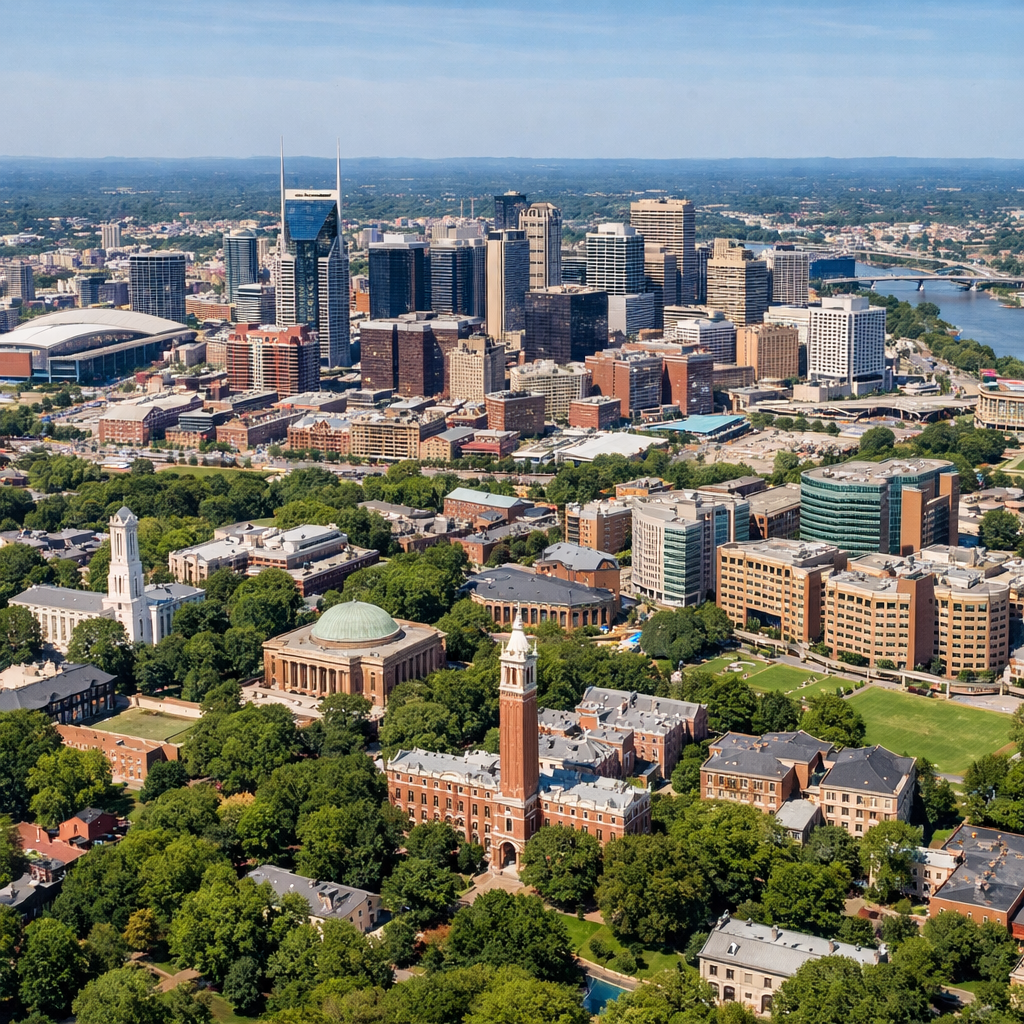
Nashville’s economic landscape continues to flourish, even as national policies undergo significant transformations. The city’s resilience is evident in various sectors, from education to population growth.
Vanderbilt University’s Economic Impact
Vanderbilt University and Vanderbilt University Medical Center have been pivotal in bolstering Nashville’s economy. Between 2019 and 2024, these institutions contributed approximately $22.13 billion to the local and state economies. As the largest private employer in the Nashville area, Vanderbilt’s influence extends beyond academia, shaping the region’s economic and social fabric.
Population Growth and Migration Trends
Nashville’s population has seen a steady increase, with Davidson County adding nearly 9,300 residents in 2025, the highest among Tennessee’s 95 counties. This growth presents both challenges and opportunities, including rising home prices and increased traffic, alongside innovation and new business ventures. Notably, domestic migration from other U.S. states continues to drive this expansion, while international migration has experienced fluctuations due to national immigration policy changes.
Housing Market Dynamics
The COVID-19 pandemic significantly reshaped Nashville’s housing market. Historically low borrowing costs and the rise of remote work led to a surge in home prices, making homeownership less attainable for many residents. Middle Tennessee, in particular, witnessed sharp price increases, with areas like East Nashville seeing home values rise by 50% since 2020. As mortgage interest rates climbed after 2021, potential buyers faced additional challenges, prompting many to seek more affordable options in the suburbs.
Educational Attainment and Income Correlation
Recent analyses highlight the strong correlation between higher education and income levels in Nashville. Adults aged 25 or older without a college education earned a median income of $41,393, underscoring the wage gap between high school graduates and those with higher education. To address this, Tennessee has introduced initiatives like Tennessee Reconnect, offering tuition-free community or technical college education to residents aged 25 and older, aiming to improve economic outcomes for adult learners.
In summary, Nashville’s economic growth remains robust, driven by key institutions, population dynamics, and educational initiatives. However, the city must navigate challenges posed by national policy shifts and evolving market conditions to sustain this momentum.