

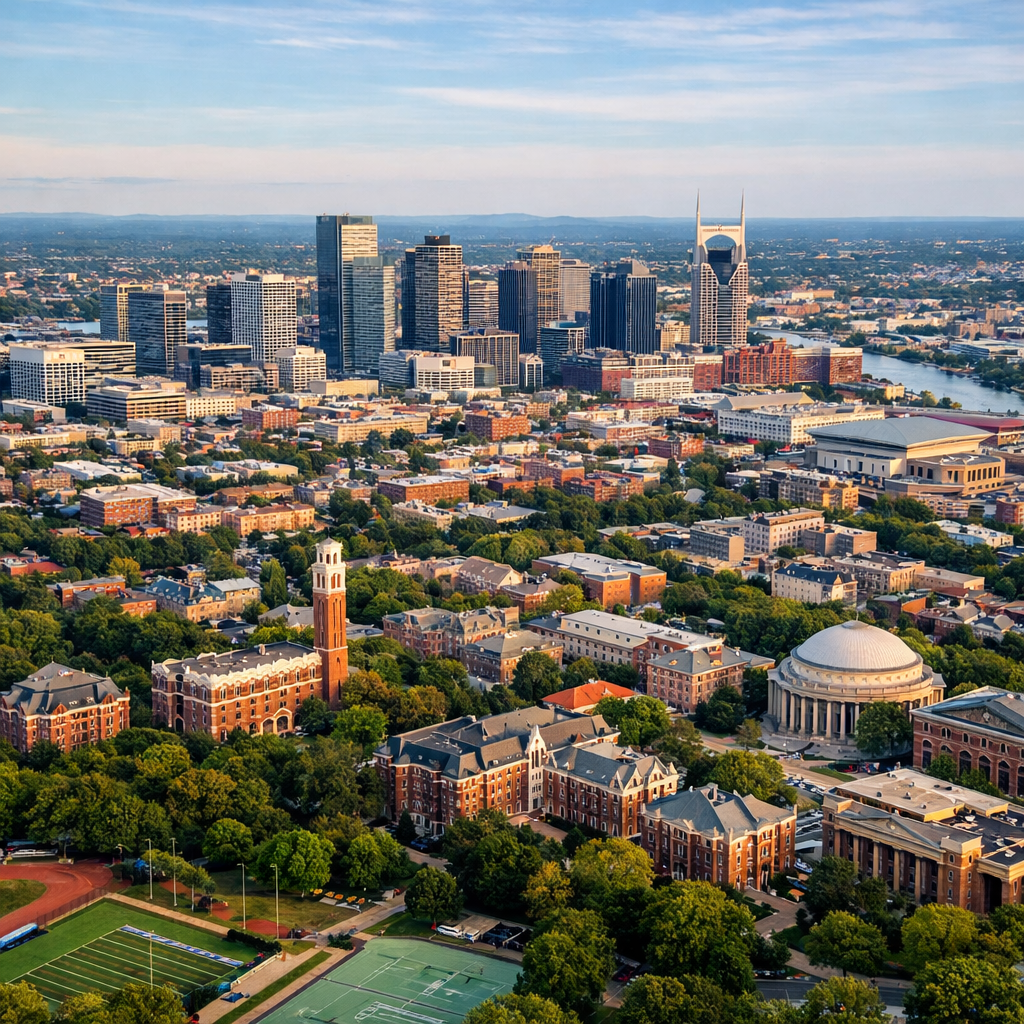
Nashville’s economy continues to flourish, demonstrating resilience and adaptability in the face of national policy changes. The city’s growth is driven by key institutions and sectors that have effectively navigated these shifts.
Vanderbilt University’s Economic Impact
Vanderbilt University and Vanderbilt University Medical Center have been pivotal in bolstering Nashville’s economy. Between 2019 and 2024, these institutions contributed a combined $22.13 billion to the city’s and state’s economies. As the largest private employer in the Nashville area and the second-largest in Tennessee, Vanderbilt’s influence extends beyond academia, shaping the region’s economic landscape and future growth.
Tourism Sector’s Resilience
Despite challenges posed by international trade policies, Nashville’s tourism industry remains robust. The city is preparing to host Super Bowl LXIV in 2030, with an anticipated investment of $60 million. This event is projected to generate $386 million in direct spending and a total economic impact of $706 million, underscoring the sector’s significance to the local economy.
Addressing Immigration Enforcement Impacts
Recent immigration enforcement operations have affected Nashville’s immigrant communities, leading to increased absenteeism in schools and heightened community concerns. In response, city leaders have established support funds and initiated studies to understand and mitigate these impacts, reflecting Nashville’s commitment to inclusivity and community support.
Conclusion
Nashville’s economic vitality is a testament to its ability to adapt to national policy changes. Through the contributions of institutions like Vanderbilt University and a resilient tourism sector, the city continues to thrive, offering a model of growth and resilience for other urban centers.