

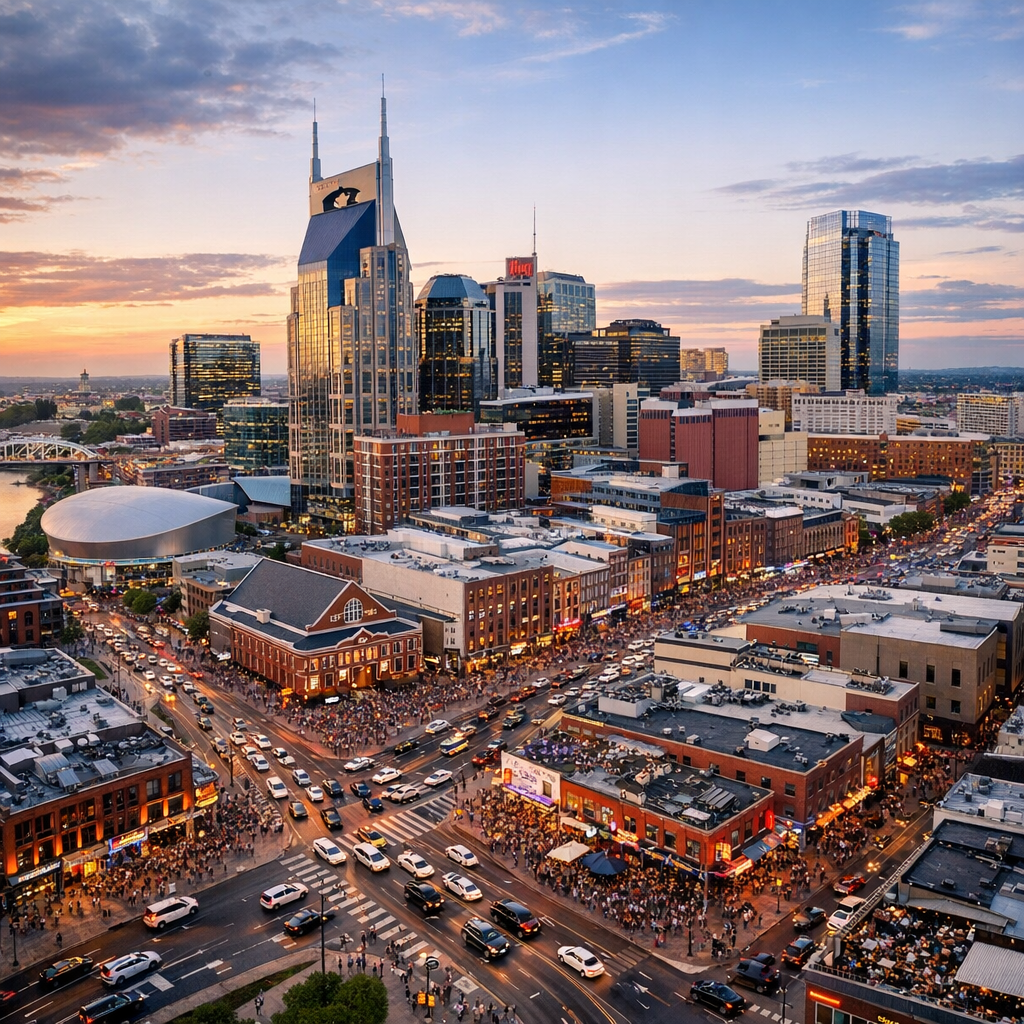
Nashville’s economic landscape has been significantly shaped by national trends, with the city experiencing notable growth in recent years. This expansion is evident in various sectors, including population dynamics, education, and healthcare.
Population Growth and Migration
In 2025, Nashville, particularly Davidson County, led Tennessee’s population growth by adding nearly 9,300 residents—the highest increase among the state’s 95 counties. This surge underscores the city’s appeal and presents both challenges and opportunities, such as rising home prices and increased traffic. Notably, domestic migration from other U.S. states continues to drive this growth, while international migration has seen a decline due to changes in national immigration policies.
Education and Income
Education remains a pivotal factor in Nashville’s economic development. Data from 2024 indicates that adults aged 25 or older without a college education earned a median income of $41,393, highlighting the wage gap between high school graduates and those with higher education. To address this, Tennessee has implemented initiatives like Tennessee Reconnect, offering tuition-free community or technical college education to residents aged 25 and older, aiming to enhance economic outcomes for its citizens.
Healthcare Sector’s Economic Impact
Vanderbilt University and Vanderbilt University Medical Center have significantly contributed to Nashville’s economy. Between 2019 and 2024, these institutions made a $22.13 billion economic impact on the city and state. As the largest private employer in the Nashville area, Vanderbilt’s influence extends beyond its campus, shaping the region’s economy, quality of life, and future growth.
These developments reflect broader national trends, with cities across the United States experiencing similar patterns of growth and challenges. Nashville’s proactive approach to education and healthcare positions it as a model for other urban areas navigating the complexities of modern economic landscapes.