

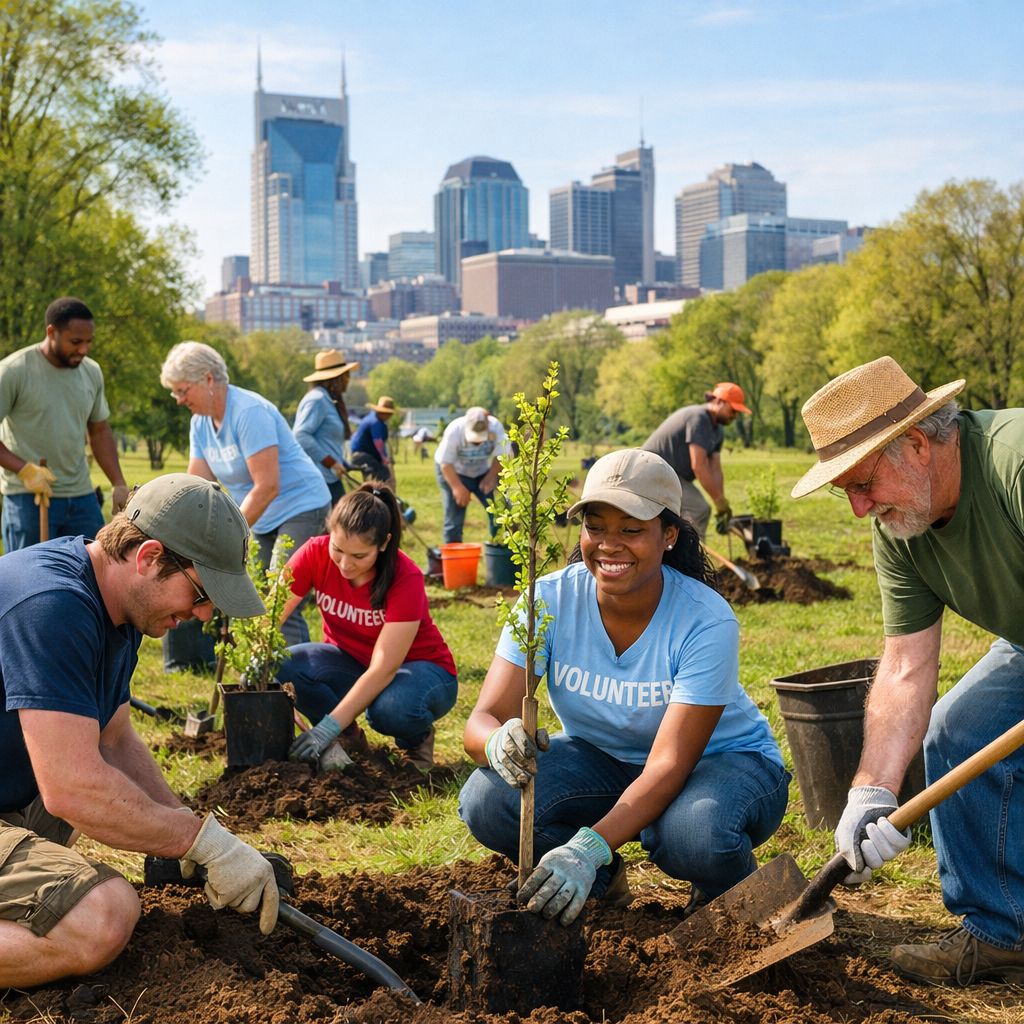
Nashville’s commitment to environmental sustainability is evident through various community-driven initiatives aimed at enhancing the city’s resilience and ecological health.
Root Nashville: Greening the City
Root Nashville, a public-private campaign led by Metro Nashville and the Cumberland River Compact, aims to plant 500,000 trees across Davidson County by 2050. This initiative seeks to restore the city’s tree canopy, promoting cleaner air and water for future generations. Residents can participate by donating, volunteering, or ordering free trees for their properties.
Centennial Park Conservancy’s Environmental Grants
Since 2020, the Centennial Park Conservancy has managed Nashville’s Earth Day festival, donating proceeds to support local environmental projects. By 2025, the organization had contributed $208,000 to initiatives focusing on bees, trees, water, pollinator gardens, sustainability, and education. These grants empower grassroots organizations to implement impactful environmental programs throughout the city.
Metro Nashville’s Climate Adaptation and Resilience Plan
Recognizing the challenges posed by climate change, Metro Nashville developed the Climate Adaptation and Resilience Plan (CARP) to prepare the city for future climate-related events. The plan focuses on mitigating risks associated with heat waves, severe storms, and flooding, ensuring the community’s ability to thrive amidst changing environmental conditions.
Community Beautification Efforts
The Metro Beautification and Environment Commission coordinates efforts to keep Nashville clean and attractive. By organizing neighborhood clean-ups and supporting beautification projects, the commission fosters community engagement and environmental stewardship among residents.
Educational Initiatives in Sustainability
Metro Nashville Public Schools (MNPS) are committed to promoting environmental stewardship through various projects and educational programs. The MNPS Energy Program has achieved a 20% annual reduction in energy consumption, equivalent to reducing 260,000 metric tons of carbon emissions. Additionally, the implementation of energy-efficient designs and construction standards has led to LEED Silver or Gold certifications for new buildings and major renovations.
These collective efforts underscore Nashville’s dedication to fostering a sustainable and resilient environment, driven by the active participation of its community members.