

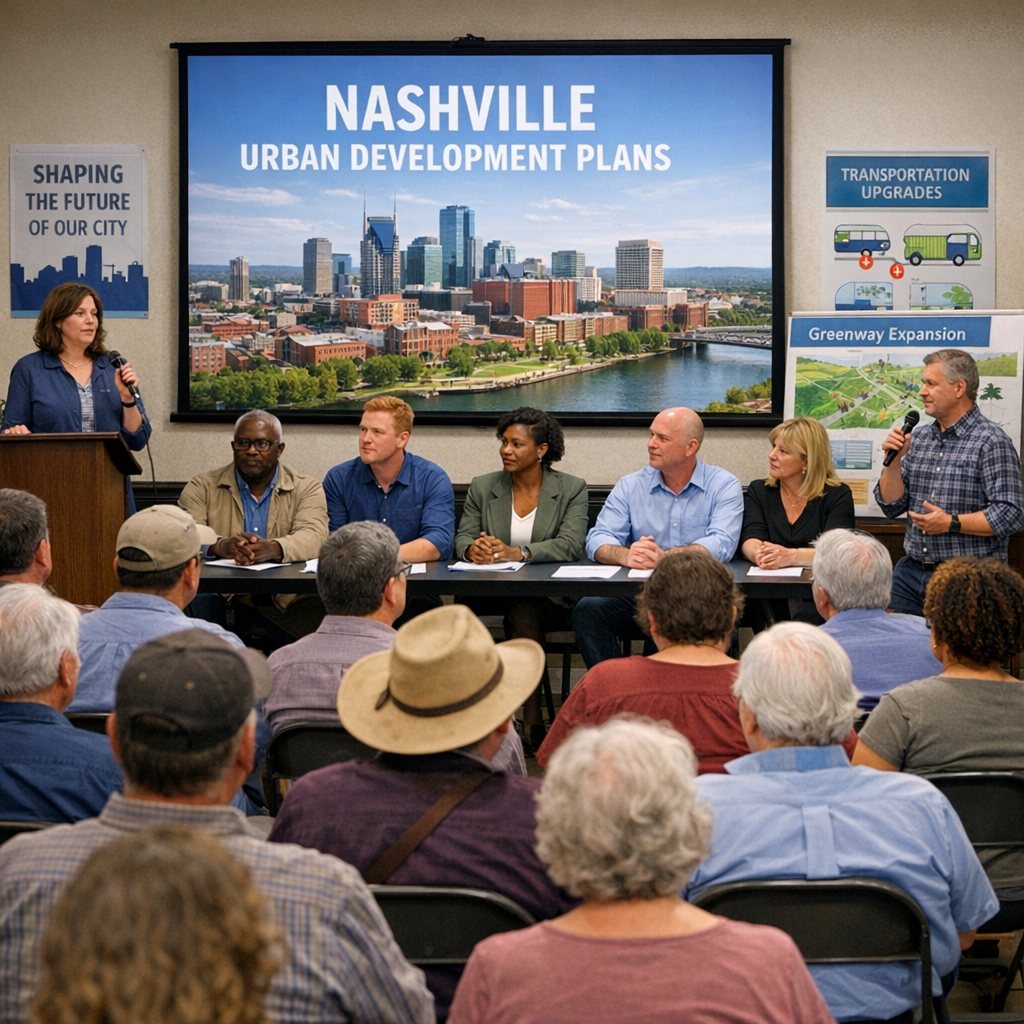
Nashville’s rapid growth has brought both opportunities and challenges, prompting city leaders and residents to address key issues affecting the community.
Affordability Challenges
Recent reports highlight significant affordability concerns, particularly among African American residents. The Metro Social Services’ annual Community Needs Evaluation underscores the enduring legacies and emerging issues contributing to these challenges. Efforts are underway to develop targeted programs aimed at alleviating financial burdens and promoting economic equity.
Community Engagement
In response to national trends of declining neighborhood interactions, Nashvillians are fostering community ties through grassroots initiatives. Residents are organizing casual gatherings, such as ‘Wine Wednesdays’ and neighborhood meet-ups, to strengthen local connections and combat social isolation.
Urban Development and Public Sentiment
Public sentiment regarding Nashville’s development is mixed. A Vanderbilt Poll indicates that nearly half of residents feel recent changes have negatively impacted their daily lives, with concerns about rapid population growth and housing affordability. Additionally, a Gensler Research Institute report reveals that Downtown Nashville is less frequented by locals, citing issues like public safety and excessive drinking as deterrents.
City Leadership and Infrastructure
City leadership is actively addressing these concerns. Mayor Freddie O’Connell has proposed restructuring the Nashville Entertainment Commission to enhance its effectiveness. Furthermore, the Metro Council is considering legislation to regulate the establishment of data centers near sensitive areas, such as the Nashville Zoo, reflecting a commitment to balanced urban development.
As Nashville continues to evolve, ongoing dialogue and collaborative efforts between city officials and residents remain crucial in shaping a community that is inclusive, vibrant, and responsive to the needs of all its members.