

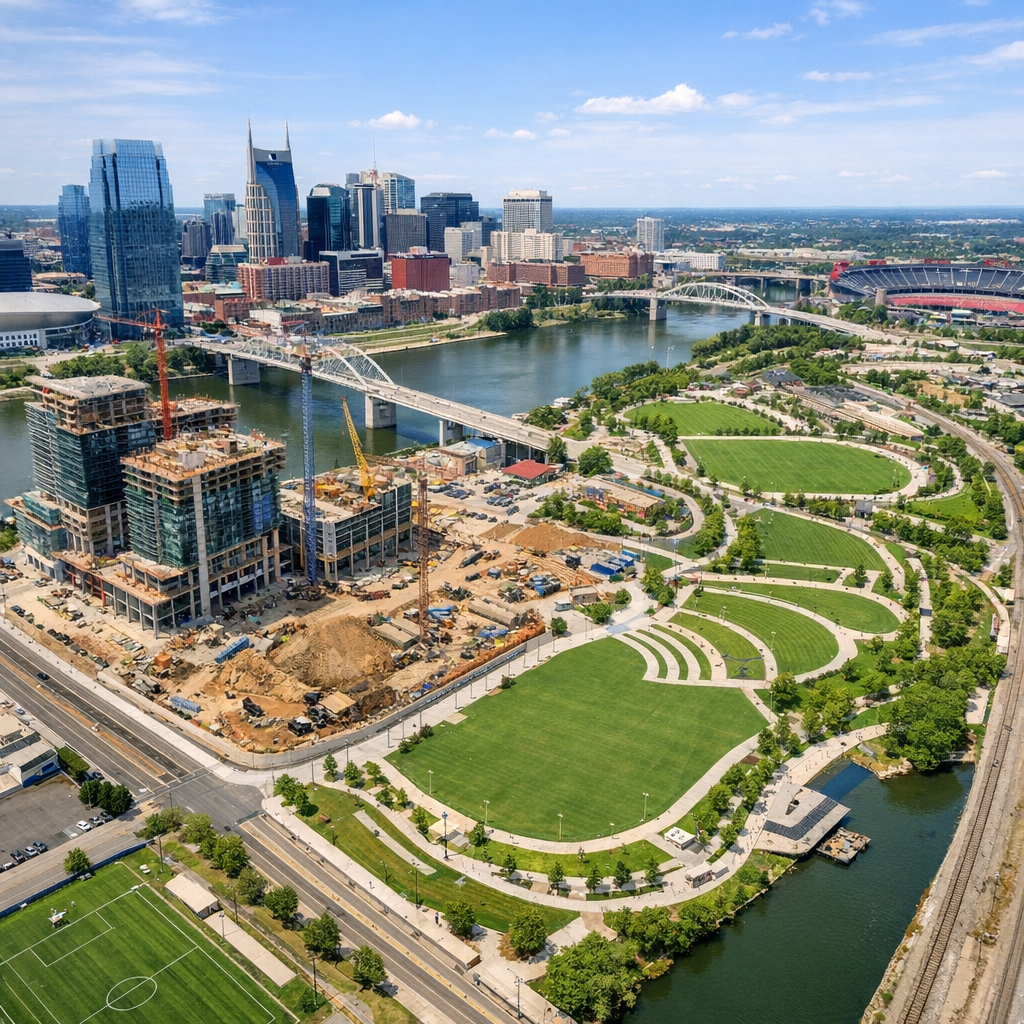
Nashville is undergoing significant transformations, with various initiatives and challenges influencing the city’s urban development, transportation infrastructure, and community well-being.
Urban Development and Community Planning
The Metro Council has approved a $300 million allocation, originally designated for the Music City Center, to fund key projects on the East Bank. This funding will support utilities infrastructure and new parks, with up to $150 million earmarked for these elements, primarily budgeted for 2030. This strategic financial plan aims to enhance Nashville’s bonding capacity for future projects, including the new Tennessee Titans stadium and the Tennessee Performing Arts Center headquarters.
In parallel, the updated “Plan to Play” document from Metro Parks serves as a framework for evaluating Nashville’s investment in its parks system. The plan offers three tiered funding options, ranging from stabilizing maintenance to realizing broader, aspirational goals set out in the original 2017 plan. Mayor Freddie O’Connell highlights this plan as a strategic tool to guide community discussions and track progress compared to peer cities.
Transportation and Road Safety
To address a rise in fatal crashes, Nashville is implementing new road safety measures funded by the “Choose How You Move” initiative. The Nashville Department of Transportation is installing concrete barriers to protect bike and scooter lanes on Commerce Street and Davidson Street near Nissan Stadium. Additionally, raised pedestrian crosswalks are being introduced to enhance pedestrian visibility and safety. These efforts aim to reduce accidents and improve the city’s transportation infrastructure.
In a related move, Metro Councilmember Sandra Sepulveda has introduced legislation to ban right turns on red lights across most of Nashville, aiming to enhance pedestrian safety. The proposal, still requiring council approval, marks a significant shift for local drivers and aligns with actions taken by other cities to improve pedestrian and cyclist safety.
Community Health and Social Challenges
The Metro Public Health Department, in collaboration with various stakeholders, has released the 2026-2028 Community Health Improvement Plan. This plan outlines four key priorities: Housing, Awareness and Navigation of Community Resources, Food Access/Food Insecurity, and Economic Opportunity and Job Skill Development. These priorities aim to address systemic issues affecting the health and well-being of Nashville residents.
Additionally, the Metro Social Services’ annual “Community Needs Evaluation” report highlights affordability challenges faced by African American residents in Nashville. The report identifies historic and contemporary causes of the city’s wealth gap and emphasizes the need for targeted programs to address these disparities.
As Nashville continues to evolve, these developments reflect the city’s commitment to enhancing infrastructure, ensuring public safety, and addressing community health and social challenges.