

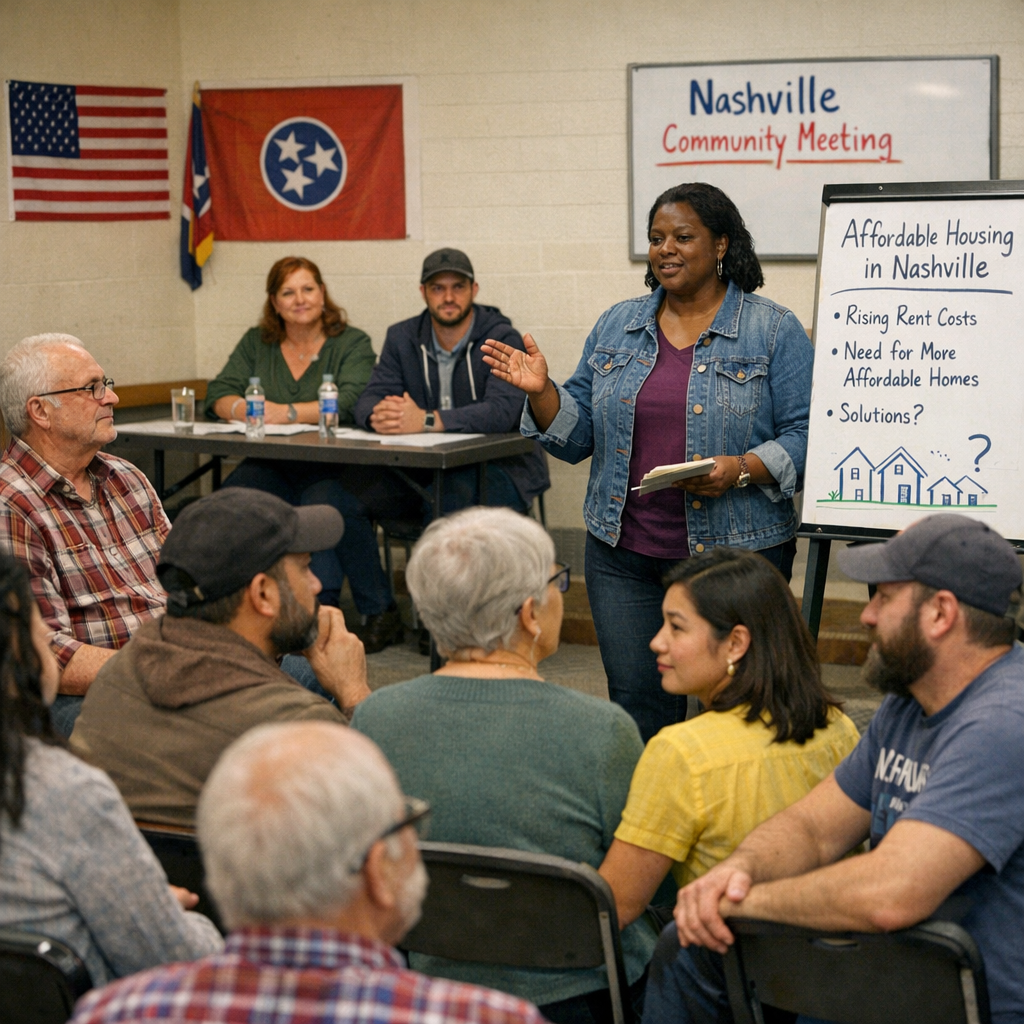
Nashville’s rapid growth has brought prosperity to many, but it has also intensified challenges in housing affordability. A recent Vanderbilt University poll reveals that 82% of residents feel they cannot afford to purchase a home in Davidson County, underscoring a deepening crisis that demands attention.
Understanding the Crisis
The city’s booming development has led to rising property values and living costs, making homeownership increasingly elusive for a significant portion of the population. This trend is particularly concerning for Black and Hispanic families, who can afford median-valued homes in less than 1% of Nashville’s neighborhoods. Such disparities highlight systemic issues rooted in historical and contemporary inequities.
Community Impact
The lack of affordable housing affects more than just potential homeowners; it disrupts the fabric of communities. Long-time residents face displacement as neighborhoods gentrify, altering the cultural and social landscape of the city. Additionally, the strain on affordable housing contributes to increased homelessness and food insecurity, with over 80,000 residents lacking reliable access to food.
Moving Forward
Addressing Nashville’s housing affordability crisis requires a multifaceted approach. Initiatives like the Unified Housing Strategy aim to increase the supply of affordable housing, but community involvement is crucial. Residents can participate in town halls, support local organizations advocating for equitable housing policies, and engage with city officials to voice their concerns and suggestions.
As Nashville continues to evolve, it’s imperative that growth includes all residents, ensuring that the city remains a vibrant and inclusive place for everyone.