

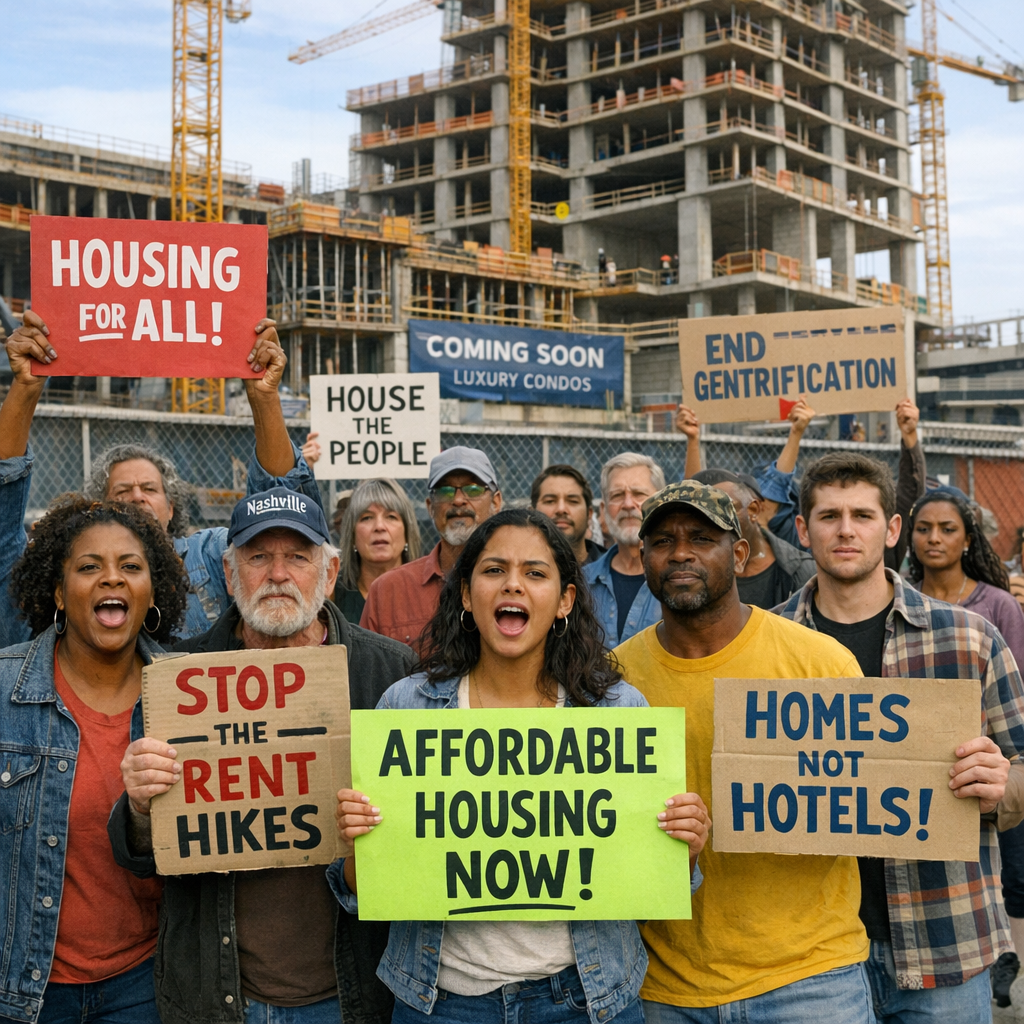
Nashville’s rapid growth has brought prosperity to many, but it has also intensified a housing affordability crisis that threatens the city’s diverse fabric. Recent studies reveal that a significant majority of residents find homeownership increasingly out of reach, with minority communities bearing the brunt of this challenge.
Widespread Affordability Concerns
A Vanderbilt University poll indicates that 82% of Nashville residents feel they cannot afford to purchase a home in Davidson County. This sentiment reflects the widening gap between median household incomes and the escalating costs of homeownership. The median household income in Nashville stands at $91,000, yet an annual income of approximately $120,000 is now necessary to afford a median-priced home. This $30,000 disparity underscores the financial strain on many residents.
Disproportionate Impact on Minority Communities
The crisis is particularly acute for Black and Hispanic families. A housing and infrastructure study revealed that these families can afford median-valued homes in less than 1% of Nashville’s 481 neighborhoods—specifically, just 0.8% for Black families and 0.6% for Hispanic families. This stark statistic highlights the enduring legacies of discriminatory practices such as redlining and racist land-use policies, which have historically marginalized these communities.
Community and Policy Responses
In response to these challenges, local leaders have initiated efforts to increase affordable housing. Mayor Freddie O’Connell has emphasized housing affordability in his budget proposals, aiming to support the construction and preservation of nearly 1,800 affordable housing units in the fiscal year. Additionally, the city’s Unified Housing Strategy seeks to address the affordability crisis through comprehensive planning and investment.
However, public opinion on solutions remains divided. While 73% of residents identify housing affordability as a top priority, support for building multifamily housing in local neighborhoods has decreased. More than half (53%) of residents now believe such developments should be limited to dense areas to preserve the character of less-populated neighborhoods. This shift indicates the complexities involved in balancing growth with community preservation.
Looking Ahead
Addressing Nashville’s housing affordability crisis requires a multifaceted approach that considers economic realities, historical inequities, and community sentiments. As the city continues to grow, fostering inclusive policies and open dialogues will be essential in ensuring that all residents have access to affordable and stable housing.