

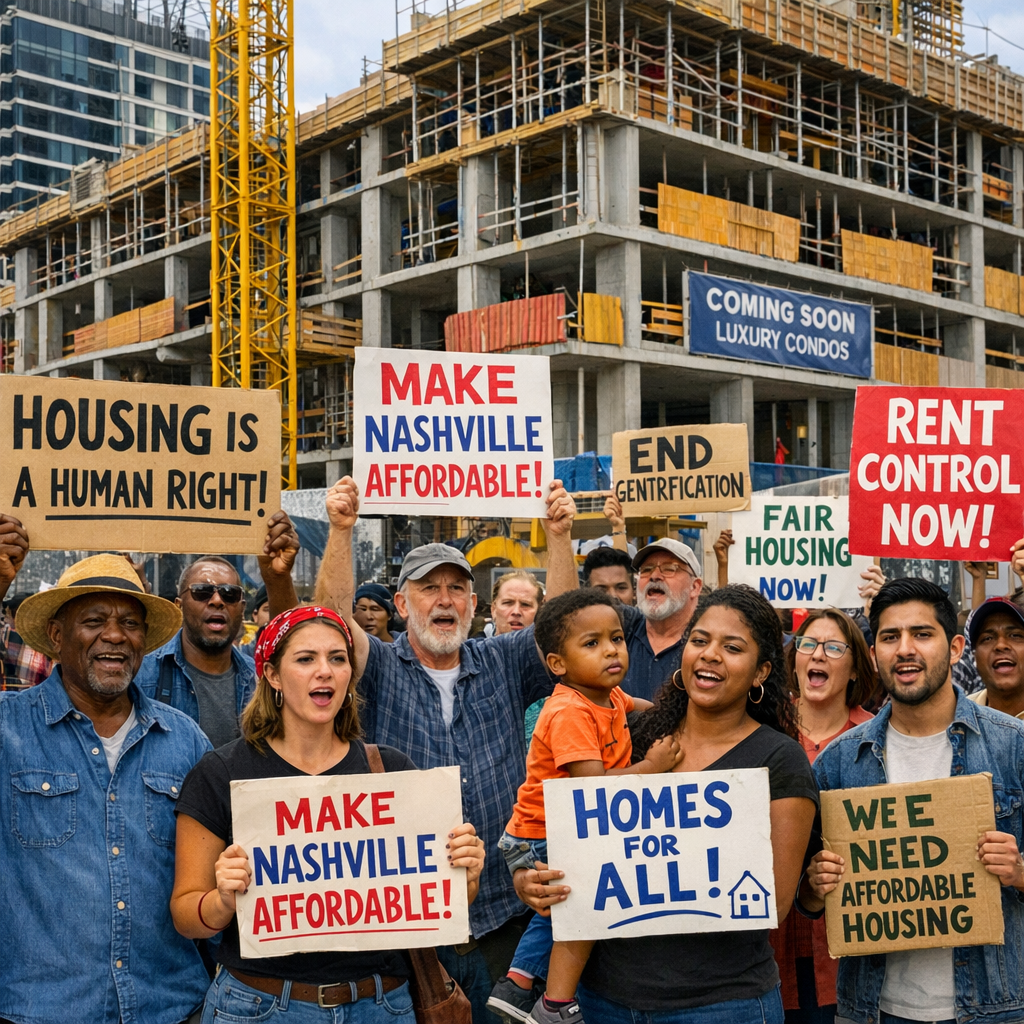
Nashville’s rapid growth has brought prosperity to many, but it has also intensified a housing affordability crisis that leaves a significant portion of residents struggling to find suitable homes. Recent studies and reports highlight the depth of this issue and its disproportionate impact on minority communities.
Widespread Affordability Concerns
A Vanderbilt University poll reveals that 82% of Nashville residents feel they cannot afford to buy a home in Davidson County. This sentiment underscores the city’s escalating housing costs, which have outpaced income growth for many residents.
Disproportionate Impact on Minority Communities
The crisis is particularly acute for Black and Hispanic families. A housing and infrastructure study indicates that these families can afford median-valued homes in less than 1% of Nashville’s 481 neighborhoods—specifically, just 0.8% for Black families and 0.6% for Hispanic families. This stark disparity points to systemic issues rooted in historical discriminatory practices such as redlining and exclusionary zoning laws.
Contributing Factors
Several factors contribute to this affordability crisis:
- Rising Home Prices: Home prices in Nashville have surged by over 53% in the past five years, making homeownership increasingly unattainable for many.
- Income Disparities: The median household income in Nashville is approximately $91,000, yet an income of around $120,000 is necessary to afford a median-priced home, creating a significant gap.
- Limited Housing Supply: The city’s housing supply has not kept pace with demand, leading to increased competition and higher prices.
Community and Policy Responses
In response to these challenges, local leaders have initiated several measures:
- Unified Housing Strategy: Mayor Freddie O’Connell’s administration has launched initiatives like the Unified Housing Strategy to increase the supply of affordable housing. In fiscal year 2025, city funding supported the construction and preservation of nearly 1,800 affordable housing units.
- Zoning Reforms: The city is considering major zoning reforms, including permitting higher-density housing along transit corridors, to address affordability and accessibility challenges.
- Community Engagement: Organizations like the Elmahaba Center are working to build inclusive communities and address systemic issues contributing to economic immobility and housing insecurity.
Looking Ahead
While these efforts are steps in the right direction, the scale of Nashville’s housing affordability crisis requires sustained and comprehensive action. Addressing systemic inequities, expanding affordable housing options, and fostering inclusive economic growth are essential to ensure that all Nashvillians have access to safe and affordable homes.