

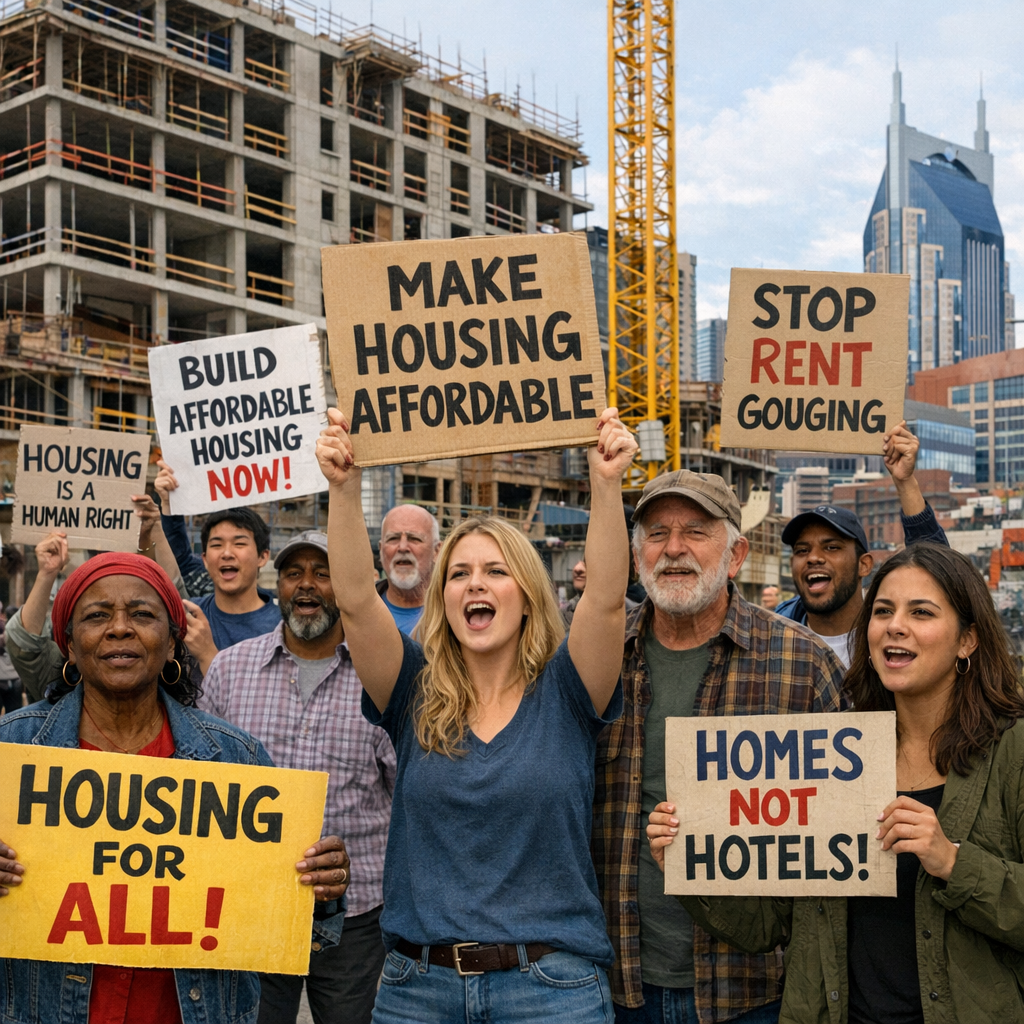
Nashville’s rapid growth has brought prosperity to many, but it has also intensified a housing affordability crisis that threatens the city’s diverse fabric. Recent studies and polls reveal a stark reality: a significant portion of residents find homeownership increasingly out of reach.
Widespread Affordability Concerns
A Vanderbilt University poll indicates that 82% of Nashville residents feel they cannot afford to purchase a home in Davidson County. This sentiment reflects the escalating housing costs that have outpaced income growth for many locals. The same poll highlights a shift in priorities, with 43% of respondents emphasizing the need to attract good jobs, up from 18% the previous year. This change underscores the economic pressures residents face amid rising living expenses.
Disproportionate Impact on Minority Communities
The affordability crisis disproportionately affects Black and Hispanic families. A housing and infrastructure study revealed that these families can afford median-valued homes in less than 1% of Nashville’s 481 neighborhoods—specifically, just 0.8% for Black families and 0.6% for Hispanic families. This disparity is rooted in historical and ongoing systemic issues, including discriminatory practices and policies that have limited economic opportunities for minority communities.
Community and Government Responses
In response to these challenges, local leaders have initiated efforts to address housing affordability. Mayor Freddie O’Connell’s administration has been working on the Unified Housing Strategy, aiming to increase the supply of affordable housing. In fiscal year 2025, city funding supported the construction and preservation of nearly 1,800 affordable housing units. However, these measures have yet to fully alleviate the concerns of residents who feel the pressure of rising costs.
Community organizations are also stepping up. Metro Social Services released an annual report and interactive maps highlighting areas of gentrification, wage disparities, and poverty. These tools aim to inform policy decisions and community initiatives by providing a clear picture of the socio-economic landscape in Nashville.
Looking Ahead
The path forward requires a multifaceted approach. While increasing the housing supply is crucial, addressing the underlying economic disparities is equally important. This includes creating equitable job opportunities, implementing policies that prevent displacement, and fostering inclusive community development.
Nashville’s identity is deeply tied to its diverse communities. Ensuring that all residents have the opportunity to live and thrive in the city is not just a policy goal—it’s a commitment to preserving the soul of Music City.