

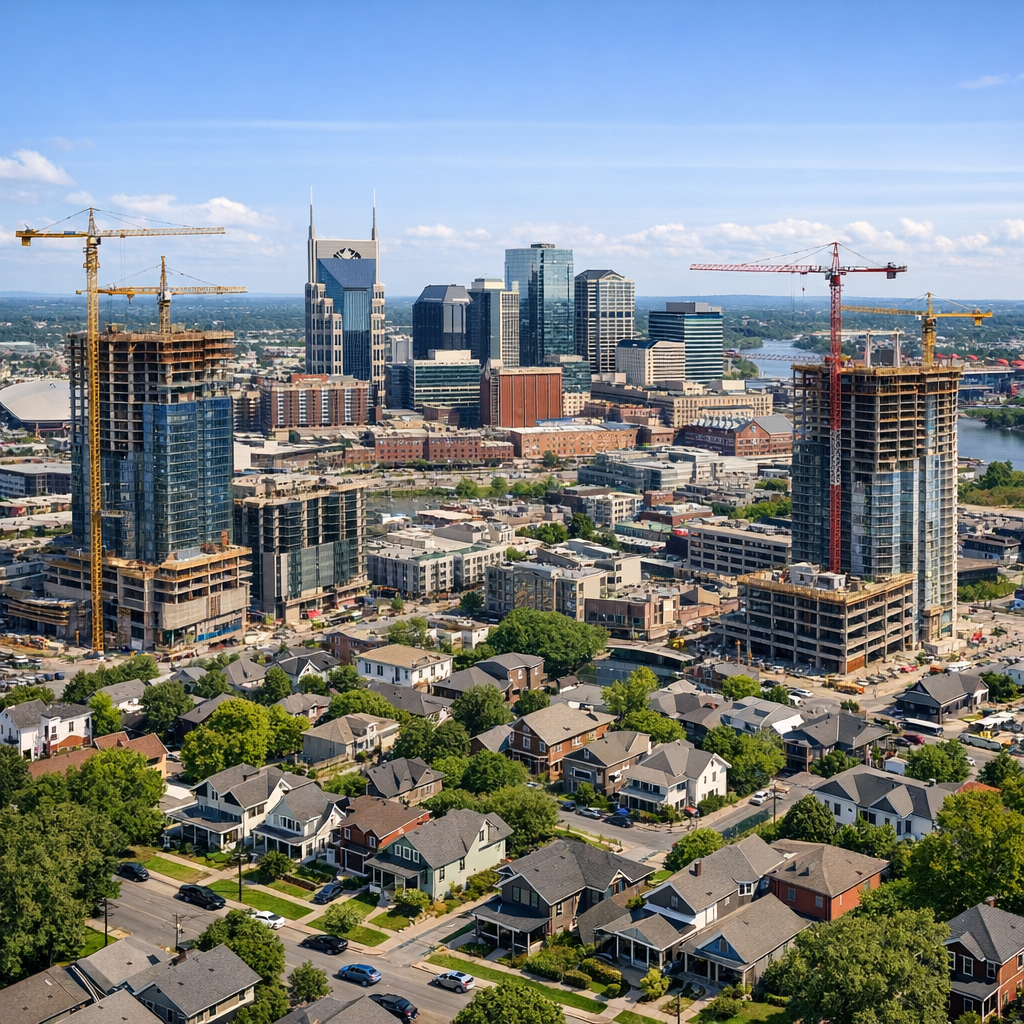
Nashville’s skyline is rapidly evolving, with cranes and new developments becoming a common sight. This construction surge, while indicative of the city’s growth, has not translated into increased housing affordability for many residents.
Construction Surge and Affordability Concerns
Recent data indicates that despite the influx of new housing units, affordability remains a pressing issue. A report from the Southern Organization for New Nashville (SONN) highlights that the majority of new constructions are priced beyond the reach of average working families. The expectation that these high-priced units would eventually become affordable over time has not materialized, leading to a continuous rise in housing costs.
Displacement of Naturally Affordable Housing
Compounding the issue is the loss of older, naturally affordable housing units. These homes, once accessible to low and moderate-income families, are being replaced at a rate that doesn’t meet the growing demand. This trend disproportionately affects households earning below 80% of the Area Median Income (AMI), where the need for affordable housing is most acute.
Community Insights and Data
Interactive maps released by Metro Social Services shed light on the socio-economic patterns in Nashville. These tools highlight areas undergoing significant demographic shifts due to rising incomes, housing values, and development activities. Such changes often lead to displacement pressures in historically affordable neighborhoods.
Looking Ahead
Addressing Nashville’s housing affordability crisis requires a multifaceted approach. While new developments signal economic growth, it’s imperative for city planners and policymakers to implement strategies that ensure housing remains accessible to all residents. This includes preserving existing affordable units, incentivizing the construction of affordable housing, and engaging the community in development decisions to balance growth with inclusivity.