

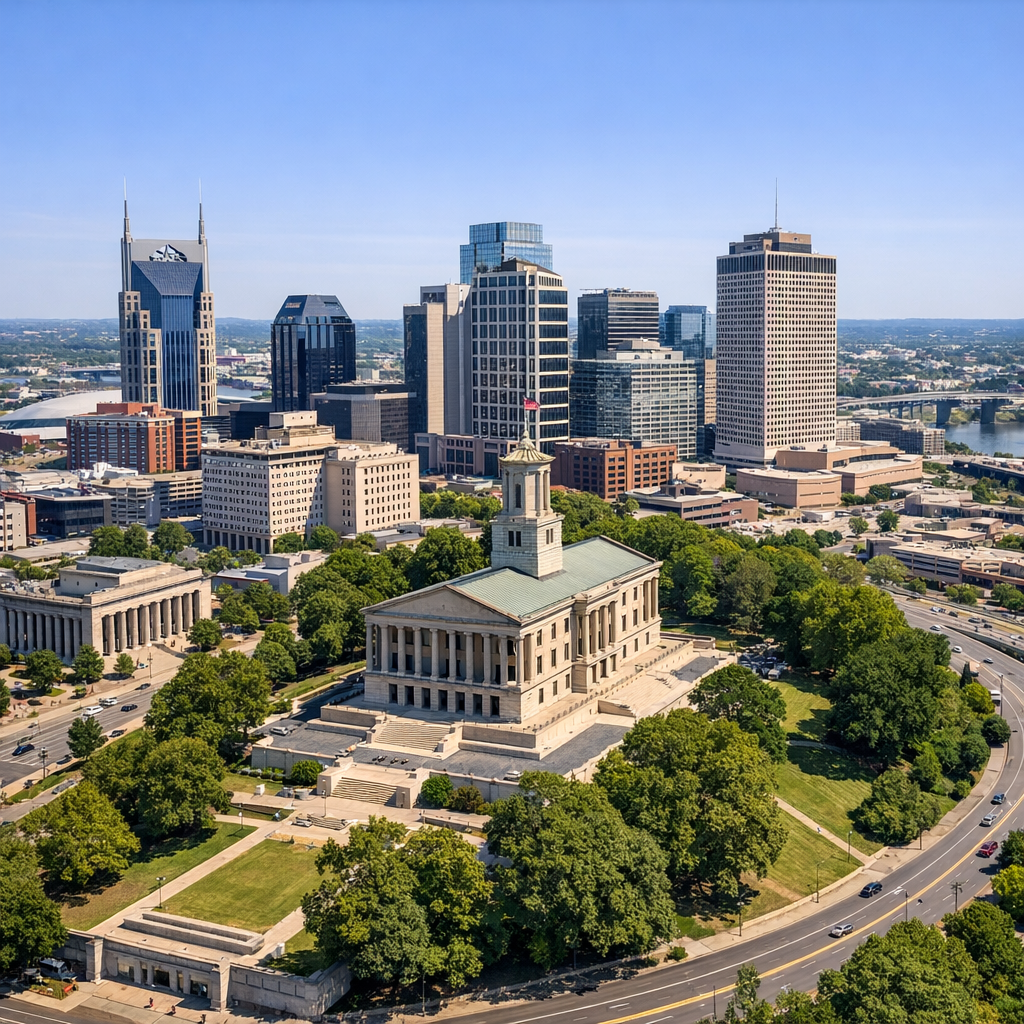
Nashville, Tennessee’s capital, stands out as a Democratic stronghold within a predominantly Republican state. This political divergence shapes the city’s governance and its interactions with state authorities.
Democratic Dominance in Nashville
Davidson County, encompassing Nashville, consistently supports Democratic candidates. In the 2024 presidential election, the Democratic nominee secured nearly 182,000 votes in Davidson County, compared to approximately 102,000 for the Republican candidate. This trend has been evident since at least 2000, highlighting the city’s steadfast Democratic alignment.
Statewide Republican Influence
Contrastingly, Tennessee as a whole leans Republican. In the same 2024 election, the Republican candidate garnered about 61% of the statewide vote. This disparity underscores the political tension between Nashville and the state government.
Legislative Tensions
The Republican-majority state legislature has enacted measures affecting Nashville’s local governance. For instance, a 2023 law aimed to reduce Nashville’s Metro Council from 40 to 20 members. Although a lower court initially blocked this move, a 2025 Tennessee Court of Appeals ruling revived the effort, emphasizing the ongoing struggle over local control.
Redistricting Controversies
Redistricting has further intensified political debates. The state legislature’s decision to divide Davidson County into multiple congressional districts diluted the city’s Democratic voting power. This move led to legal challenges alleging unconstitutional racial gerrymandering, reflecting the broader conflict between Nashville’s local preferences and state-level decisions.
Economic and Cultural Impacts
Nashville’s political landscape influences its economic and cultural development. The city’s growth, driven by sectors like healthcare and education, attracts a diverse population that often leans Democratic. However, state policies, such as restrictions on local tax authority and gun regulations, can impede Nashville’s initiatives, affecting its ability to address local needs effectively.
Understanding Nashville’s unique position as a blue city in a red state is crucial for residents and policymakers alike. The interplay between local and state politics continues to shape the city’s future, presenting both challenges and opportunities for its diverse community.