

By Daniel Rodriguez
Nashville’s economy is in a phase of both opportunity and change. What’s happening right now offers both headwinds and wind at the backs of local businesses, entrepreneurs, and those tracking economic shifts.
Small Business Gets New Support
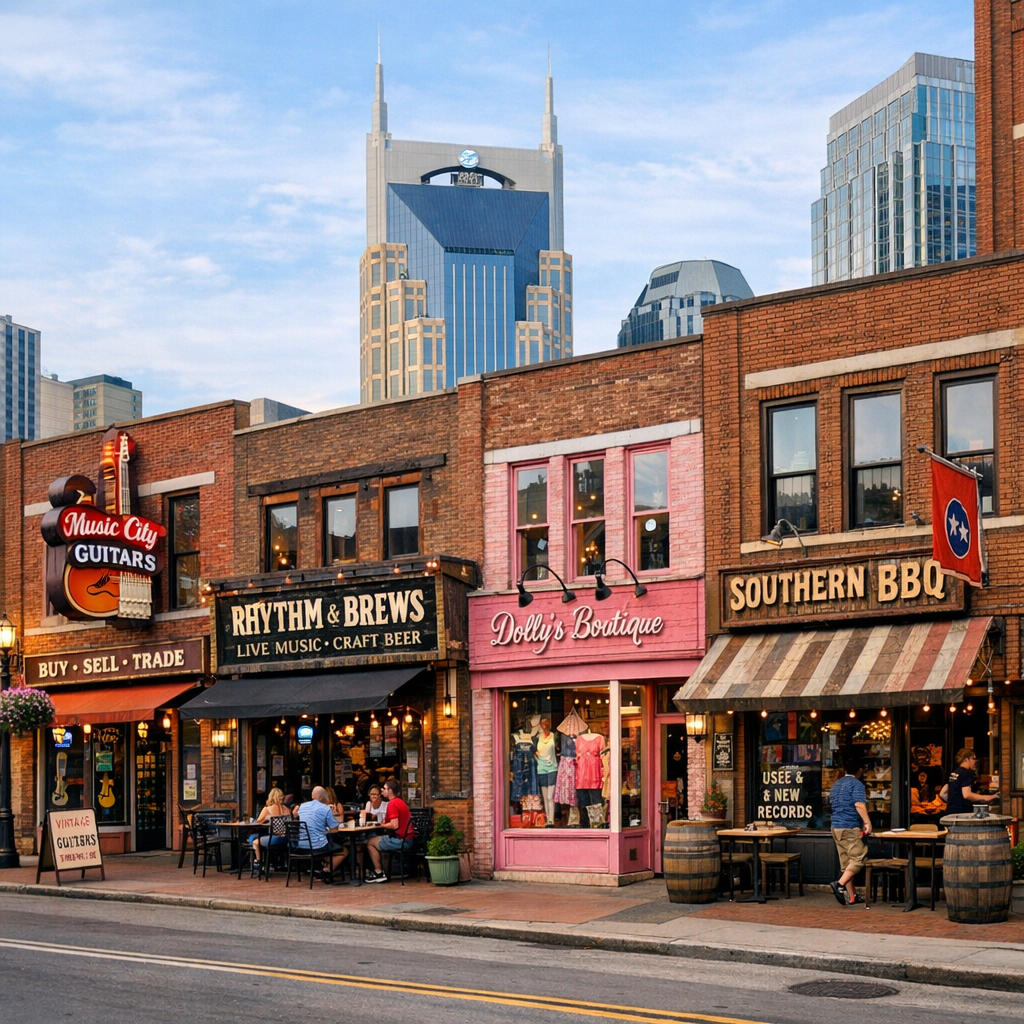
The city is moving forward with several initiatives aimed at bolstering long‐standing and emerging businesses. Mayor Freddie O’Connell recently put forward legislation including a Legacy Business Program to help firms that have been operating for 15 years or more—providing grants for modernizing operations, marketing, infrastructure, and more. Another program, the Workforce Advancement Incentive, offers up to $10,000 to assist small businesses in recruiting and retaining employees through continuing education or training. Expansion of Metro’s Property Investment Incentive is also in the works. These efforts reflect growing recognition from City Hall that small businesses are integral to Nashville’s neighborhoods and economy.
Corporate Growth & Moving Pieces
Large companies continue to choose Nashville for expansion—an example is Starbucks, which has committed around $100 million to establish a Southeast regional hub in the city, creating approximately 2,000 jobs. An entire building in Peabody Union will be dedicated for its operations soon. These corporate investments help diversify the local job base, adding strength outside the traditional music, healthcare, and tourism sectors.
The Real Estate Angle: Growth, Costs & Market Dynamics
Local commercial and industrial real estate markets are adjusting. The industrial market, in particular, has seen an expanding development pipeline, but speculative projects are outpacing immediate demand in some areas. Vacancy rates in parts of the city have drifted upward even as asking rents rise—especially in logistics and premium Class A spaces. Transportation projects and public infrastructure are increasingly underlined as essential to support this growth, particularly in the East Bank area where major developments are planned or underway.
Labor, Jobs & Key Challenges
Job growth continues albeit at a more measured pace: early 2026 saw monthly increases typically in the low‐thousands, still holding above many peer metros. Sectors like leisure and hospitality are strong, while construction and government roles have shown slower growth. Meanwhile, many local businesses say rising property taxes are squeezing margins, especially in commercial and downtown locations.
What This Means for Business Owners & Entrepreneurs
- Seek out the new grant and incentive programs—eligibility may favor businesses with a strong community identity or existing operations.
- Consider how rising rents and property taxes affect location decisions; costs can shift competitive advantage.
- Tap local talent pipelines from universities, community colleges, and skilled trade programs to grow teams.
- Plan for flexibility—especially in real estate and workforce costs—as economic tides shift.
As Nashville continues to grow, local business owners and entrepreneurs who stay informed—about both the incentives available and the rising costs around them—are best positioned to thrive.