

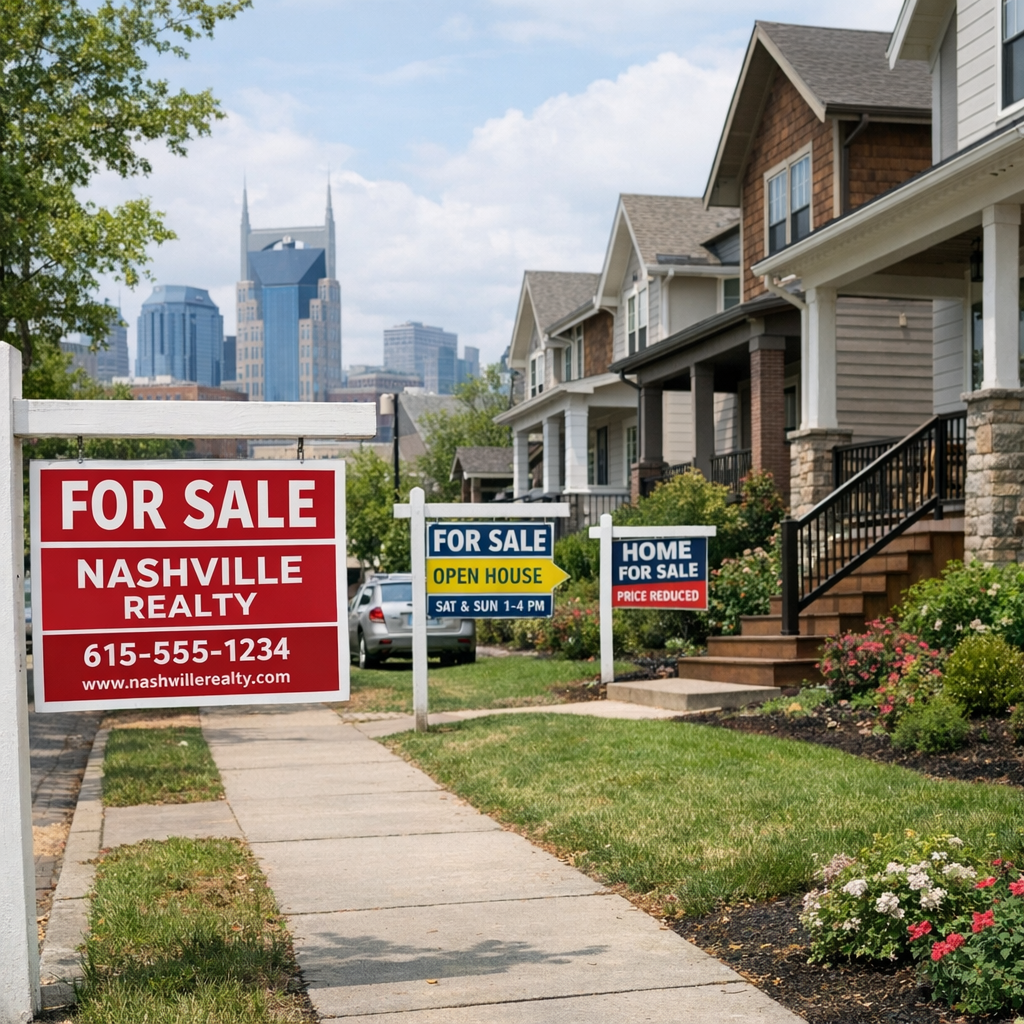
Nashville’s housing market is experiencing notable changes, presenting both challenges and opportunities for buyers and sellers. Understanding these trends is crucial for making informed decisions.
Market Trends
Recent data indicates a shift toward a more balanced market. The median sale price of homes in Nashville has seen a slight decrease, with some reports noting a 3.3% decline over the past year, bringing the average home value to approximately $436,603. Additionally, homes are spending more time on the market, averaging around 70 days before sale. This extended timeframe suggests that buyers have more negotiating power and options to consider.
Inventory and Listings
The number of active listings has increased, providing buyers with a broader selection of properties. In March, active listings reached 2,642, marking a 9.8% increase from the previous year. This rise in inventory contributes to a less competitive environment, allowing buyers to explore various options without the pressure of rapid decision-making.
Rental Market
For those considering renting, the average rent in Nashville stands at $1,825, slightly below the national average of $1,965. This stability in rental prices offers an alternative for individuals not yet ready to commit to purchasing a home.
Local Developments
Several development projects are underway, reflecting the city’s growth and potential impact on the housing market. For instance, the DC Blox data center project near the Nashville Zoo is progressing despite new regulations. Such developments can influence local property values and attract additional investments to the area.
Conclusion
Nashville’s housing market is evolving, with increased inventory and slight price adjustments creating a more favorable environment for buyers. Sellers may need to adopt strategic pricing and marketing approaches to attract interest. Staying informed about these trends and local developments will be essential for anyone navigating the real estate landscape in Nashville.