

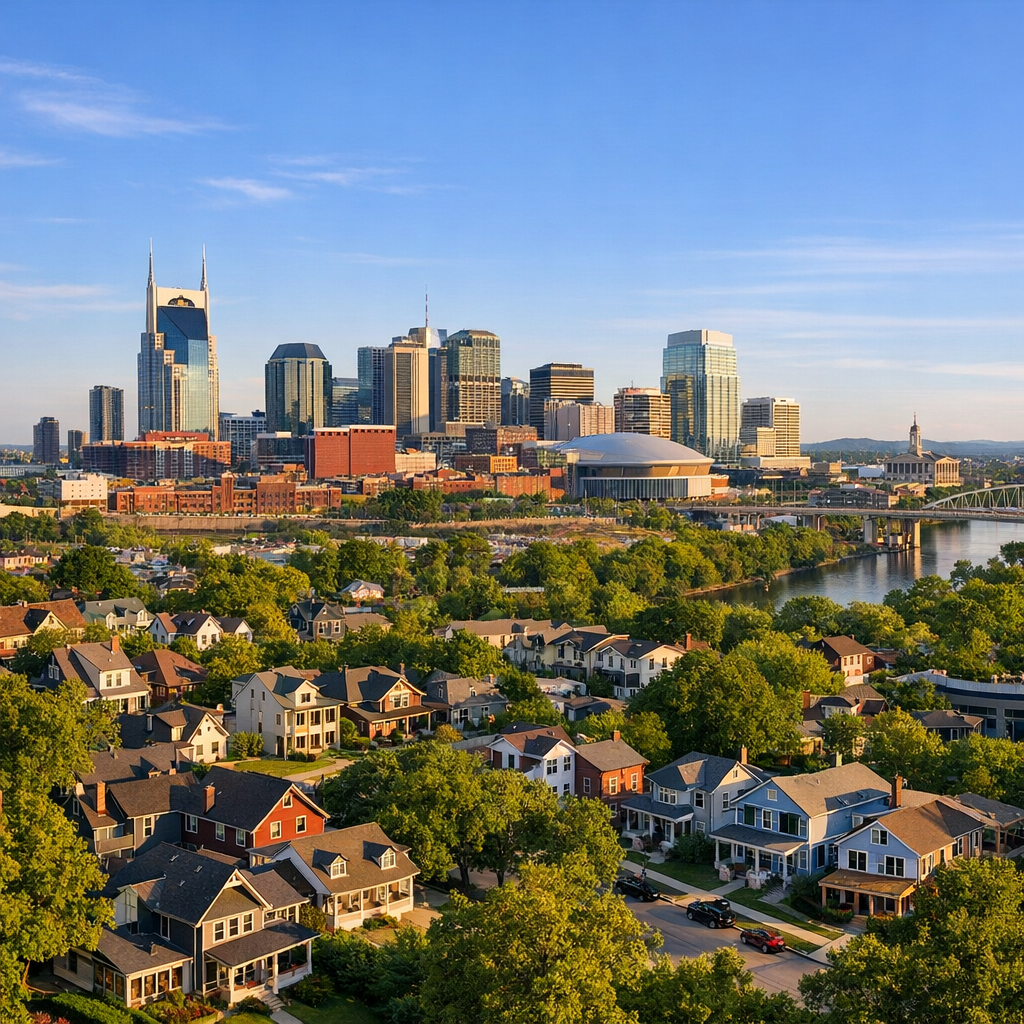
Nashville’s real estate market is experiencing significant changes, offering both challenges and opportunities for buyers and sellers alike.
Market Trends
Recent data indicates a shift toward a more buyer-friendly market. As of May 2026, active listings in Nashville increased by 12.3% year-over-year, providing buyers with a broader selection of properties. This surge in inventory has contributed to a slight decrease in median list prices, with more than one in five active listings undergoing price reductions. Consequently, buyers now have greater negotiating power, while sellers are encouraged to adopt strategic pricing and marketing approaches to attract interest.
Home Prices and Sales
The median sale price of homes in Nashville was $475,000 over the three months ending in May 2026, marking a modest 0.5% increase compared to the same period last year. However, homes are spending more time on the market, averaging 70 days before sale, up from 58 days the previous year. This trend suggests a cooling market where buyers can afford to be more selective.
Rental Market
For renters, the average rent in Nashville stood at $1,825 as of June 2026, slightly below the national average of $1,965. This stability in rental prices offers some relief to residents amid the broader market fluctuations.
Local Developments
Several significant developments are reshaping Nashville’s landscape. The East Bank redevelopment project made substantial progress in 2025, with key milestones including advancements on the new Titans stadium and plans for a riverfront arts center. Additionally, the Belle Meade Plaza is set to host a new luxury residential project, 1 Iris Lane, featuring upscale condos starting at $2.5 million. These projects reflect Nashville’s ongoing growth and the increasing demand for diverse housing options.
In contrast, the city is taking steps to preserve community interests. The Metro Council recently approved the use of eminent domain to prevent a $700 million data center development adjacent to the Nashville Zoo, citing concerns over potential disruptions to the zoo’s operations and visitor experience.
Conclusion
Nashville’s real estate market is in a state of transition. Buyers are finding more opportunities with increased inventory and stable prices, while sellers must adapt to a more competitive environment. Staying informed about these trends and developments is crucial for making well-informed decisions in this evolving market.