

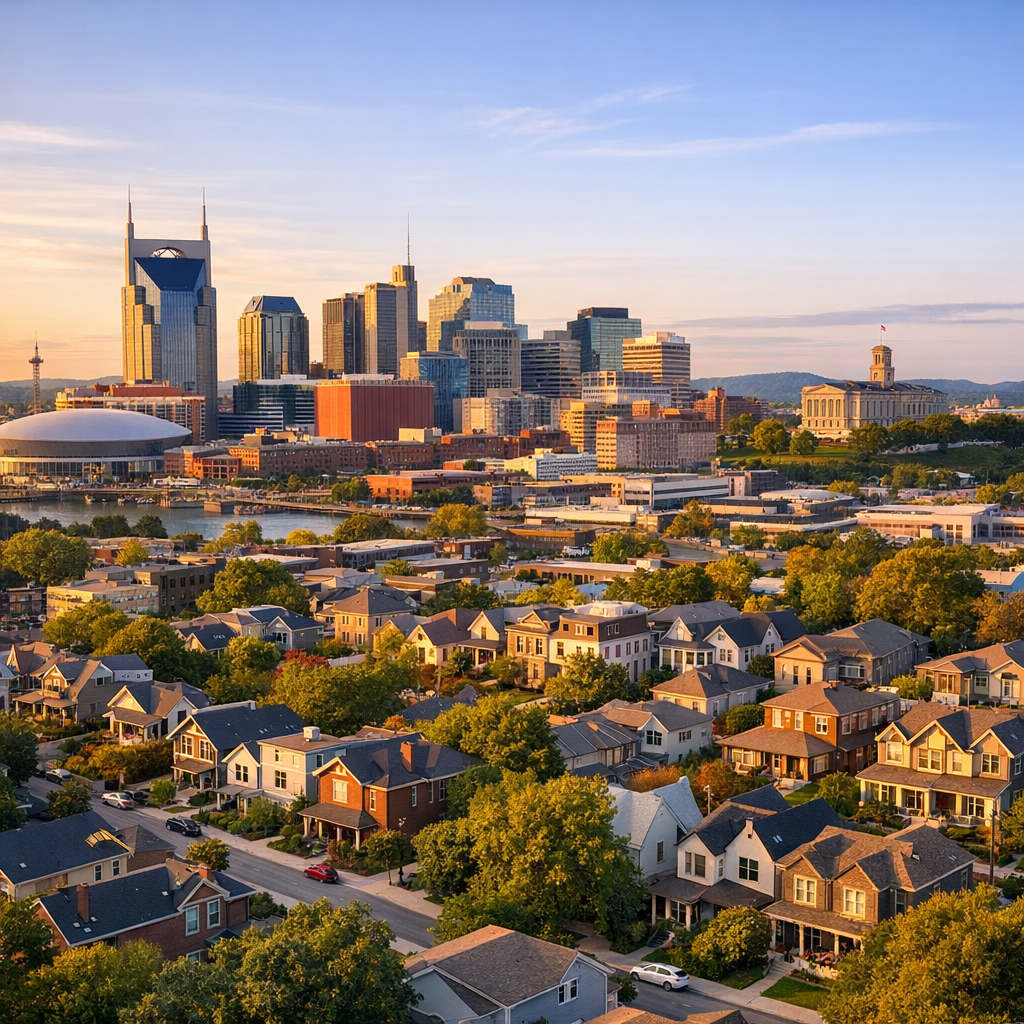
Nashville’s real estate market is experiencing notable shifts, presenting both challenges and opportunities for buyers and sellers alike. Understanding these trends is essential for making informed decisions in this dynamic environment.
Current Market Trends
Recent data indicates a slight increase in home prices. Over the three months ending May 2026, the median sale price of a home in Nashville was $475,000, marking a 0.5% rise compared to the same period last year. However, the median sale price per square foot decreased by 2.0%, now standing at $276. Homes are also spending more time on the market, averaging 70 days before sale, up from 58 days the previous year. Additionally, the number of homes sold in May increased to 2,831, a 3.7% year-over-year growth.
Inventory and Buyer Dynamics
The market is tilting in favor of buyers due to a notable increase in housing inventory. As of March 2026, there were 12,315 properties available for sale, a 12% rise from the previous year. This surge, combined with lower interest rates, is empowering buyers with greater negotiating power, leading sellers to adopt creative tactics such as offering incentives. Although home prices have decreased slightly—condo prices fell from $350,000 in February 2025 to $338,500 last month—overall prices remain significantly higher than in past years, continuing to price out some buyers.
Neighborhood Spotlight: Antioch
Antioch (ZIP code 37013) continues to lead Nashville’s real estate market, recording 1,121 home sales in 2025. This marks the third consecutive year Antioch has topped the list, emphasizing its rapid growth in southeastern Davidson County. Rising home prices in popular areas like East Nashville have pushed buyers toward more affordable destinations like Antioch, which is also benefiting from new amenities such as Tanger Outlets and an upcoming In-N-Out.
Development Projects and Community Impact
Significant development projects are underway, influencing the local real estate landscape. For instance, DC Blox is proceeding with its plan to build a 69,000-square-foot data center near the Nashville Zoo, despite public and environmental opposition. Over 500,000 individuals have signed a petition against the project, and two environmental organizations have criticized its potential threat to endangered species in the area. While the Metro Planning Commission has approved measures to limit future data center developments, DC Blox remains undeterred, emphasizing its commitment to transparency and environmental responsibility.
In response, Nashville Mayor Freddie O’Connell is taking steps to block the proposed data center by filing eminent domain legislation. This move would grant the city authority to acquire the land, currently owned by MarketStreet Enterprises and under contract to be sold to DC Blox for $23 million. O’Connell stated the city has a legitimate public need for the property and acknowledged widespread community and zoo-related concerns about the project.
Conclusion
Nashville’s real estate market is in a state of flux, with increasing inventory, shifting buyer dynamics, and significant development projects shaping the landscape. Staying informed about these trends is crucial for anyone looking to navigate the market effectively.