

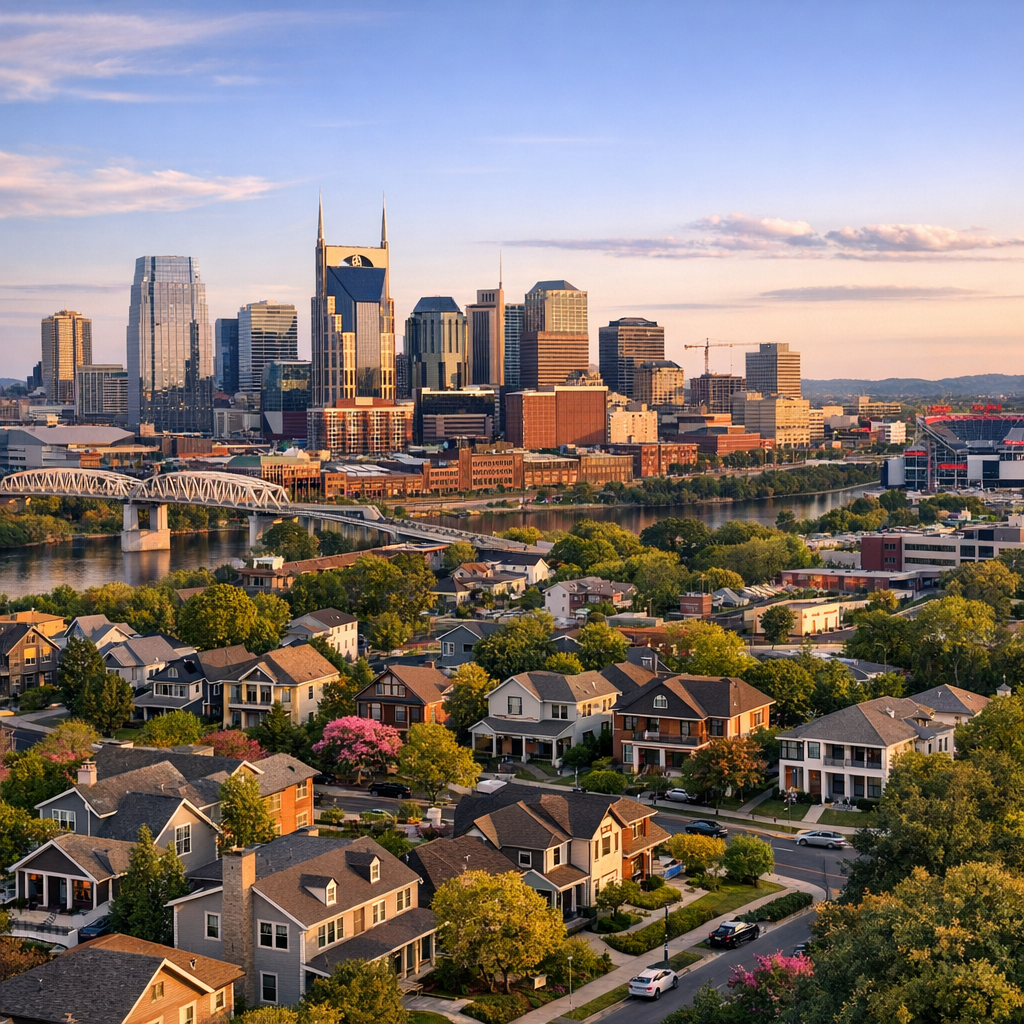
Nashville’s real estate market is experiencing notable shifts, presenting both challenges and opportunities for buyers and sellers alike.
Market Trends
Recent data indicates a slight decrease in home values. As of May 2026, the average home value in Nashville stands at $436,519, reflecting a 3.3% decline over the past year. Homes are typically going under contract in approximately 22 days, suggesting a market that remains active despite the dip in prices.
Inventory and Sales
The housing inventory has seen a significant increase. In March 2026, active listings reached 2,642, marking a 9.8% rise from the previous year. This surge provides buyers with more options and has contributed to a shift towards a more balanced market. Consequently, sellers are adopting creative strategies, such as offering incentives, to attract potential buyers.
Neighborhood Highlights
Antioch (ZIP code 37013) continues to lead in home sales, recording 1,121 transactions in 2025. This marks the third consecutive year Antioch has topped the list, emphasizing its rapid growth in southeastern Davidson County. The area’s affordability and new amenities, including the Tanger Outlets and an upcoming In-N-Out, have bolstered its appeal.
Development Projects
Several development projects are shaping Nashville’s landscape. Notably, DC Blox is proceeding with plans to build a 69,000-square-foot data center near the Nashville Zoo, despite significant public and environmental opposition. Over 500,000 individuals have signed a petition against the project, and two environmental organizations have criticized its potential threat to endangered species in the area. While the Metro Planning Commission has approved measures to limit future data center developments, DC Blox remains undeterred. The company insists the project will comply with all regulations concerning light, sound, stormwater, and energy use and emphasizes its commitment to transparency and environmental responsibility. Nonetheless, environmental and community concerns remain key points of contention.
Additionally, a new lawsuit has been filed against the city of Nashville by a group of residents aiming to halt the construction of a new parking structure at Cheekwood Estate & Gardens. This legal action escalates a longstanding dispute over traffic and land use surrounding the historic botanical garden, which has grown into a major Nashville attraction. Cheekwood initiated the construction project after receiving Metro approval, prompted by the upcoming expiration of an overflow parking arrangement on Metro Parks property. The lawsuit follows a prior unsuccessful zoning appeal and seeks to enforce zoning, noise, and traffic regulations. In response, Cheekwood has mounted a “Save Cheekwood” campaign, arguing the legal actions threaten visitor access and could potentially shut down the institution. Cheekwood denies intentions of expansion, citing a 15% decline in attendance over the past five years from a pandemic-era high of 435,000 visitors annually.
Conclusion
Nashville’s real estate market is in a state of flux, influenced by changing home values, increased inventory, and significant development projects. Staying informed about these trends is essential for making strategic decisions in this dynamic environment.