

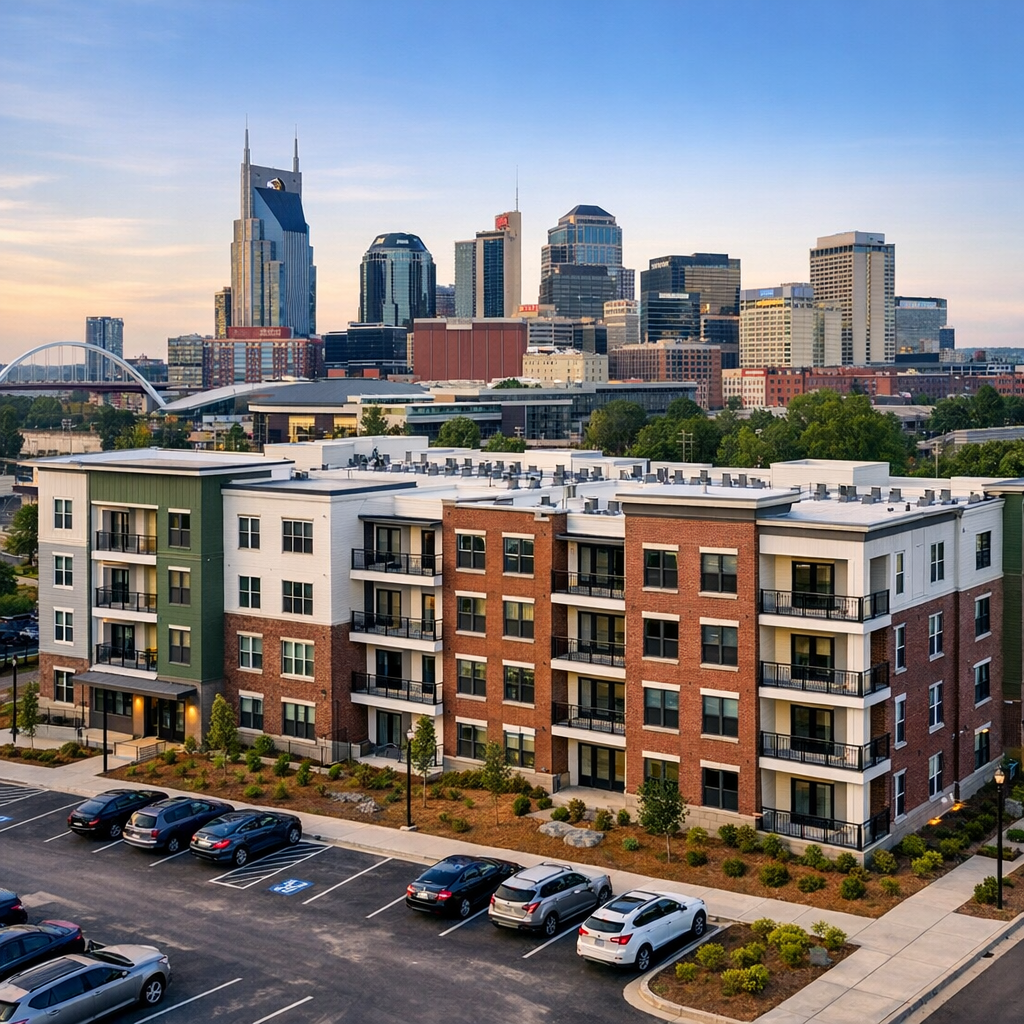
Nashville’s housing scene remains a dynamic mix of opportunity, challenge, and innovation. For those navigating homeownership, renting, or simply imagining the city’s future, several trends are defining where the market is headed.
Home Prices and Market Pressure
Single‐family home prices in the Greater Nashville area have continued their climb. The median price reached roughly $537,000 in June for single‐family homes across nine Middle Tennessee counties. Persistent population growth, land costs, and strong demand are driving prices upward.
Inventory remains tight, which adds upward pressure on prices even as mortgage rates fluctuate. Many buyers are competing in a market where “cash offers” and bidding wars are still common, especially in hot neighborhoods close to amenities and transit.
Development and Affordable Housing Efforts
One of the most significant projects underway is Eastpoint Flats, the first 100% affordable housing development in the East Bank’s Eastpoint district. It will include 323 income‐restricted units, along with childcare and retail spaces—and its land is secured through a 99-year ground lease to help preserve affordability long term.
Meanwhile, the Unified Housing Strategy (UHS) unveiled by Metro Nashville lays out a comprehensive roadmap. It emphasizes the need for mixed-income housing, zoning reforms, infrastructure investment, and tools to support homeownership opportunities.
There are existing gaps: almost half of renter households are cost-burdened. For households at or below 50% of area median income, only about 48 affordable homes exist per 100 such renters.
Policy Shifts & Neighborhood Impacts
To meet the rising demand, city government is exploring changes to zoning and land use policies. The goal is to increase housing types—beyond just large single‐family homes—and let more units be developed along transit corridors and major thoroughfares.
Redevelopment districts administered by MDHA (Metropolitan Development and Housing Agency) are another lever. In these zones, design review guidelines encourage mixed land use, architectural compatibility, and sustainable development to preserve neighborhood character while allowing growth.
What Homebuyers & Renters Should Know
If you’re looking to buy:
- Expect competition and act quickly—good listings don’t stay long.
- Look at neighborhoods {just} outside the city center for better value.
- Factor in long‐term maintenance, taxes, and utility costs when calculating affordability.
If you’re renting or seeking affordable housing:
- Watch for new affordable units tied to city or nonprofit projects—applications may have waiting lists.
- Explore housing vouchers or programs offered by MDHA or Metro’s housing division.
- Keep tabs on redevelopment or infill projects in your area—they may bring opportunities, but also changes in neighborhood dynamics.
Looking Ahead
Efforts like the City’s plan to build thousands of mixed-income units, stronger zoning tools, and transit‐oriented development indicate that Nashville is leaning into addressing its housing challenges. While no single project will solve affordability, the combination of policy reform, private & public partnership, and community input offers hope.
In the months to come, watching how these plans are implemented—and where attention turns—will be crucial. For Nashvillians, staying informed means staying empowered as the housing landscape shifts.