

By Mia Wilson
Nashville continues to evolve rapidly—not just in culture and music but in how we live. Whether you’re looking to rent, buy or invest, certain trends are moving fast in our housing market. Here’s what’s happening, and how to get in ahead.
1. Home Prices & Listings: More Choices, Higher Costs
The median sale price for homes in Nashville is around $465,000, according to recent tracking data. That puts single-family homes and condos at much higher price points than the U.S. average. Yet, inventory has started to loosen a bit, meaning more homes for sale and slightly longer time on the market for sellers.
For buyers, that can be good news—but not easy news. Even as interest rates remain a barrier, having more options gives room to negotiate. Neighborhoods farther out from downtown still offer lower entry costs, though commute time and amenities will vary.
2. Rental Market Pressure
Rent prices have been rising steadily, particularly for newer multi-family units close to downtown, transit, and mixed-use zones. Long-term renters are seeing fewer bargains and more competition, especially for apartments with amenities like gyms, green space or parking.
For people priced out of the core, looking in the suburbs or older neighborhoods with infill or adaptive reuse housing can be a strategy. Some nonprofit and workforce housing conversions are starting to fill gaps in affordable inventory, though demand still outpaces supply.
3. New Projects & Neighborhood Shifts
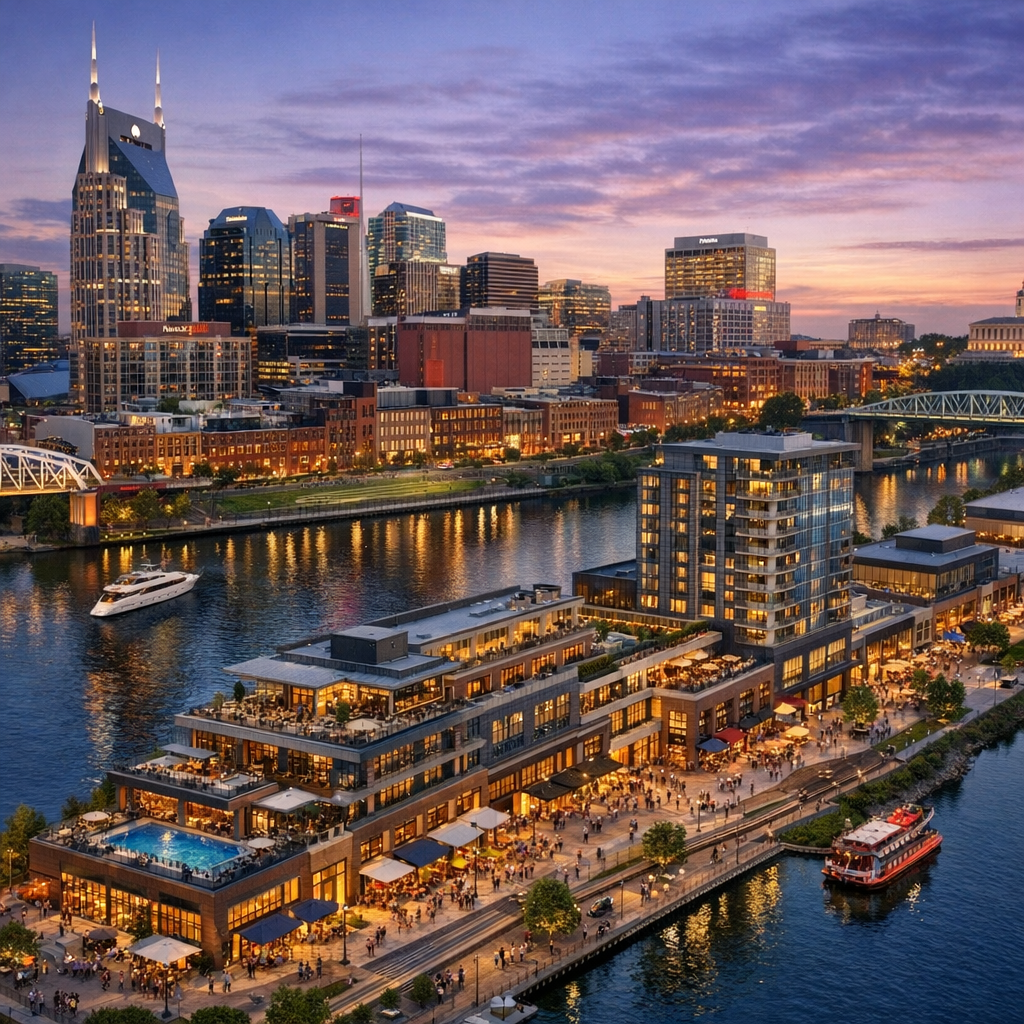
Several major mixed-use projects are either under construction or planned across East Bank, Wedgewood-Houston, the Gulch, SoBro, and Belle Meade. These involve not just housing but hotels, retail, and cultural amenities—aimed at creating more walkable, amenity-rich neighborhoods.
One high-visibility project is the East Bank redevelopment, which includes the new Titans stadium, a Tennessee Performing Arts Center headquarters, and private development around core areas. Public funds from former convention center allocations are being redirected to help support infrastructure, affordable housing components, and connectivity.
4. What Buyers, Renters & Neighbors Should Keep in Mind
For Buyers
- Clarify your total budget—not just mortgage, but taxes, maintenance, parking, and commute costs.
- Consider emerging neighborhoods. Prices tend to be lower where infrastructure developments are recent or planned.
- Don’t ignore timing. Being prepared—pre-approval, knowledge of market comps—can give you leverage in competitive listings.
For Renters
- Ask about rent escalations and the duration of leases; newer buildings often have higher rates but limited stability.
- Check for hidden costs—utilities, parking, amenity fees can add up.
- Explore subsidized or workforce housing options, especially in neighborhoods undergoing change.
For Community & Developers
- Community input is critical, especially around issues like scale, traffic, and affordable housing inclusion.
- Developers who prioritize connectivity—public transit, walkability, parks—tend to gain stronger neighborhood support.
- Keep an eye on policy shifts: zoning, stairway requirements, density changes can affect what gets built and where.
5. Long-Term Outlook: Sustainable Growth Matters
With thousands of residential units in the pipeline, Nashville’s horizon will include more people, more buildings, and more demands on infrastructure. Mixed-use development may help make better use of land, while public investment in transit, parks, and services will be key to livability.
Equity and affordability remain the greatest challenges. While large developments may include affordable housing components, those often make up a small fraction of total units. Meaningful gains will likely come through smaller infill development, conversions, and policy that supports lower-cost housing.
Nashville’s housing story is still being written—and whether you’re buying a first home, renting, or planning a development, there’s a place in it. Staying informed, realistic, and community-minded will help everyone make good choices.