

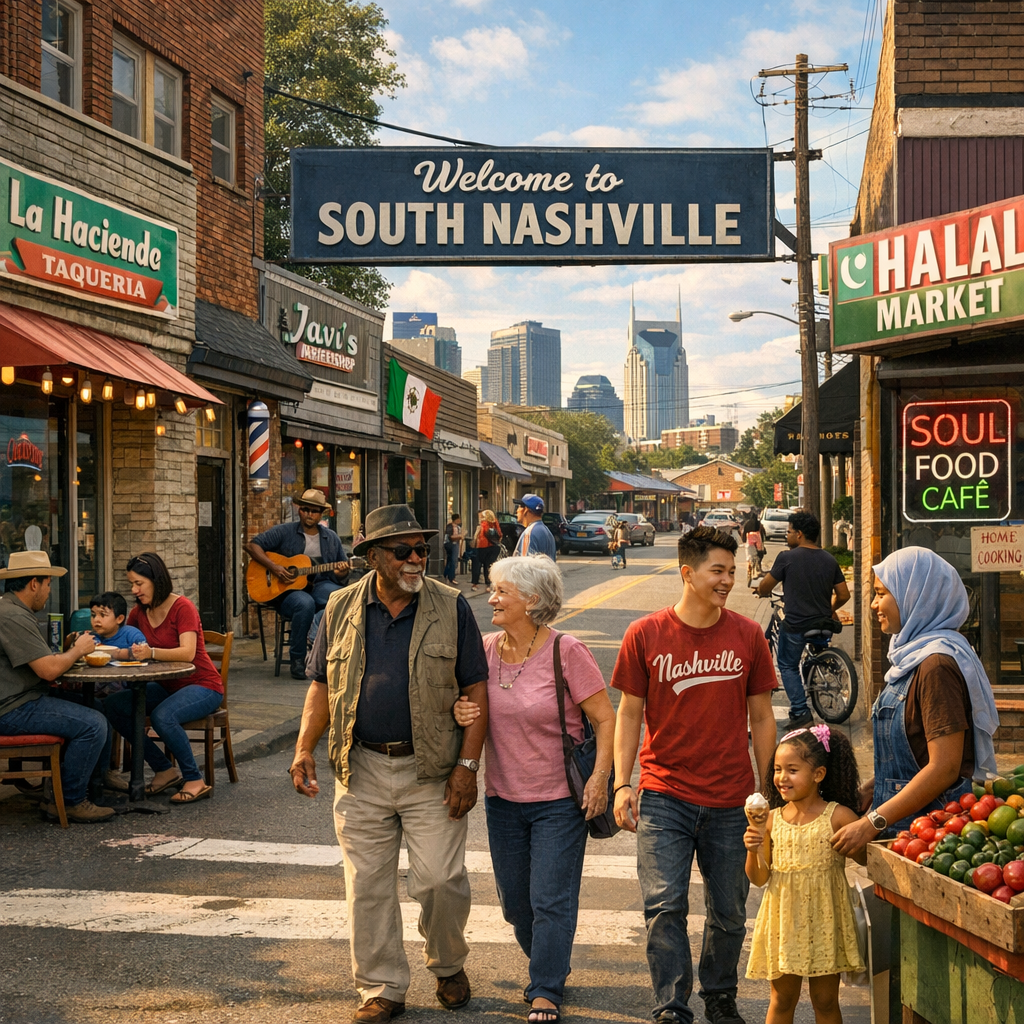
In recent years, Nashville has experienced significant growth, with international migration playing a pivotal role. According to the U.S. Census Bureau, nearly 38,000 people moved to the Nashville metro area from other countries between 2020 and 2024, accounting for about 28% of the region’s total growth during that period.
However, this growth has been accompanied by challenges, particularly concerning federal immigration enforcement. In May 2025, operations conducted by U.S. Immigration and Customs Enforcement (ICE) and the Tennessee Highway Patrol led to nearly 200 arrests in Nashville. These actions have had profound effects on the local community.
Economic Impact
Local businesses, especially those in South Nashville, have reported significant declines in sales. For instance, a family-owned restaurant experienced a 40% drop in sales following the enforcement actions. The fear among residents has led to decreased patronage, affecting the livelihoods of many business owners and employees.
Educational Challenges
The impact extends to the educational sector as well. Metro Nashville Public Schools (MNPS) observed a sharp rise in absenteeism among immigrant students after the raids. Teachers reported that students stayed home out of fear, even without confirmed ICE presence at schools or bus stops. This disruption has compounded existing challenges, affecting students’ learning and emotional well-being.
Community Response
In response to these challenges, local leaders have taken steps to support the immigrant community. Nashville Mayor Freddie O’Connell acknowledged the deep community harm caused by the enforcement actions and initiated efforts to assist affected residents. Additionally, Metro Council members have proposed new policies and funding to support immigrants, including displaying signs listing legal rights in government buildings.
While national policies on immigration enforcement continue to evolve, their local implications are profound. Nashville’s experience underscores the need for balanced approaches that consider both national security and the well-being of local communities.