

By Sophia Anderson
Nashville is in a moment of transformation. Recent years have brought ambitious plans for more affordable housing, upgraded transit options, and enhanced public safety. But as Metro moves forward, many neighborhoods are asking: are these changes reaching everyone? Here’s what city-level work has accomplished—and where gaps remain.
Building an Inclusive Housing Strategy
Earlier, Nashville released its Unified Housing Strategy (UHS), a first-of-its-kind roadmap to address housing affordability and stability across the city. It highlights seven core priorities—everything from preserving existing homes to promoting homeownership opportunities, improving accessibility, and aligning public resources. The UHS was shaped through extensive community input over 2024 and includes a Ten–Year Implementation Plan to guide investments and policy changes. Many actions are underway. Metro’s annual Action Plan (2026–2027) will impact grant allocations aimed at low- and moderate-income areas and help support programs like HOME, ESG, and Community Development Block Grants. MDHA is leading many of these efforts under coordination from Metro’s Housing Division.
What’s working well
- The Unified Housing Strategy combines policies, financial resources, and accountability—all under one framework.
- MDHA manages over 6,700 affordable units and more than 7,000 housing vouchers—serving around 30,000 residents—offering stability to many households.
- Public-facing dashboards and reporting tools allow residents to track progress on affordability metrics and funding usage.
Challenges to address
- Demand still outweighs supply: Waitlists for affordable housing units remain long, especially for those near transit or in walkable neighborhoods.
- Rising construction and land costs continue to push up housing prices, making new affordable developments harder to build.
- Infrastructure and planning rules—especially zoning—sometimes block the smaller-scale housing types that might better serve working families and individuals.
Transit, Streets, and Shared Mobility
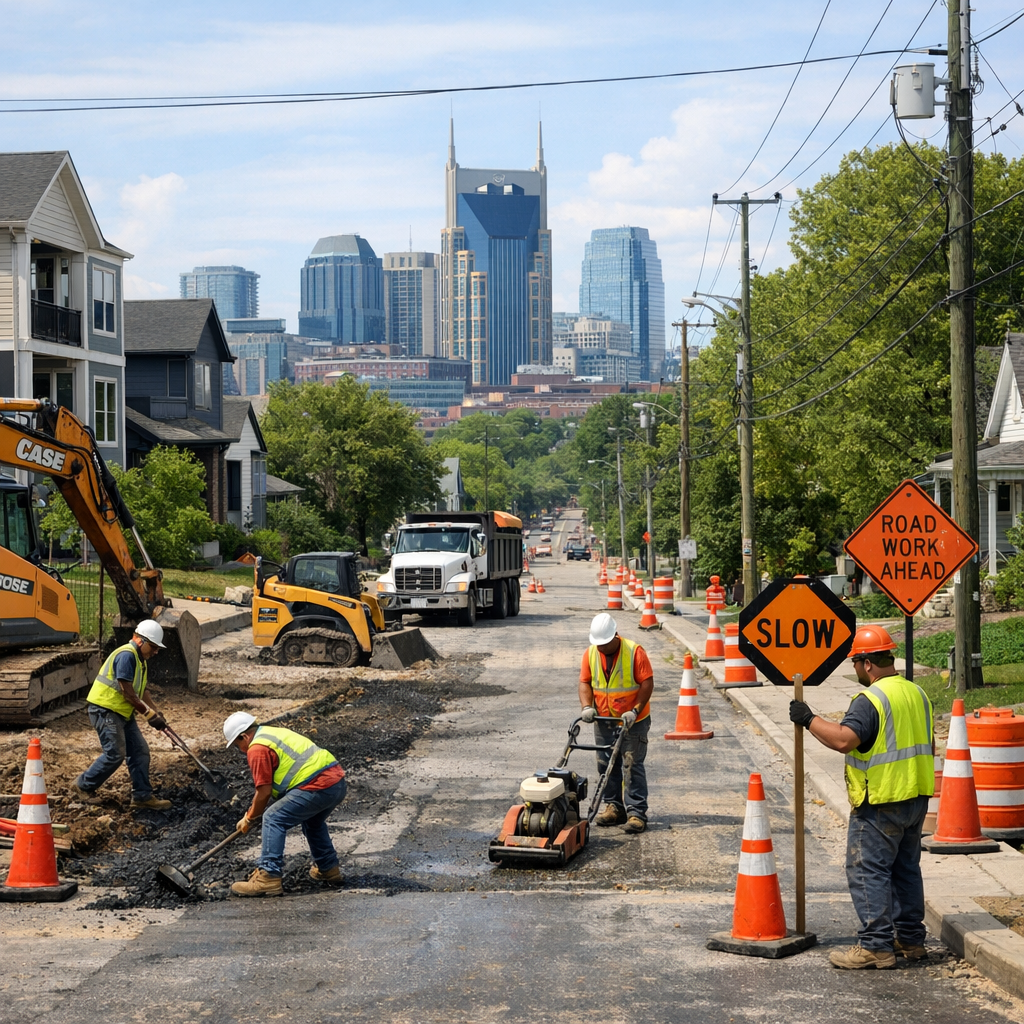
The Choose How You Move transportation program, approved by voters, is laying down a vision for better sidewalks, safer streets, upgraded traffic signals, and more reliable transit. One marquee project is the Nolensville Pike All-Access Corridor, a nine-mile stretch from Downtown to South Nashville, targeting high-capacity transit, sidewalks, and safety enhancements. The city is also rolling out new pavement markings, concrete dividers, and raised crosswalks aimed at protecting people who walk, ride bikes or scooters.
Community wins
- Investment in transit corridors like Nolensville Pike offer the potential of more equitable access, especially for neighborhoods underserved by public transit.
- Physical safety upgrades—raised crosswalks, clearer markings, concrete separators—are making visible differences and helping reduce dangerous interactions between pedestrians and traffic.
- More frequent community input sessions help ensure that the design of projects aligns with local residents’ daily needs.
Ongoing hurdles
- Construction timelines and funding often lag behind what residents expect—some delays are unavoidable but erode community trust.
- Corridors still need attention: areas outside the urban core—where reliance on cars is higher and sidewalks or safe crossings are sparse—are catching up more slowly.
- Maintaining affordability near improved transit is still a concern: investments can increase property values, risking displacement unless preservation and inclusion policies keep pace.
Safety, Governance, and Community Voice
Safety metrics show progress: citywide crime rates, including burglary and robbery, are falling, and homicide rates have dropped in recent years. Staffing up police precincts and expanding resources for community task forces are part of that effort. Meanwhile, Metro is increasingly seeking resident input in planning—through engagement tools like public hearings, advisory committees, and online platforms.
What’s changing
- Dedicated budget resources are increasingly factoring into safety and infrastructure improvements.
- Smart and responsive governance—especially around transit and land use—is being viewed more as a partnership between government and neighborhoods.
Source of tension
- Residents in many neighborhoods express concern over pace of change and whether their voices are fully heard—especially under rezoning or development near highly valued areas.
- Balancing growth and preserving what gives neighborhoods character—including affordable housing, green space, cultural landmarks—remains a delicate job for planners and local leaders.
What to Look for Moving Forward
If Nashville’s recent efforts continue, what should residents watch for?
- Launch of new affordable housing projects under the UHS that prioritize both proximity to transit and long-term occupancy for current residents.
- Tracking of Choose How You Move capital investment: when and where sidewalks are built, streets made safer, crosswalks raised, and transit frequency increased.
- Presence of elected forums and opportunities in every neighborhood to shape planning decisions—rezoning, tax changes, infrastructure upgrades.
Nashville’s path toward affordability, safety, and connectivity is no longer just a vision—it’s a work in progress. With attention to inclusivity, transparency, and long-term stability, these changes stand a chance of improving life for all Nashvillians—not just in the city center, but in every corner.