

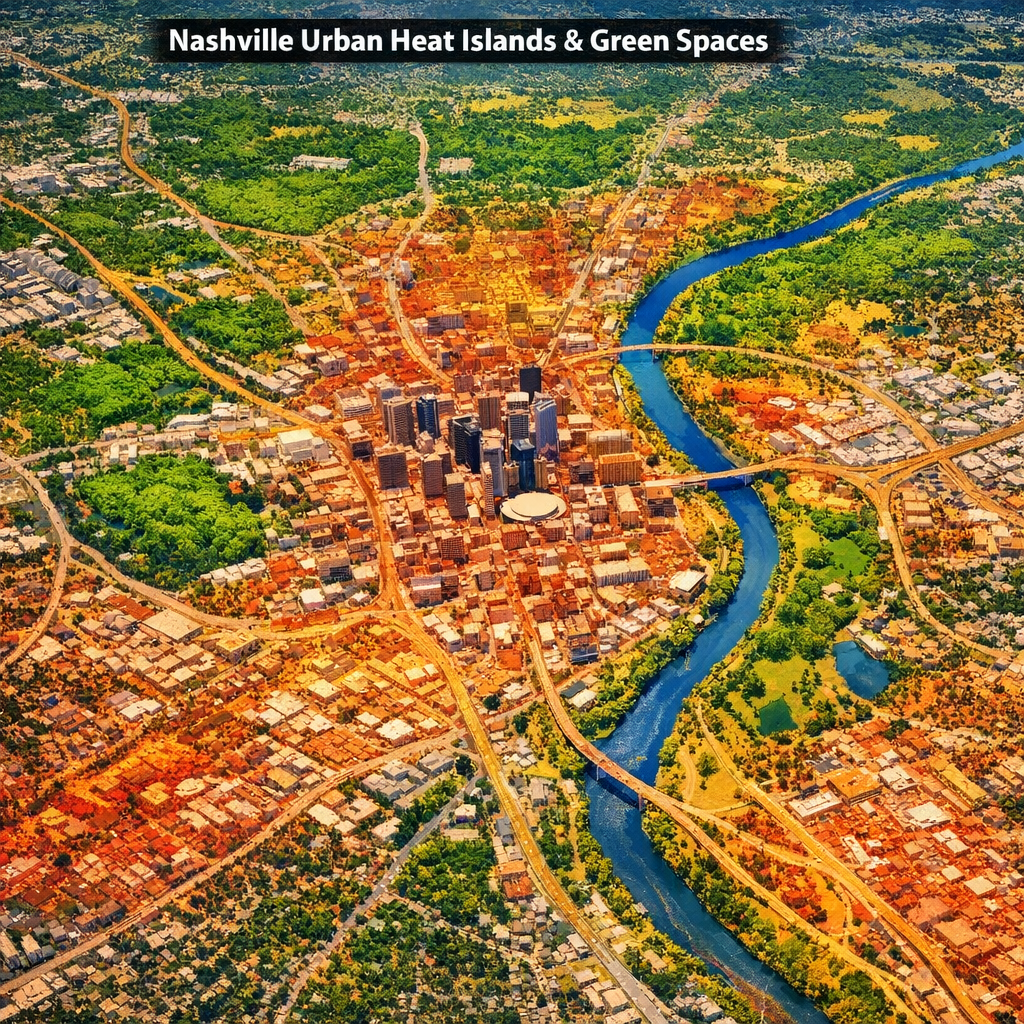
Nashville’s climate is undergoing noticeable changes, with increasing instances of extreme weather events impacting the community. Understanding these shifts is crucial for residents and policymakers alike.
Rising Temperatures and Heat Islands
Recent studies indicate a significant rise in Nashville’s temperatures. The city experiences a humid subtropical climate, characterized by hot, humid summers and mild winters. However, the frequency and intensity of heatwaves have increased, leading to concerns about urban heat islands—areas where infrastructure like buildings and roads absorb and re-emit heat more than natural landscapes. Notably, 71% of Nashville residents live in neighborhoods considered heat islands, exacerbating the effects of extreme heat, especially in historically lower-income areas.
Intensifying Rainfall and Flood Risks
Alongside rising temperatures, Nashville has seen an uptick in heavy downpours. Research shows that hourly rainfall intensity in the city has increased by 12% since 1970. This trend heightens the risk of flash floods, posing challenges to infrastructure and public safety.
Winter Storms and Ice Accumulation
While summers are becoming hotter, winters are also presenting new challenges. Nashville has experienced severe winter storms with significant ice accumulation, leading to hazardous conditions and widespread power outages. For instance, a historic ice storm in early 2026 left over 232,000 households without electricity at its peak.
City Initiatives for Climate Resilience
In response to these challenges, Nashville has developed a Climate Adaptation and Resilience Plan. This comprehensive strategy aims to prepare the city for climate-driven disruptions by enhancing infrastructure, promoting sustainable practices, and supporting vulnerable communities.
Additionally, the city has launched initiatives like the Heat Mapping Campaign to identify and mitigate urban heat islands. By engaging local experts and community volunteers, Nashville is working to understand temperature variations across neighborhoods and implement targeted interventions.
Community Engagement and Future Outlook
Addressing climate change requires collective effort. Residents can contribute by staying informed, participating in local sustainability programs, and adopting practices that reduce environmental impact. As Nashville continues to grow, integrating climate resilience into urban planning and community development will be essential to ensure a sustainable and livable future for all.