

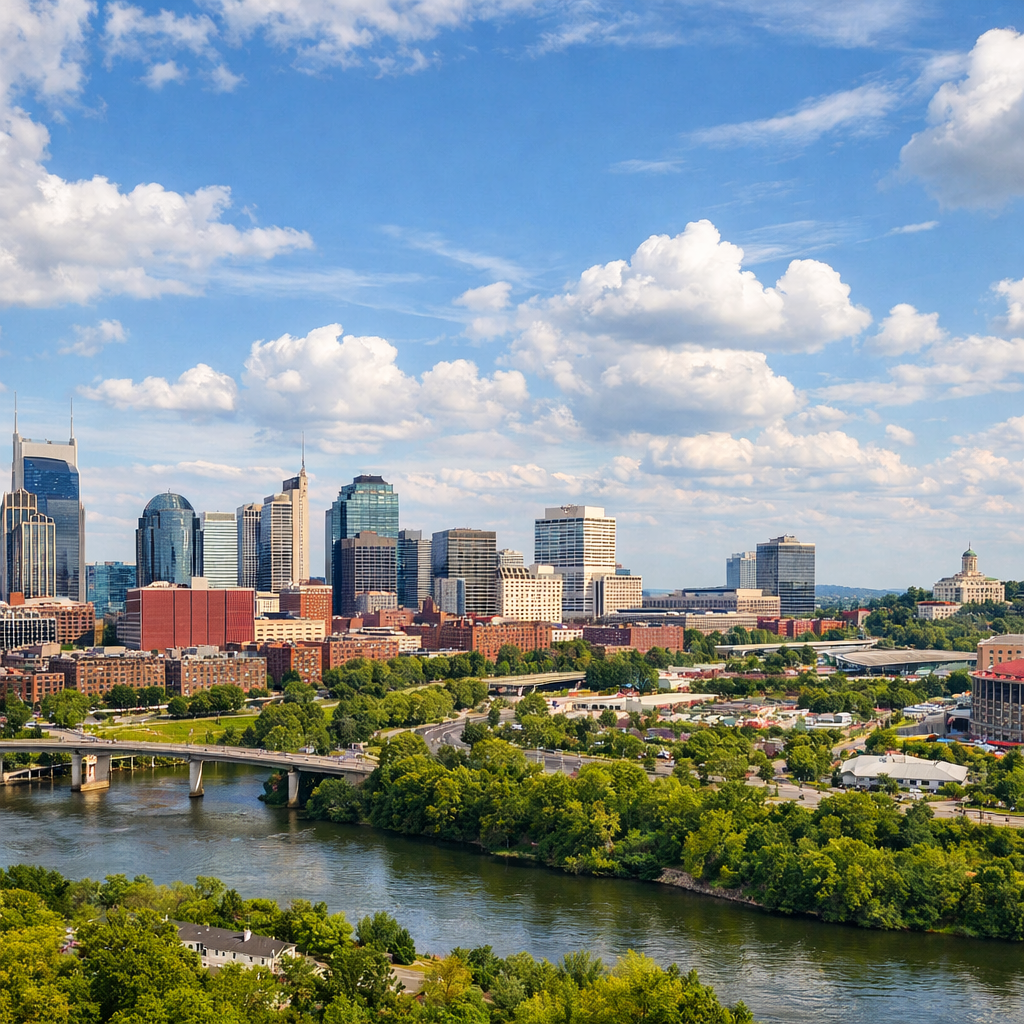
Nashville, Tennessee, experiences a humid subtropical climate characterized by hot, humid summers and mild to cool winters. Understanding these patterns can help residents prepare for the city’s diverse weather conditions.
Seasonal Overview
Summer
Summers in Nashville are typically hot and muggy, with average high temperatures around 89°F (31.7°C) in July. The season often brings thunderstorms, contributing to the city’s annual precipitation of approximately 53.5 inches. Residents should stay hydrated and be prepared for sudden weather changes during these months.
Winter
Winters are generally mild, with average low temperatures around 31°F (-0.6°C) in January. While snowfall is infrequent, occasional cold snaps can occur. It’s advisable to have warm clothing and be prepared for potential icy conditions.
Spring and Fall
Spring and fall offer moderate temperatures and are often considered the most pleasant times of the year. These seasons are ideal for outdoor activities, with comfortable weather and lower humidity levels.
Environmental Considerations
Stormwater Management
Rain and melting snow can carry pollutants from lawns and streets into local waterways, affecting the Cumberland River, Nashville’s primary source of drinking water. Residents can help by properly disposing of waste and minimizing the use of harmful chemicals on their properties.
Air Quality
Nashville has faced challenges with air quality, particularly concerning fine inhalable particles that pose health risks. Staying informed about daily air quality levels and reducing outdoor activities during high pollution periods can help mitigate health impacts.
Urban Heat Islands
Many areas in Nashville experience higher temperatures due to urban heat islands—regions with dense infrastructure and limited green spaces. Incorporating more vegetation and reflective materials in urban planning can help reduce these effects.
By understanding Nashville’s climate and environmental challenges, residents can take proactive steps to adapt and contribute to a healthier community.