

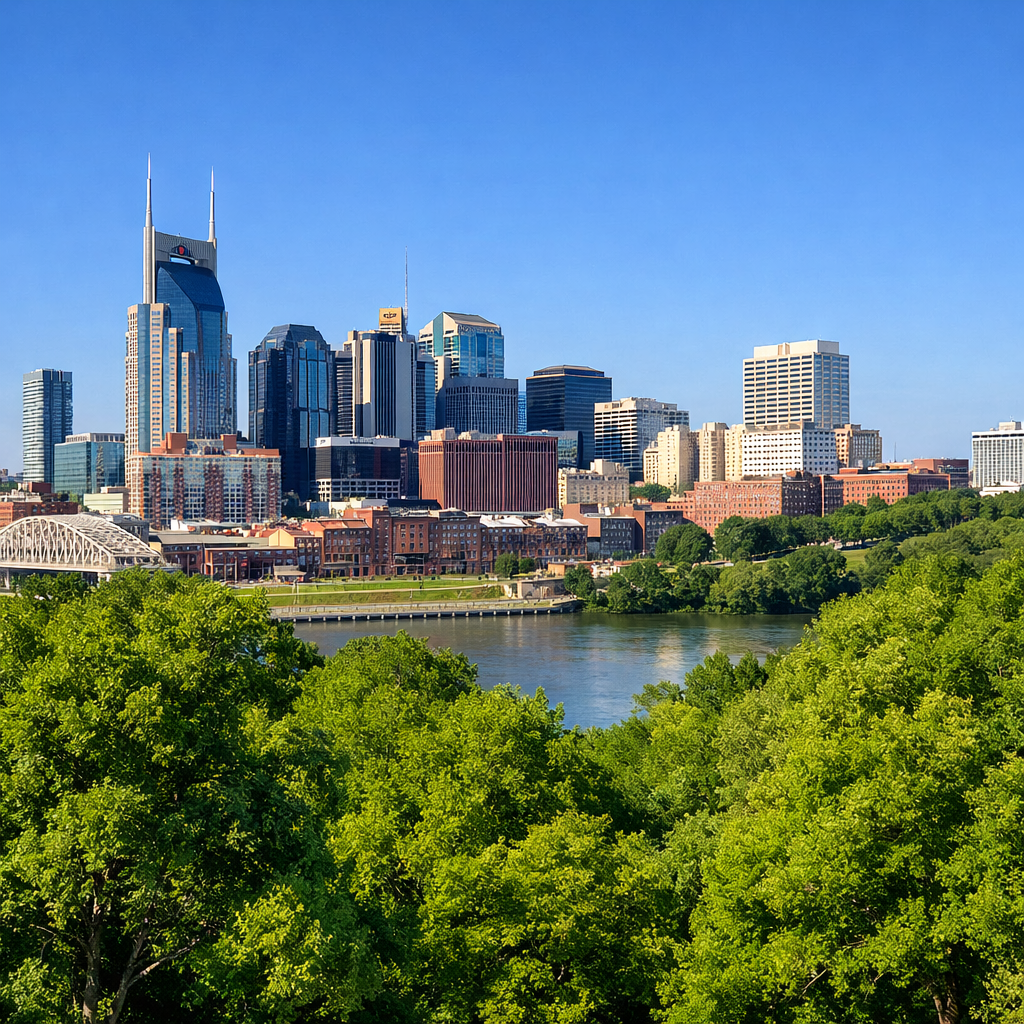
Nashville, Tennessee, experiences a humid subtropical climate, characterized by hot, humid summers and mild to cool winters. Understanding these patterns can help residents prepare for seasonal changes and participate in local environmental initiatives.
Seasonal Overview
Spring (March to May)
Spring brings mild temperatures, with average highs ranging from 60.7°F (16°C) in March to 78.6°F (26°C) in May. This season also sees increased rainfall, averaging around 5 inches per month, supporting the blooming of local flora.
Summer (June to August)
Summers are hot and humid, with average highs peaking at 89.2°F (32°C) in July. Thunderstorms are common, contributing to the season’s average monthly precipitation of approximately 4.5 inches.
Fall (September to November)
Fall offers cooler temperatures, with highs decreasing from 83.1°F (28°C) in September to 60°F (16°C) in November. Rainfall averages around 4 inches per month, and the changing foliage provides scenic beauty.
Winter (December to February)
Winters are generally mild, with average highs around 50°F (10°C) and lows near 30°F (-1°C). Snowfall is rare but possible, and precipitation averages about 4.5 inches per month.
Environmental Initiatives
Nashville is committed to environmental stewardship through various initiatives:
- Tree Canopy Expansion: The city has set a goal to plant 500,000 trees by 2050, enhancing urban greenery and improving air quality.
- Zero Waste Goal: Aiming to divert 90% of waste from landfills, Nashville encourages recycling, composting, and waste reduction practices.
- Ecological Conservation Strategy: This plan focuses on preserving natural landscapes and ecosystems while accommodating urban growth.
Residents can contribute by participating in local programs, such as tree planting events, recycling initiatives, and community clean-ups. Staying informed about Nashville’s climate and environmental efforts empowers individuals to make sustainable choices and support the city’s commitment to a healthier environment.