

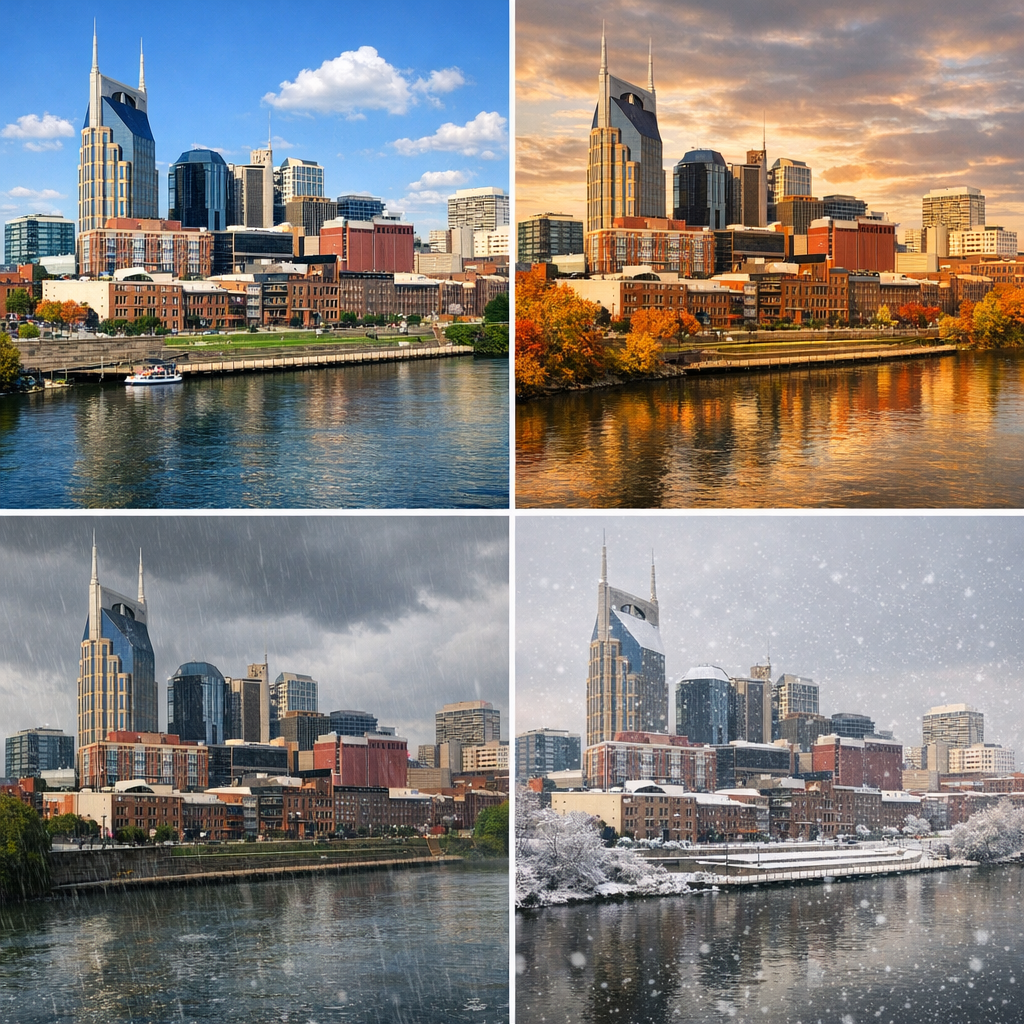
Nashville, Tennessee, experiences a humid subtropical climate characterized by four distinct seasons, each offering unique weather patterns and challenges. Understanding these seasonal variations is essential for residents and visitors alike.
Spring: A Season of Renewal and Rain
Spring in Nashville, spanning March through May, brings gradually warming temperatures and increased rainfall. Average highs rise from the mid-60s°F (18°C) in March to the upper 70s°F (25°C) by May. This period is also marked by frequent thunderstorms and the potential for severe weather, including tornadoes, as Nashville lies within the area known as “Dixie Alley.”
Summer: Heat and Humidity
Summers, from June to August, are typically hot and humid. Average high temperatures hover around 89°F (32°C) in July, the warmest month. The city often experiences heat waves, with temperatures occasionally reaching the mid-90s°F (35°C). High humidity levels can make it feel even hotter, and residents should be mindful of heat advisories during this time.
Autumn: Mild and Pleasant
Autumn, from September through November, offers milder temperatures and lower humidity. Highs range from the mid-80s°F (29°C) in September to the mid-60s°F (18°C) by November. This season is generally drier, providing comfortable conditions for outdoor activities and enjoying the fall foliage.
Winter: Cool with Occasional Snow
Winters in Nashville, from December to February, are relatively mild compared to northern regions. Average highs are in the upper 40s°F (9°C) to low 50s°F (11°C), with lows occasionally dipping below freezing. Snowfall is infrequent but possible, with the city receiving an average of about 6 inches (15 cm) of snow annually.
Impact of Climate Change
Climate change is influencing Nashville’s weather patterns, leading to more frequent and intense heat waves, heavier rainfall events, and an increased risk of flooding. The city’s rapid urbanization has also contributed to the urban heat island effect, where built-up areas experience higher temperatures than surrounding rural regions. Efforts are underway to enhance Nashville’s climate resilience, including developing a Climate Adaptation and Resilience Plan to address these challenges.
By staying informed about Nashville’s seasonal weather patterns and the impacts of climate change, residents can better prepare for and adapt to the evolving climate conditions in the region.