

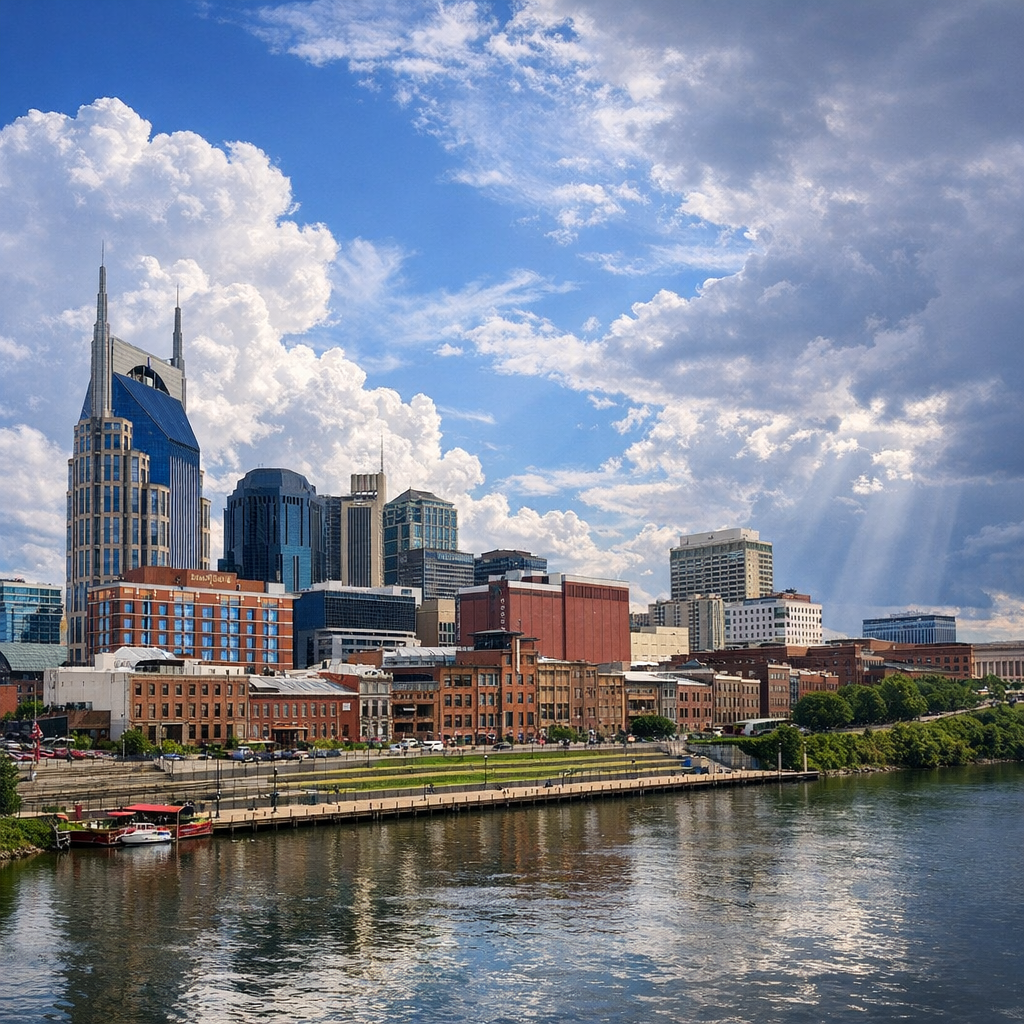
Nashville, Tennessee, experiences a humid subtropical climate characterized by hot, humid summers and mild to cool winters. Understanding the city’s weather patterns is essential for residents and visitors alike.
Seasonal Weather Patterns
Summer
Summers in Nashville are typically hot and muggy, with average high temperatures around 89°F (32°C) in July. The season spans from late May to mid-September, with daily highs often exceeding 81°F (27°C). Humidity levels are high, making the heat feel more intense.
Winter
Winters are generally mild but can be cold, with average low temperatures around 31°F (-1°C) in January. The cold season lasts from late November to late February, with daily highs below 56°F (13°C). Snowfall is minimal, averaging 1.7 inches in January.
Spring and Fall
Spring and fall offer the most pleasant weather conditions. May sees average high temperatures of 78°F (26°C), while October averages 70°F (21°C). These seasons are ideal for outdoor activities, with moderate temperatures and lower humidity.
Environmental Challenges
Urban Heat Islands
Urban heat islands (UHIs) are areas within cities that experience higher temperatures due to human activities and infrastructure. In Nashville, approximately 71% of residents live in neighborhoods considered heat islands. These areas have less greenery and more concrete, leading to increased heat absorption and retention. Vulnerable populations, including those in historically lower-income areas, are disproportionately affected by extreme heat events.
Increased Precipitation and Flooding
Climate change has led to more intense rainfall in Nashville. Between 1970 and 2024, the intensity of hourly rainfall increased by 12%. This rise in precipitation can result in flash flooding, posing risks to infrastructure and public safety. The May 2010 flood, which caused significant damage and loss of life, remains a stark reminder of the city’s vulnerability to such events.
Climate Resilience Efforts
To address these challenges, Nashville has developed the Climate Adaptation and Resilience Plan (CARP). This plan focuses on the city’s main climate hazards—flooding, tornadoes, extreme heat, winter storms, and thunderstorms—and aims to build adaptive capacity across Nashville’s built and natural environments, communities, economic systems, and public services.
Understanding Nashville’s climate and the associated environmental challenges is crucial for fostering a resilient and sustainable community. By staying informed and proactive, residents can better prepare for and adapt to the changing climate conditions.