

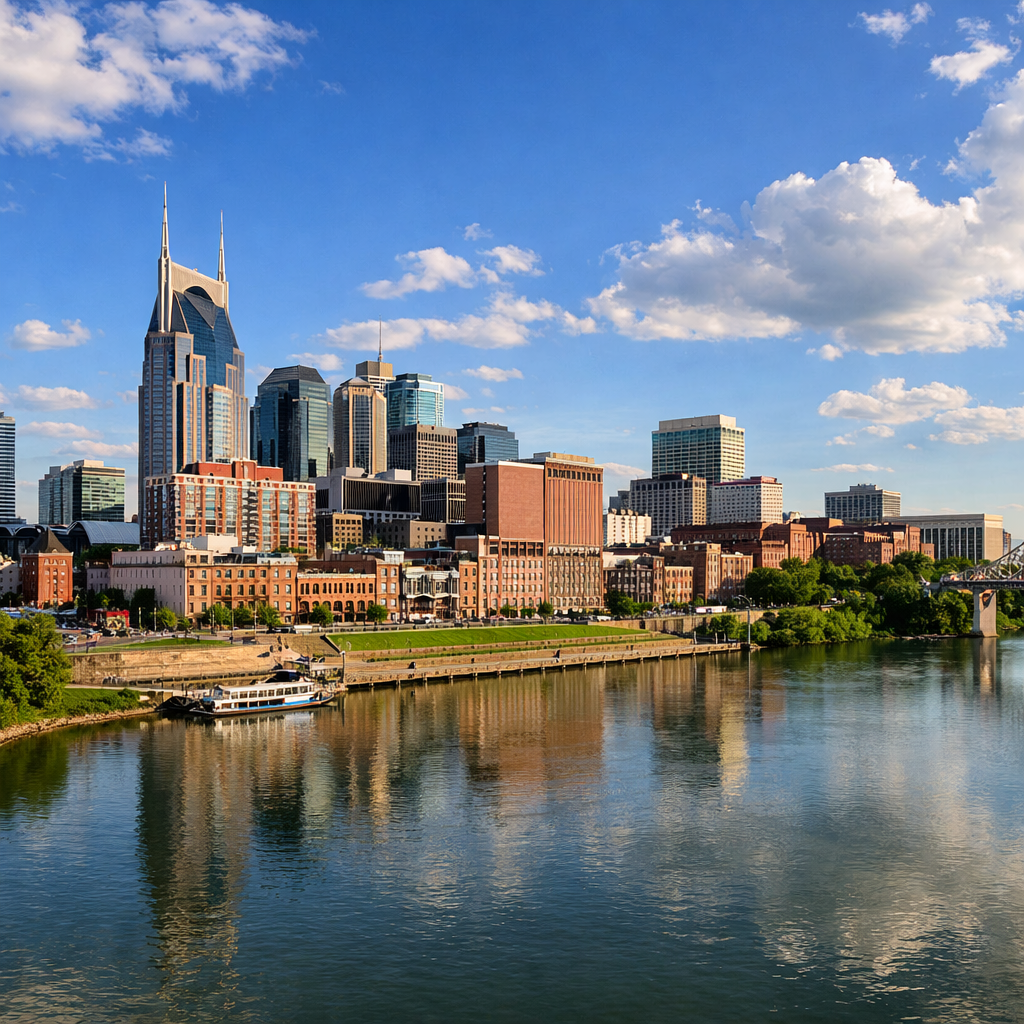
Nashville, Tennessee, experiences a humid subtropical climate characterized by hot, humid summers and mild to cool winters. This climate brings a variety of weather patterns and environmental challenges that residents should be aware of.
Seasonal Weather Patterns
Spring
Spring in Nashville is marked by moderate temperatures and increased rainfall. Thunderstorms are common during this season, occasionally leading to severe weather events, including tornadoes. The city’s location in “Dixie Alley” makes it susceptible to such storms.
Summer
Summers are typically hot and humid, with average high temperatures in July reaching around 88.3°F (31.3°C). The city often experiences heat waves, and the urban heat island effect can exacerbate these conditions, especially in densely populated areas with limited green spaces.
Autumn
Autumn brings cooler temperatures and reduced humidity, offering a respite from the summer heat. This season is generally pleasant, with lower precipitation levels compared to spring and summer.
Winter
Winters are mild to cool, with average low temperatures in January around 30.6°F (-0.8°C). Snowfall is infrequent and usually light, but occasional winter storms can occur, bringing ice and snow that may disrupt daily activities.
Environmental Challenges
Flooding
Nashville’s geography, situated in the Cumberland River basin, makes it prone to flooding. The city has experienced significant flood events, such as the May 2010 flood, which caused extensive damage. Efforts have been made to improve flood resilience, but the risk remains, especially during periods of heavy rainfall.
Urban Heat Island Effect
The urban heat island effect results in higher temperatures in urban areas compared to surrounding rural regions. In Nashville, this effect is intensified by extensive development and a reduction in tree canopy. Efforts to increase green spaces and implement reflective materials in urban planning are ongoing to mitigate this issue.
Air Quality
Air quality in Nashville varies seasonally. During summer, high temperatures and stagnant air can lead to elevated ozone levels, while winter months may see increased particulate matter due to factors like wood burning and temperature inversions. Monitoring air quality and taking precautions during periods of poor air quality is advisable.
Staying Informed
Understanding Nashville’s climate and environmental challenges is essential for residents and visitors. Staying informed about weather forecasts, participating in community resilience efforts, and supporting sustainable practices can help mitigate the impacts of these challenges.