

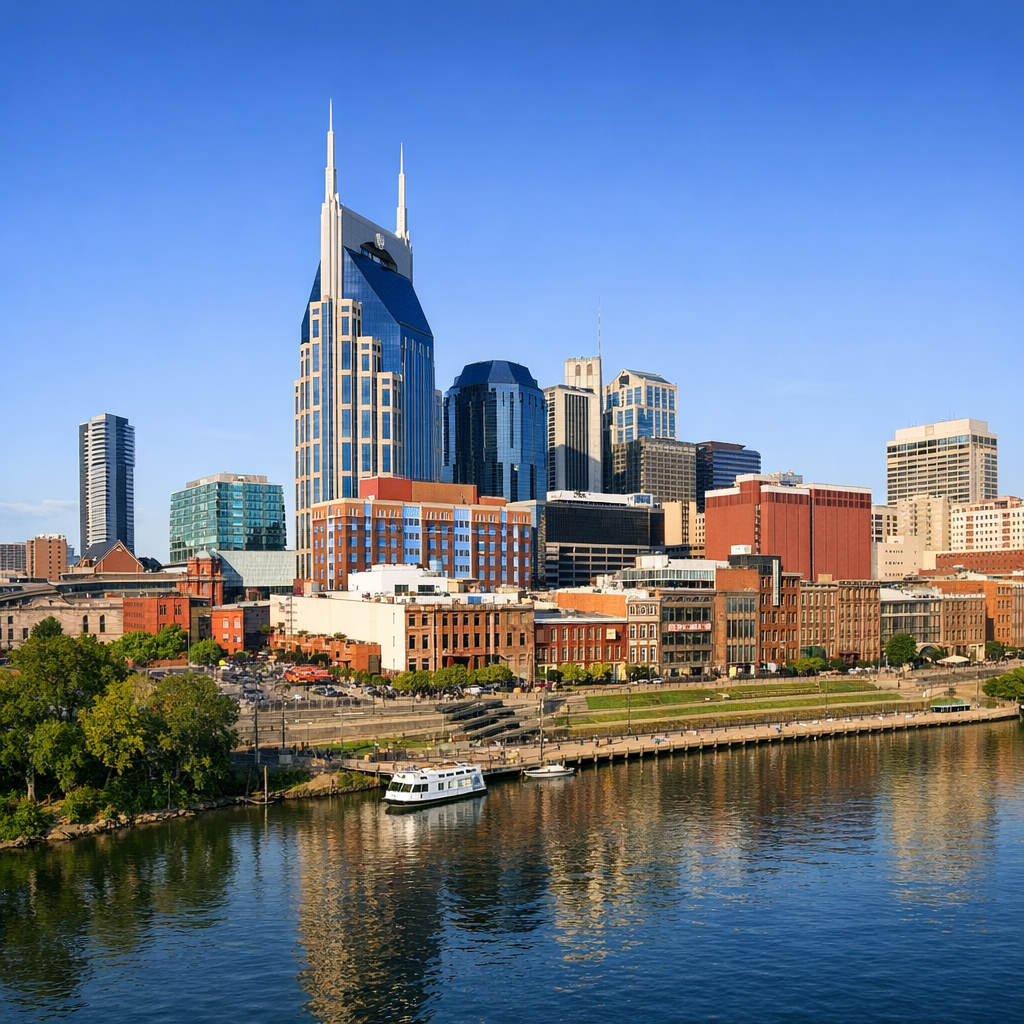
Nashville, Tennessee, experiences a humid subtropical climate characterized by hot summers and mild winters. This climate brings a variety of weather patterns and environmental challenges that residents should be aware of.
Seasonal Weather Patterns
Throughout the year, Nashville’s temperatures fluctuate significantly. January typically sees average lows around 30.6°F (-0.8°C), while July averages highs of 88.3°F (31.3°C). Rainfall is unevenly distributed, with July recording the highest precipitation at 4.02 inches (102mm) and November the least at 1.77 inches (45mm).
Environmental Challenges
Heat Waves
In recent years, Nashville has experienced longer and more frequent heat waves. Data indicates that since the 1960s, the city has seen an average increase of three heat waves per year, each lasting nearly one day longer. This trend poses significant health risks, especially for vulnerable populations.
Flooding
Intense rainfall events have become more common, leading to increased flooding risks. For instance, in April 2025, severe storms caused dangerous flooding across Nashville, rendering several roads impassable. The National Weather Service forecasted an additional 2 to 5 inches of rain during that period, raising further flood concerns.
Air Quality
Air pollution in Nashville stems from various sources, including vehicle emissions, industrial activities, and construction dust. Seasonal factors also play a role; during summer months, high temperatures and stagnant air can exacerbate pollution levels, leading to health advisories.
Staying Informed
Understanding Nashville’s climate and environmental challenges is crucial for residents. Staying informed about weather forecasts, heat advisories, and air quality reports can help individuals take necessary precautions to protect their health and property.