

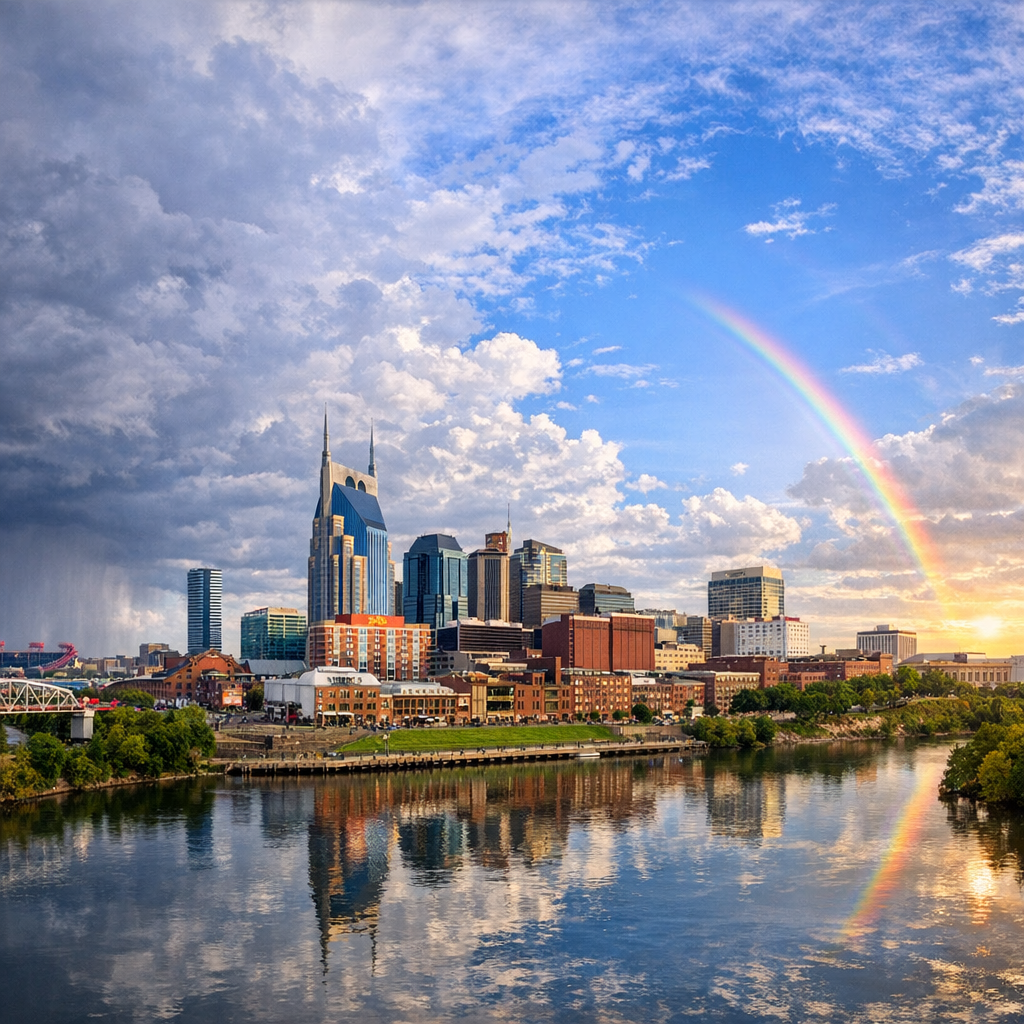
Nashville, Tennessee, experiences a humid subtropical climate, characterized by hot, humid summers and mild to cool winters. This diverse weather pattern influences various aspects of life in Music City, from daily activities to long-term planning.
Seasonal Breakdown
Summer
Summers in Nashville are notably hot and humid, with average high temperatures reaching around 89°F (31.8°C) in July. The season spans from late May to mid-September, often bringing muggy conditions that can make outdoor activities challenging. Residents and visitors are advised to stay hydrated and take precautions against heat-related illnesses during this period.
Winter
Winters are generally mild, with average low temperatures in January around 28.3°F (-2.1°C). While snowfall is infrequent, averaging about 2 inches annually, occasional cold snaps can occur. It’s essential to stay informed about weather forecasts during winter months to prepare for any sudden changes.
Spring and Fall
Spring and fall offer the most comfortable weather conditions, with moderate temperatures and lower humidity levels. These seasons are ideal for outdoor activities and festivals, making them popular times for tourism and local events.
Precipitation Patterns
Nashville receives an average annual precipitation of approximately 53.5 inches (1357.9 mm), distributed fairly evenly throughout the year. However, May tends to be the wettest month, while August is typically the driest. Residents should be prepared for sudden rain showers, especially during the spring and summer months.
Climate Resilience Efforts
In response to the challenges posed by climate change, Nashville has developed a Climate Adaptation and Resilience Plan. This initiative aims to anticipate and adapt to changing climate conditions, ensuring the city’s infrastructure and communities can withstand and recover from climate-driven disruptions. Efforts include enhancing green spaces, improving stormwater management, and increasing public awareness about climate resilience.
Understanding Nashville’s climate is crucial for residents and visitors alike. By staying informed about seasonal patterns and participating in local resilience efforts, the community can better navigate the city’s diverse weather conditions.