

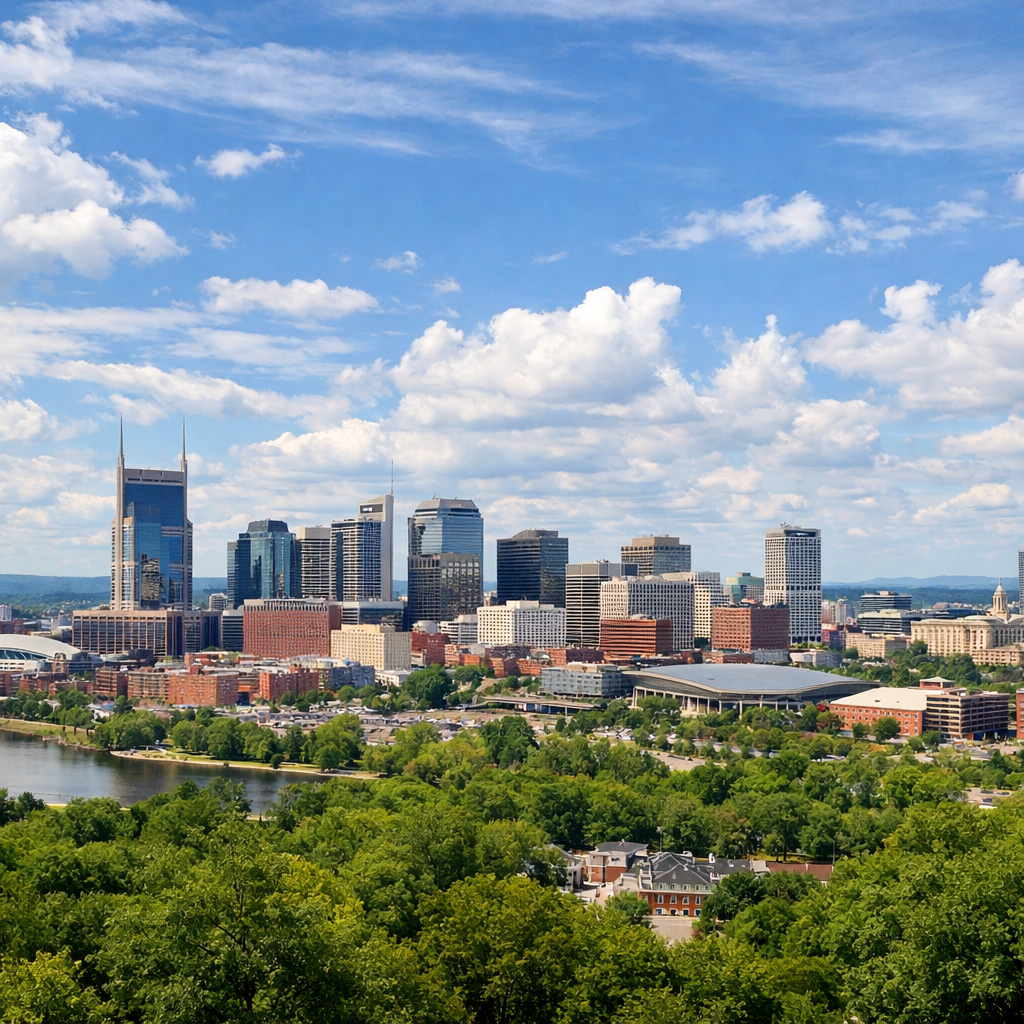
Nashville, Tennessee, experiences a humid subtropical climate, characterized by hot, humid summers and mild to cool winters. This climate influences various aspects of daily life, from outdoor activities to environmental considerations.
Seasonal Weather Patterns
Summer
Summers in Nashville are typically hot and humid, with average high temperatures reaching around 89°F (31.7°C) in July. Residents often experience muggy conditions, making it essential to stay hydrated and take precautions against heat-related illnesses.
Winter
Winters are generally mild, with average low temperatures in January around 30.6°F (-0.8°C). Snowfall is occasional, averaging about 2 inches per year, primarily between November and February.
Precipitation
Rainfall is fairly evenly distributed throughout the year, totaling approximately 54 inches annually. May tends to be the wettest month, while November is typically the driest.
Environmental Considerations
Urban Heat Islands
A significant portion of Nashville’s population resides in urban heat islands—areas where infrastructure like buildings and roads absorb and retain heat, leading to higher temperatures compared to surrounding rural areas. This effect is intensified during summer months, posing health risks, especially to vulnerable populations.
Stormwater Management
Stormwater runoff can carry pollutants from urban areas into local waterways, affecting water quality. The city’s stormwater system, comprising street drains, pipes, and ditches, directs excess rainwater to minimize flooding. Residents can contribute to pollution prevention by properly disposing of waste and reducing the use of harmful chemicals.
Air Quality
Air quality is a concern in Nashville, with reports indicating levels of fine particulate matter that may exceed federal standards. These particles can pose health risks, particularly to individuals with respiratory conditions. Staying informed about daily air quality indices and limiting outdoor activities during high pollution days can help mitigate health impacts.
Staying Informed
Understanding Nashville’s climate and environmental challenges is crucial for residents and visitors alike. By staying informed and adopting sustainable practices, we can collectively contribute to a healthier and more resilient community.