

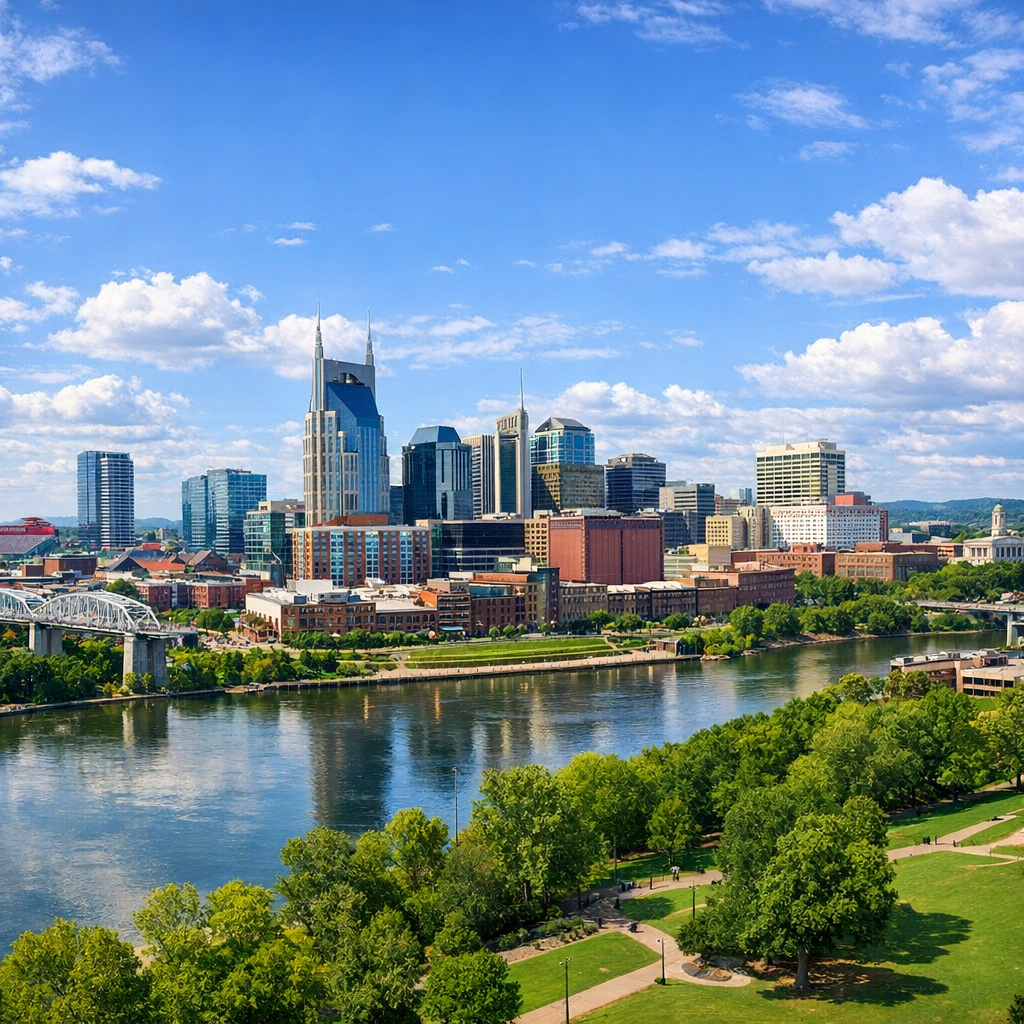
Nashville, Tennessee, experiences a humid subtropical climate, characterized by hot, humid summers and mild to cool winters. Understanding the city’s climate patterns can help residents and visitors prepare for the varying weather conditions throughout the year.
Temperature and Seasons
Throughout the year, temperatures in Nashville typically range from lows of around 31°F (-0.6°C) in January to highs near 90°F (32.2°C) in July. The city experiences four distinct seasons:
- Spring (March to May): Temperatures gradually warm, with average highs increasing from 60.7°F (15.9°C) in March to 78.6°F (25.9°C) in May. Spring is also a wet season, with May receiving an average of 5.38 inches (136.65 mm) of precipitation.
- Summer (June to August): Summers are hot and humid, with July being the warmest month, averaging highs of 89.2°F (31.8°C). Humidity levels are high, making it feel warmer than the actual temperature.
- Autumn (September to November): Temperatures gradually decrease, with average highs dropping from 83.1°F (28.4°C) in September to 60°F (15.6°C) in November. Fall is generally pleasant, with lower humidity and moderate rainfall.
- Winter (December to February): Winters are mild to cool, with January being the coldest month, averaging lows of 28.3°F (-2.1°C). Snowfall is occasional, averaging about 2 inches (5 cm) per year.
Precipitation and Weather Events
Nashville receives an average annual precipitation of approximately 53.5 inches (1,357.9 mm), distributed fairly evenly throughout the year. However, May tends to be the wettest month, while November is typically the driest.
The city is also susceptible to severe weather events, including thunderstorms, tornadoes, and occasional winter storms. Spring and early summer are peak seasons for severe thunderstorms and tornadoes, so it’s essential to stay informed about weather alerts during these periods.
Environmental Considerations
Urban development has led to the formation of heat islands in Nashville, where built-up areas experience higher temperatures due to infrastructure like buildings and roads absorbing heat. Approximately 71% of residents live in these heat-prone neighborhoods, which can exacerbate the effects of heat waves.
Air quality is another environmental concern. In April 2026, a coalition reported that Nashville had unhealthy levels of fine particulate matter, leading to legal action against the EPA for enforcement of air quality standards. These fine particles pose significant health risks, particularly to individuals with respiratory conditions.
Preparing for Nashville’s Climate
To adapt to Nashville’s climate, consider the following tips:
- Stay Informed: Regularly check local weather forecasts and heed any advisories or warnings, especially during severe weather seasons.
- Seasonal Preparedness: Equip your home with appropriate heating and cooling systems to handle temperature extremes. Ensure your property is well-maintained to withstand severe weather events.
- Health Precautions: During high heat periods, stay hydrated, limit outdoor activities during peak heat, and be aware of heat-related illnesses. Monitor air quality reports, especially if you have respiratory conditions, and reduce outdoor activities when air quality is poor.
- Community Engagement: Participate in local environmental initiatives aimed at improving air quality and mitigating heat island effects, such as tree planting programs and advocating for green spaces.
By understanding and preparing for Nashville’s climate and environmental factors, residents and visitors can better navigate the city’s diverse weather conditions and contribute to a healthier community.