

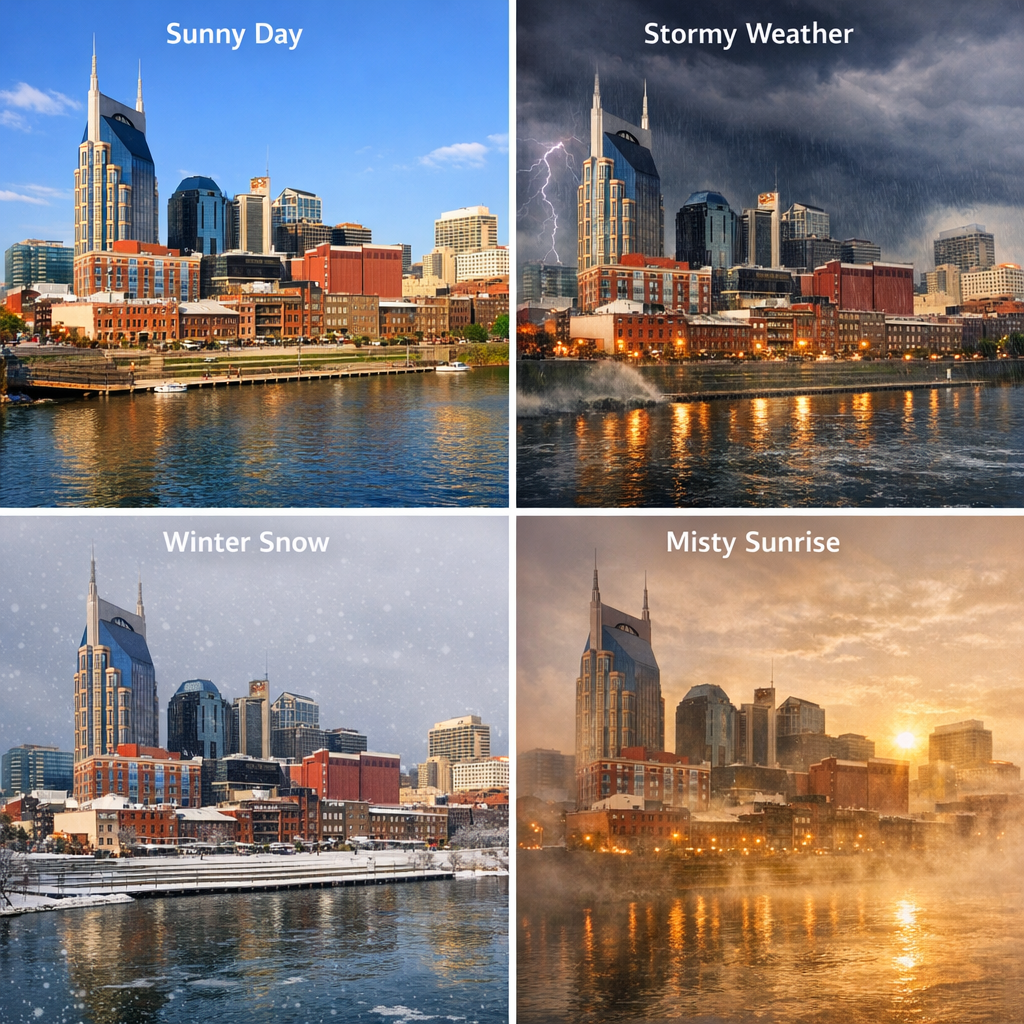
Nashville, Tennessee, experiences a humid subtropical climate, characterized by hot, humid summers and mild to cool winters. Understanding the city’s climate patterns can help residents and visitors prepare for the varying weather conditions throughout the year.
Seasonal Temperature Variations
Throughout the year, temperatures in Nashville fluctuate significantly. The hottest month is typically July, with average high temperatures around 89°F (31.7°C), while January is the coldest, averaging lows near 30°F (-1.1°C). These variations highlight the importance of seasonal preparedness, from staying cool during summer heat waves to bundling up in the winter months.
Precipitation and Weather Events
Nashville receives an average annual precipitation of approximately 53.5 inches (1,357.9 mm), distributed fairly evenly throughout the year. May often records the highest rainfall, averaging around 5.38 inches (136.65 mm), while August tends to be drier, with about 3.74 inches (95 mm) of precipitation. Snowfall is relatively rare, averaging about 2 inches (5 cm) per year, primarily occurring between November and February.
Environmental Considerations
Recent reports have raised concerns about air quality in the Nashville area. The American Lung Association’s 2026 “State of the Air” report indicates that the Nashville-Davidson–Murfreesboro metro area received an F grade for ozone smog, affecting over 400,000 children in Tennessee who are breathing unhealthy air. However, the same report notes that the area ranks among the nation’s cleanest cities for daily particle pollution measures.
Additionally, urban heat islands—areas with higher temperatures due to infrastructure and limited green spaces—affect a significant portion of Nashville’s population. Approximately 71% of residents live in these heat-prone neighborhoods, which can exacerbate the effects of extreme heat, particularly for vulnerable populations.
Preparing for Nashville’s Climate
Given the city’s diverse climate and environmental factors, it’s essential for residents to stay informed and take proactive measures. This includes monitoring weather forecasts, understanding seasonal patterns, and being aware of air quality reports. Staying prepared ensures that individuals can enjoy all that Nashville has to offer, regardless of the season.