

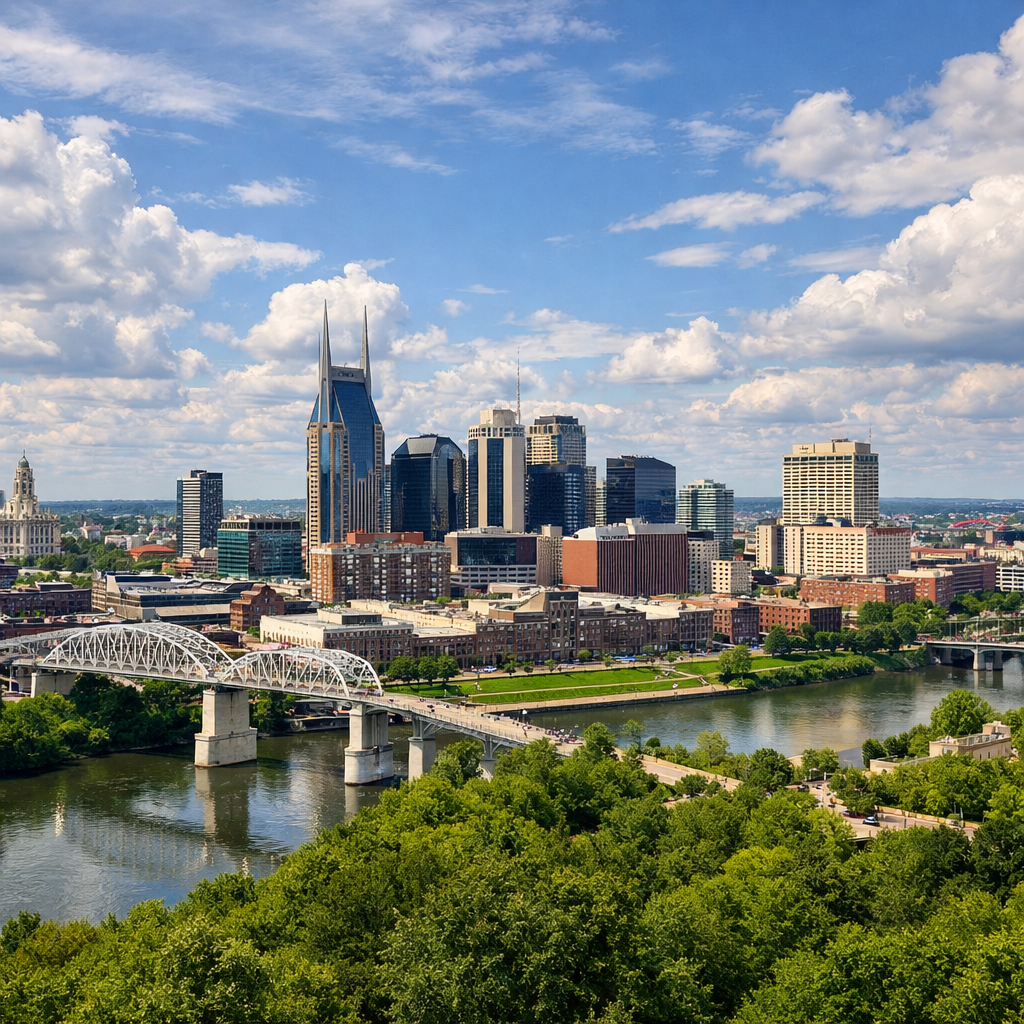
Nashville, Tennessee, experiences a humid subtropical climate, characterized by hot, humid summers and mild to cool winters. This climate influences various aspects of daily life, from wardrobe choices to outdoor activities.
Seasonal Weather Patterns
Summer
Summers in Nashville are typically hot and humid, with average high temperatures in July reaching around 89°F (31.3°C). The city often experiences several days each year where temperatures exceed 90°F (32°C). Residents should be prepared for high humidity levels, which can make the heat feel more intense.
Winter
Winters are generally mild, with average low temperatures in January around 30.6°F (-0.8°C). While snowfall is infrequent, averaging about 2 inches annually, occasional cold snaps can bring freezing temperatures. It’s advisable to stay informed about weather forecasts during the winter months.
Precipitation
Nashville receives approximately 54 inches of rainfall annually, with May typically being the wettest month. Rainfall is fairly evenly distributed throughout the year, so carrying an umbrella is often a good idea regardless of the season.
Environmental Considerations
Urban development has led to the formation of heat islands in Nashville, where built-up areas experience higher temperatures due to infrastructure like buildings and roads absorbing heat. This effect is more pronounced in neighborhoods with fewer green spaces. Efforts are underway to mitigate these effects through initiatives like increasing tree canopy coverage and implementing reflective pavement coatings.
Air quality is another important environmental factor. The Metro Public Health Department monitors air pollution levels and provides daily updates through the Air Quality Index (AQI). Residents are encouraged to stay informed, especially those with respiratory conditions, as air quality can fluctuate due to various factors, including weather patterns and industrial activities.
Staying Informed
Understanding Nashville’s climate and environmental factors is essential for residents and visitors alike. Staying informed about weather forecasts, air quality reports, and local environmental initiatives can help individuals make informed decisions and contribute to the community’s well-being.