

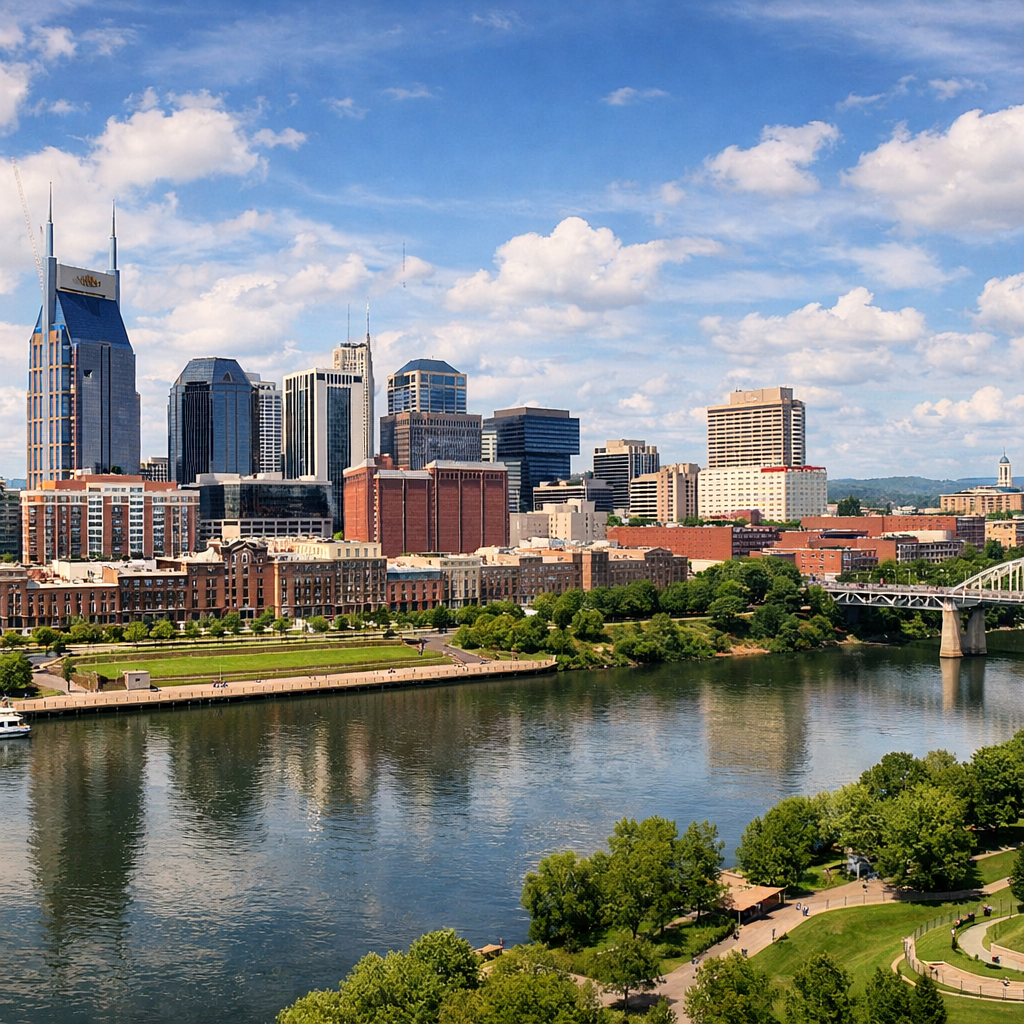
Nashville, Tennessee, experiences a humid subtropical climate, characterized by hot, humid summers and mild to cool winters. This climate influences various aspects of daily life, from outdoor activities to environmental considerations.
Seasonal Weather Patterns
Throughout the year, Nashville’s temperatures fluctuate significantly. Summers are typically hot and humid, with average high temperatures reaching around 89°F (31.3°C) in July. Winters are milder, with average lows dipping to approximately 30.6°F (-0.8°C) in January. Precipitation is fairly evenly distributed year-round, totaling about 53.5 inches (1357.9 mm) annually. Snowfall is occasional, averaging around 1.6 inches (4 cm) per year.
Environmental Challenges
Nashville faces several environmental challenges related to its climate. The city has experienced issues with air quality, particularly concerning ozone smog levels. Recent reports indicate that the Nashville-Davidson–Murfreesboro metro area received an F grade for ozone smog, highlighting the need for ongoing efforts to improve air quality.
Additionally, urban heat islands are a concern. Approximately 71% of Nashville residents live in areas with higher temperatures due to infrastructure like buildings and roads, coupled with fewer green spaces. This phenomenon exacerbates the effects of heat waves, posing health risks, especially to vulnerable populations.
Community Initiatives
To address these challenges, Nashville has implemented various initiatives. Efforts to prevent stormwater pollution are in place to protect the Cumberland River, the city’s primary source of drinking water. Residents are encouraged to prevent common household pollutants from reaching creeks and streams.
Understanding Nashville’s climate and environmental challenges is crucial for residents and visitors alike. Staying informed and participating in community efforts can help mitigate the impacts of these issues and contribute to a healthier environment for all.