

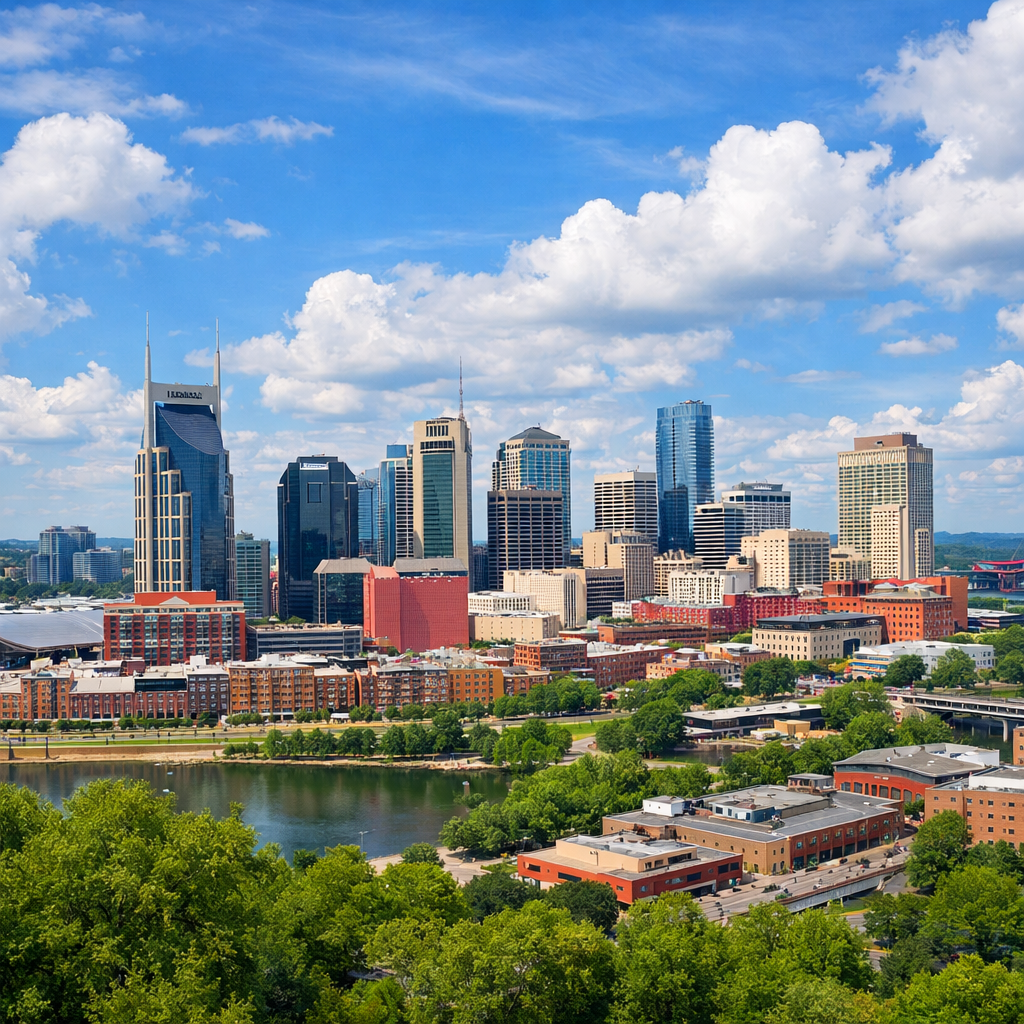
Nashville, Tennessee, experiences a humid subtropical climate, characterized by hot, humid summers and mild to cool winters. This climate classification, known as Cfa in the Köppen system, influences the city’s weather patterns and seasonal variations.
Temperature Trends
Throughout the year, Nashville’s temperatures fluctuate significantly. The coldest month is January, with average low temperatures around 28.3°F (-2.1°C) and average highs near 47.3°F (8.5°C). In contrast, July stands as the hottest month, boasting average highs of approximately 89.2°F (31.8°C) and lows around 69°F (20.6°C). These variations highlight the city’s distinct seasonal shifts.
Precipitation Patterns
Rainfall in Nashville is relatively evenly distributed across the year, totaling about 53.5 inches (1357.9 mm) annually. May typically receives the highest precipitation, averaging 5.38 inches (136.65 mm), while October tends to be drier, with around 3.6 inches (91.44 mm) of rainfall. Snowfall is occasional, averaging about 2 inches (5 cm) per year, primarily occurring between November and February.
Seasonal Highlights
Spring and fall are particularly pleasant in Nashville. May offers comfortable temperatures with average highs of 78.6°F (25.9°C), making it ideal for outdoor activities. October provides cooler yet enjoyable weather, with average highs around 72.1°F (22.3°C). These seasons also feature moderate rainfall and ample sunshine, enhancing their appeal.
Environmental Considerations
Urban development has led to the formation of heat islands in Nashville, where built-up areas experience higher temperatures due to infrastructure like buildings and roads absorbing heat. Approximately 71% of residents live in these heat-prone neighborhoods, which can exacerbate the effects of extreme heat, especially during summer months.
To address these challenges, the Metro Public Health Department’s Environmental Health Programs focus on promoting healthy living conditions through initiatives like air pollution control and food protection services. These efforts aim to mitigate environmental health hazards and enhance the overall well-being of Nashville’s residents.
Understanding Nashville’s climate and environmental dynamics is essential for residents and visitors alike. By staying informed about seasonal patterns and participating in local environmental initiatives, the community can better adapt to and mitigate the impacts of the city’s weather and environmental challenges.