

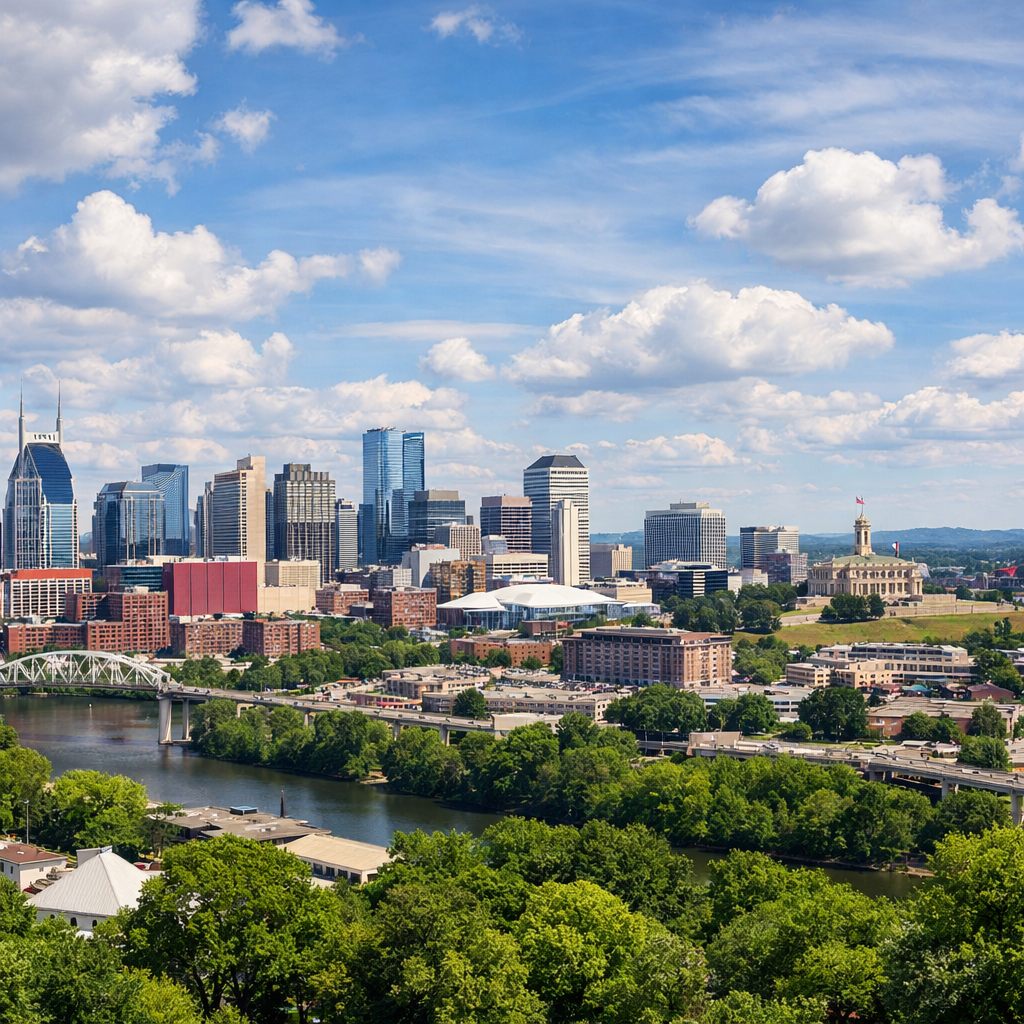
Nashville, Tennessee, experiences a humid subtropical climate, characterized by hot, humid summers and mild to cool winters. This climate classification, known as Cfa in the Köppen system, results in a diverse range of weather conditions throughout the year.
Temperature Trends
Throughout the year, Nashville’s temperatures vary significantly. The coldest month is January, with average low temperatures around 30.6°F (-0.8°C), while July is typically the warmest, averaging highs of 88.3°F (31.3°C). This seasonal variation influences daily life, from wardrobe choices to outdoor activities.
Precipitation Patterns
Rainfall is fairly evenly distributed across the year, totaling about 54 inches annually. May tends to be the wettest month, while November sees the least precipitation. Snowfall is occasional, averaging about 2 inches per year, primarily occurring in the winter months.
Seasonal Changes
Spring and fall are transitional seasons, offering mild temperatures and lower humidity, making them particularly pleasant times of the year. Summers are hot and humid, with temperatures often reaching the upper 80s to low 90s°F. Winters are generally mild but can experience cold snaps, with temperatures occasionally dropping below freezing.
Environmental Considerations
Urban development has led to the formation of heat islands in Nashville, where built-up areas experience higher temperatures due to infrastructure like buildings and roads absorbing heat. Approximately 71% of residents live in these heat-prone neighborhoods, which can exacerbate the effects of summer heat.
Air quality is another environmental concern. The American Lung Association’s 2026 “State of the Air” report indicates that the Nashville-Davidson–Murfreesboro metro area received an F grade for ozone smog, highlighting the need for ongoing efforts to improve air quality.
Understanding Nashville’s climate and environmental factors is essential for residents and visitors alike, aiding in preparedness and appreciation of the city’s unique weather patterns.