

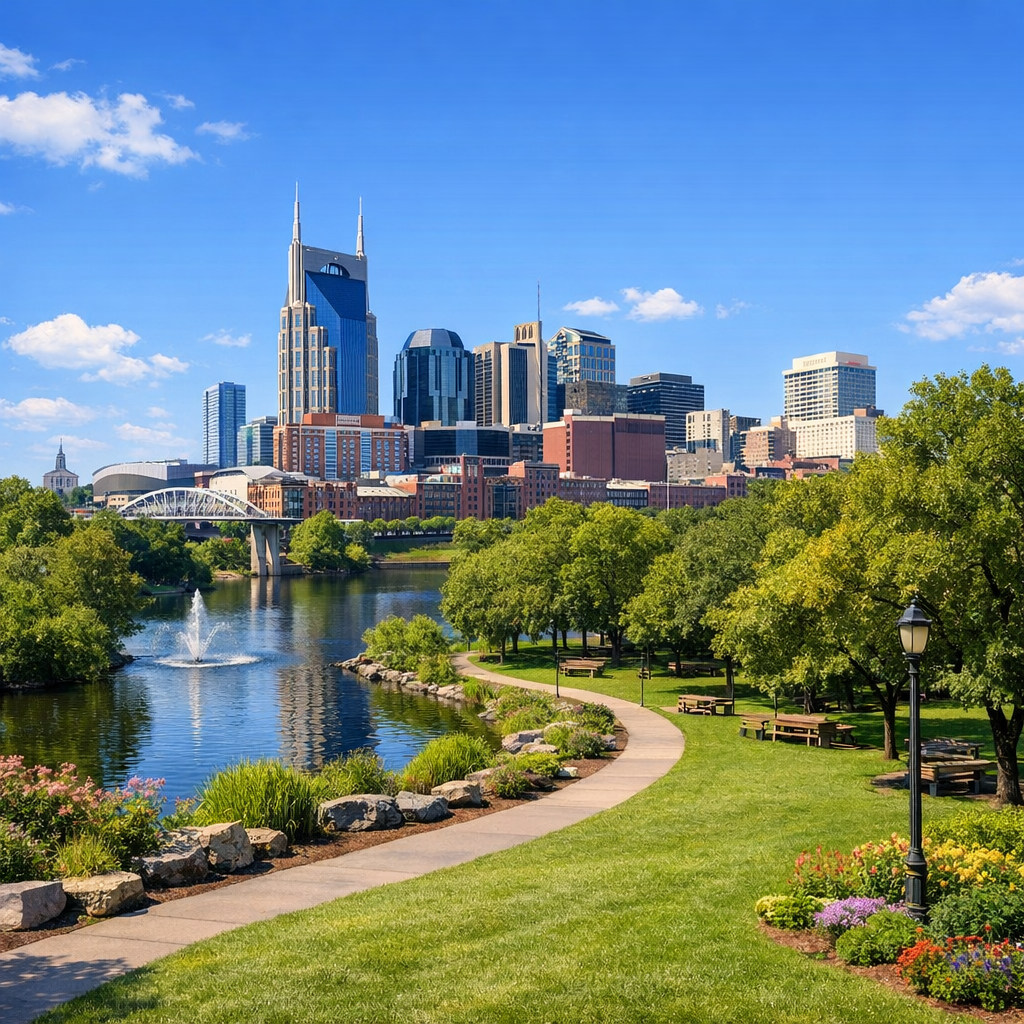
Nashville, Tennessee, experiences a humid subtropical climate characterized by hot summers and mild winters. The average annual high temperature is approximately 69.9°F (21°C), with lows around 48.1°F (9°C). The city receives an average annual precipitation of 53.5 inches (1357.9 mm), contributing to its lush landscapes.
Seasonal Climate Overview
Throughout the year, Nashville’s temperatures and precipitation levels vary:
- Winter (December – February): Average lows range from 28.3°F (-2.1°C) in January to 30.8°F (-0.7°C) in February, with highs between 47.3°F (8.5°C) and 51.5°F (10.8°C). Precipitation averages around 4.24 inches (107.7 mm) in January.
- Spring (March – May): Temperatures rise, with average highs reaching 78.6°F (25.9°C) in May. Precipitation peaks in May at approximately 5.38 inches (136.65 mm).
- Summer (June – August): The warmest months, with average highs of 86.0°F (30°C) in June and 89.2°F (31.8°C) in July. Rainfall remains steady, averaging around 4.42 inches (112.27 mm) in June.
- Fall (September – November): Temperatures gradually decrease, with November highs averaging 60.0°F (15.6°C). Precipitation averages 3.79 inches (96.27 mm) in November.
Environmental Initiatives in Nashville
The city is actively engaged in environmental stewardship to preserve its natural resources and promote sustainability. Key initiatives include:
Tree Canopy Restoration
Legislation has been enacted to manage trees on public property as valuable assets. This includes regular progress reports and a review panel overseeing large-scale tree removals. Additionally, a dedicated revenue stream supports tree canopy restoration on private properties, aiming to plant 500,000 trees by 2050.
Parks and Greenways Expansion
The ‘Plan to Play’ master plan outlines a ten-year vision to enhance Nashville’s parks and greenways. Goals encompass acquiring new parkland, developing facilities, and ensuring sustainable operations to meet the community’s recreational needs.
Ecological Conservation Strategy
Launched to assess the health of Nashville’s natural resources, this strategy aims to develop an action plan for conserving waterways, forests, and green spaces while accommodating growth. Community and stakeholder feedback will inform conservation priorities and policy recommendations.
Community Engagement and Education
Organizations like Urban Green Lab educate communities on sustainable living practices. Their programs have reached numerous educators and organizations, fostering a culture of sustainability across the city.
Understanding Nashville’s climate patterns and supporting these environmental initiatives are crucial steps toward ensuring a sustainable and resilient future for the city.