

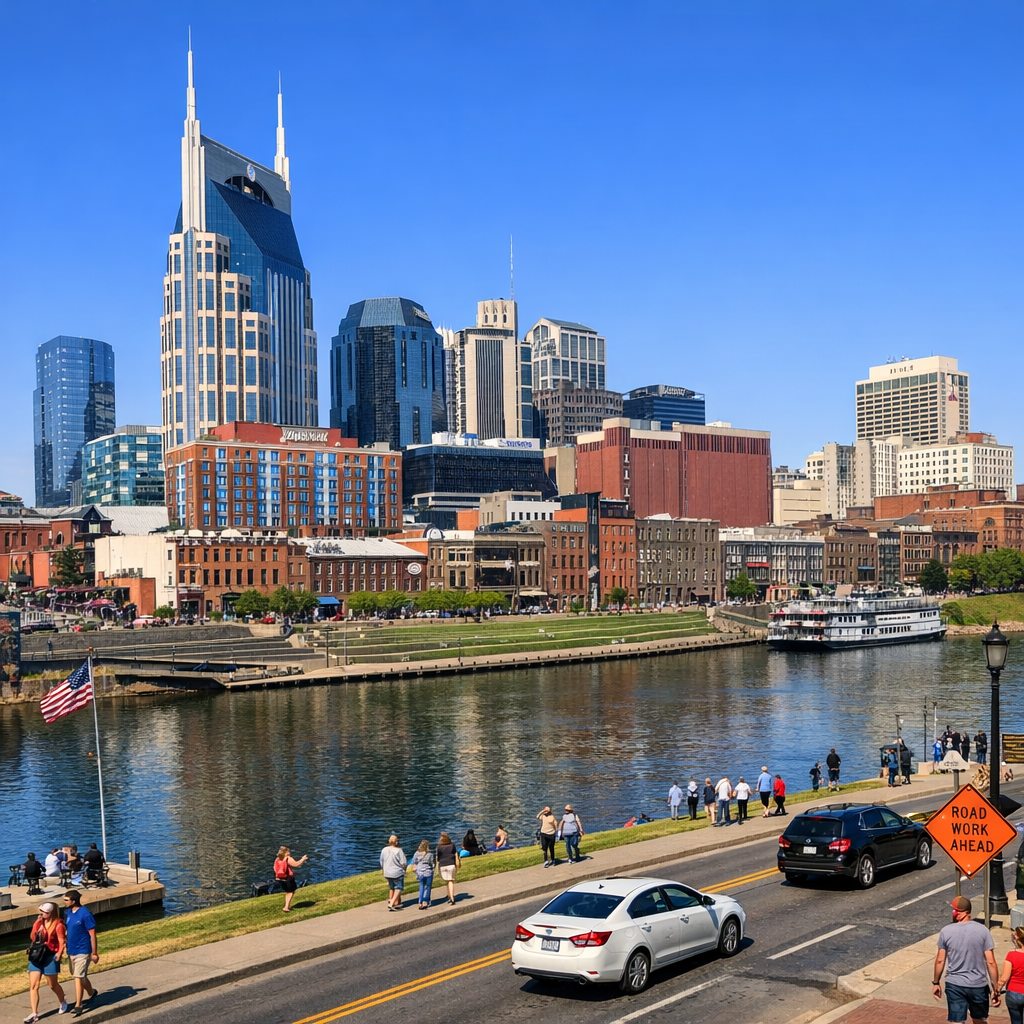
Nashville, Tennessee, experiences a humid subtropical climate characterized by hot, humid summers and mild to cool winters. This climate pattern influences various aspects of daily life, from agriculture to energy consumption.
Seasonal Overview
Summer
Summers in Nashville are notably warm and humid. The hot season spans approximately from late May to mid-September, with average daily high temperatures exceeding 81°F. July stands out as the hottest month, boasting an average high of 89°F and a low of 71°F. Residents often experience temperatures reaching up to 90°F during this period.
Winter
Winters are relatively mild but can bring cold spells. The cold season lasts from late November to late February, with average daily high temperatures below 56°F. January is typically the coldest month, featuring an average low of 31°F and a high of 48°F. Snowfall is infrequent but possible, adding a picturesque touch to the cityscape.
Precipitation
Rainfall is distributed fairly evenly throughout the year, with July often recording the highest precipitation at approximately 4.02 inches. November tends to be the driest month, averaging around 1.77 inches of rainfall. This consistent precipitation supports the region’s lush greenery and vibrant ecosystems.
Climate Trends and Future Projections
Recent analyses indicate a trend toward increasing temperatures and more intense rainfall events in Nashville. Between 1970 and 2024, the intensity of hourly rainfall in the city increased by 12%. This escalation is attributed to warmer air holding more moisture, leading to heavier downpours. Such intense rainfall can result in flash floods and other hazards, emphasizing the need for effective urban planning and infrastructure resilience.
Projections suggest that by 2050, Nashville could experience an average of about 45 days per year with temperatures exceeding 95.6°F, a significant rise from the current average of seven such days. This anticipated increase underscores the importance of implementing adaptive strategies to mitigate heat-related health risks and infrastructure challenges.
Urban Heat Islands
The urban heat island effect is a notable concern for Nashville. Approximately 71% of residents live in areas prone to higher temperatures due to dense infrastructure and limited green spaces. This phenomenon disproportionately affects communities with fewer resources to combat heat, highlighting the need for equitable climate resilience initiatives.
Community Initiatives
In response to these challenges, Nashville has undertaken several initiatives to enhance climate resilience. The city’s forthcoming Climate Adaptation and Resilience Plan focuses on addressing key climate hazards, including flooding, extreme heat, and severe storms. Additionally, efforts such as the 2022 heat mapping campaign aim to identify and mitigate urban heat islands, promoting a healthier environment for all residents.
Understanding Nashville’s climate patterns and projected changes is crucial for developing effective strategies to adapt to and mitigate the impacts of climate change. Through informed planning and community engagement, Nashville can continue to thrive amidst evolving environmental conditions.