

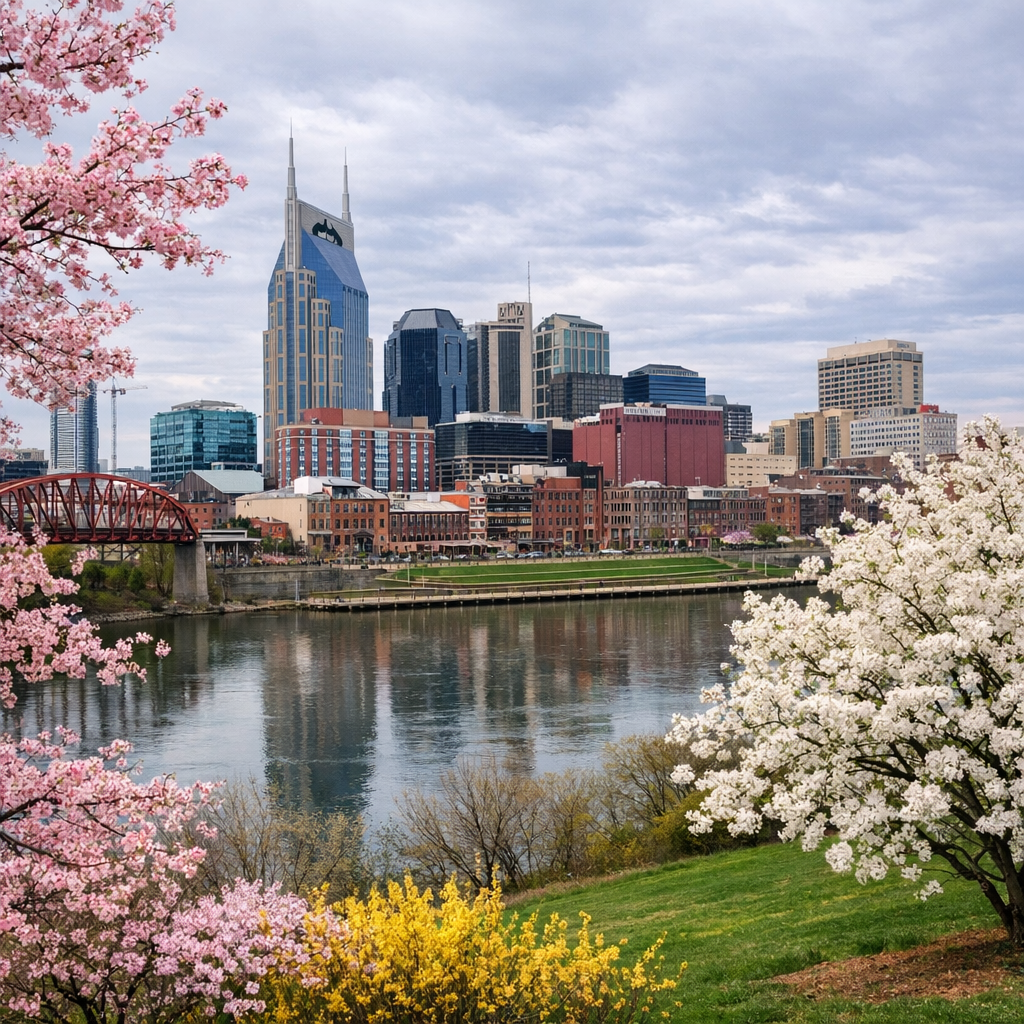
Here in Nashville, our weather doesn’t just change—it tells a story. Every drop of rain, every degree shift, and every rustle of leaf paints an evolving portrait of our climate and environment. Let’s take a look at the patterns, the changes underway, and what they mean for our daily lives.
Climate and Seasonal Normals
Nashville falls under the humid subtropical climate zone, which means hot, humid summers and cool winters with modest snowfall. On average, summer highs hover in the upper 80s to low 90s°F, while January days tend to top out in the upper 40s. Overnight lows in winter often dip into the 30s. Over the course of a year, we see about 50 inches of rain—spread relatively evenly, though spring is the rainiest season and autumn tends to dry out a bit. Normal snowfall is around 4 to 5 inches annually.
What’s Changing: Shifts in Weather Patterns and Environment
Gradual Warming and Hotter Summers
Over recent decades, Nashville has warmed noticeably. The average annual temperature has edged upward several degrees compared to mid-20th-century levels. Summers are not only getting hotter, but more humid—and those late summer and early autumn days of sticking-around warmth seem to be lasting longer than they used to.
Rainfall Trends and Drought Risks
Though rainfall remains fairly generous, the seasonal distribution is shifting. Our wettest months—traditionally in spring—still deliver the bulk of the annual precipitation, but the intervals of dryness in late summer and early fall are more pronounced. These dry gaps heighten risks for soil moisture loss and stress on gardens, trees, and farms.
Urban Heat Islands and Disparities
Within Nashville, city centers and densely built neighborhoods tend to stay warmer—especially at night—compared to surrounding suburban or rural areas. This urban heat island effect amplifies discomfort in heat waves, impacts public health for vulnerable populations, and places additional strain on cooling systems.
What This Means for Nashvilleans
These shifts aren’t just abstract—everyday life is feeling the change. Here are a few ways we’re being affected:
- Health impacts: Longer stretches of heat raise risks for heat-related illnesses. Sensitive groups—including children, older adults, people who work outdoors, or those without cooling access—are particularly at risk.
- Gardening and green spaces: The growing season is already long in Middle Tennessee—around 220–225 days—and shifts in frost dates and rainfall patterns are changing what and when we plant.
- Infrastructure and planning: Flash storms and heavier downpours stress stormwater systems. Dry spells can increase fire risk and reduce stream flows. Green infrastructure—trees, ponds, permeable surfaces—is more important than ever.
- Environmental justice: Heat and storm impacts aren’t felt evenly. Areas with less tree cover, fewer parks, and older housing stock often bear the brunt of both heat and flooding.
Steps Toward Resilience and Adaptation
Nashville’s working on it—but there’s still room to grow. The city’s Climate Adaptation and Resilience Plan (2024) maps key climate risks—like severe storms and heatwaves—and lays out strategies for improving public safety, ecosystem health, and infrastructure strength.
On a neighborhood level, planting more trees, ensuring cooler building materials, creating green corridors, and improving stormwater drainage are tangible steps people can advocate for or help carry out.
Looking Forward: What to Watch
Here are a few environmental indicators to track in the coming months and years:
- Frost dates in spring and fall—are they moving later or earlier?
- Length and intensity of heat waves, especially in late summer and early autumn.
- Heavy rainfall events: frequency, intensity, where flooding occurs.
- Changes in the timing of leaf color and leaf drop—autumn’s calendar is one climate bellwether.
As our climate subtly shifts, understanding its patterns helps us plan better—be it for our health, our neighborhoods, our gardens, or our shared future. I’m William Thompson, bringing you this look at how Weather & Environment shapes life in Music City.