

By William Thompson
Climate Patterns & What Makes Nashvillians Know It’s That Time of Year
Nashville lies in a humid subtropical climate zone, meaning summers are hot and muggy, while winters are cool but usually not extreme. Average daytime highs can reach around 90–91°F in July and August, while January highs hover in the upper 40s°F. Overnight lows in winter often dip into the 30s°F. Precipitation is fairly well-distributed through the year, but spring—especially May—tends to be the wettest month. Snow is light and infrequent, totaling just a few inches annually.
Seasons & Transition Times
Spring arrives with quick shifts—warm days can still be followed by chilly nights. Storms, including severe ones with strong wind or hail, are most common during spring and early summer. The summer months are long and humid, with dew points often making afternoons feel oppressive. Fall brings relief, especially once September turns into October, with cooler nights and lower humidity. Winter is generally mild, but occasional cold snaps and light snow do happen.
Growing Season & Urban Heat
Nashville’s growing season stretches roughly 220 days, beginning after the last frost in early April and ending before hard freezes return. That’s enough time for a wide variety of crops, gardens, and native plants to thrive.
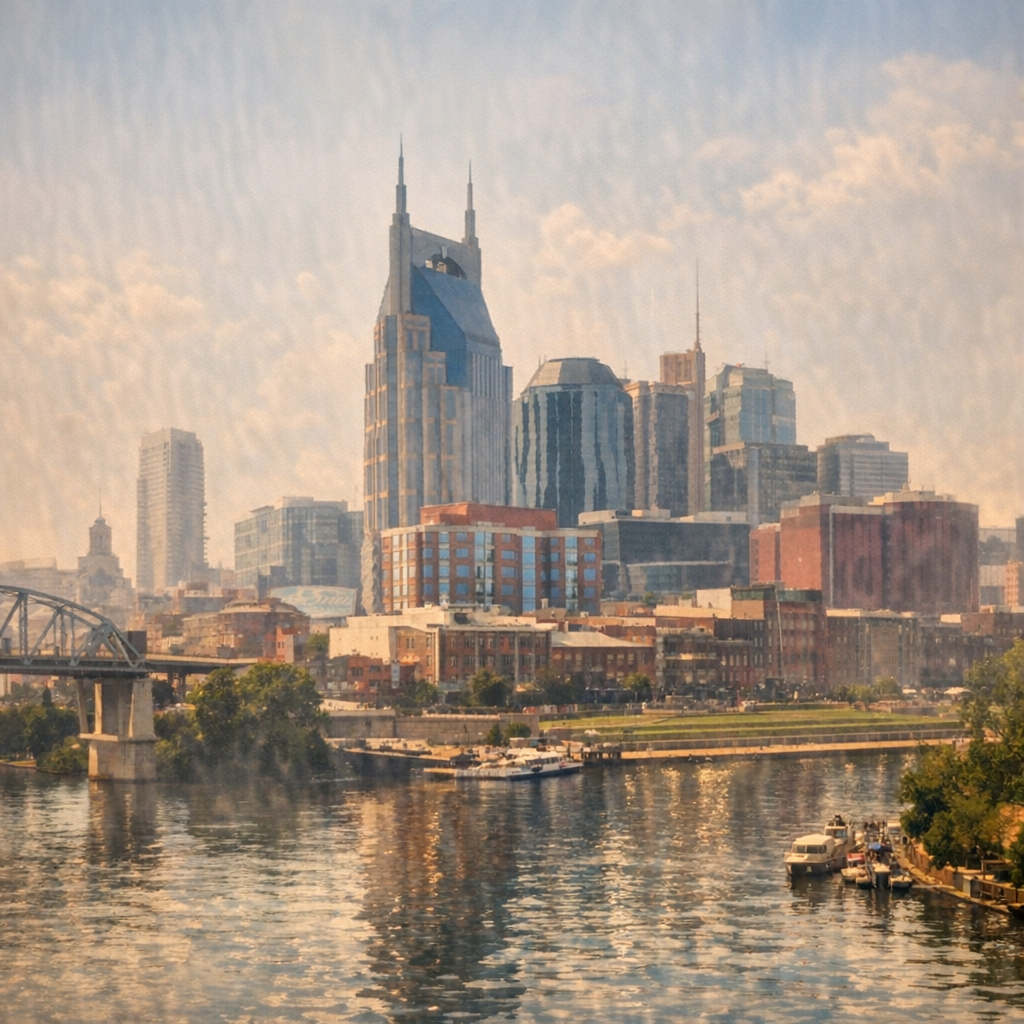
However, urban heat islands are real here. In the more built-up areas—downtown, with concrete, pavement, and less tree cover—nighttime temperatures can be several degrees warmer than in suburban or rural zones. This magnifies heat stress during summer, especially for vulnerable groups.
Environment & Health Considerations
Air quality becomes a concern several times a year, particularly during heat waves, when ozone levels rise. Those with respiratory conditions like asthma may especially notice symptoms worsen.
Flooding risk is something Nashvillians keep an eye on. Heavy rainfall events in spring and summer can lead to flash floods, especially where impervious surfaces—roads, parking lots—limit drainage. Planning and mitigation are key in both public infrastructure and home preparedness.
What’s Shifting: Long-Term Trends
Over recent decades, average summer temperatures in Nashville have crept upward by a few degrees Fahrenheit. Winters are seeing fewer very cold nights. These shifts align with broader regional warming trends. Higher summertime heat, paired with humidity, raises the potential for heat-related illness.
Meanwhile, patterns of rainfall are showing signs of change. Some springs are wetter, increasing flood risks. Others face longer dry spells, which stress water availability for landscaping, ecosystems, and even drinking supply in drought-prone periods.
What This Means for You
Whether you’re gardening, fixing up your home, or deciding when to get outside, here are practical tips:
- Watch weather forecasts particularly in spring; storms can develop fast.
- On hot, humid days, limit strenuous outdoor activity; seek shade or air conditioning.
- Use rainwater or mulch in dry stretches to reduce stress on plants.
- If possible, support or advocate for urban tree planting—it helps cool neighborhoods and improve air quality.
- Take flooding seriously. Even short intense rains can overwhelm drainage.
Climates change slowly, but their effects are felt in daily routines—for work, play, health, and how we shape our surroundings. Keeping an eye on long-term weather and environmental trends helps Nashville stay resilient and thrive.