

By Mia Wilson
Nashville’s housing market is in a phase of gradual adjustment—prices remain high, rental rates are cooling, and several major development projects are changing how neighborhoods grow and feel. Whether you’re buying, renting, or just keeping an eye on local development, here’s a snapshot of what’s shaping housing in Music City.
Home Prices & Inventory: Buyers Gain More Breathing Room
In the first half of 2026, the median price for single-family homes across Nashville and Middle Tennessee reached roughly $537,000, up slightly from the year before. Condominiums, meanwhile, have risen more slowly, with median condo prices around $350,000. Active listings are increasing, and sellers are seeing homes stay on the market for about 50 to 60 days, rather than moving within weeks as in past years. These shifts signal a market moving from intense competition toward more balance. (Sources: Greater Nashville Realtors, Axios)
Renting: Cooling Rents & More Options
After years of rising rental costs, Nashville is seeing downward pressure on rents—especially for smaller units. Median asking rents for 0- to 2-bedroom homes have declined by ~4-5% year-over-year in early 2026. Vacancy rates are higher too—above 11% in the metro area—which gives renters more selection and negotiating power.
Buy vs. Rent: What Makes Sense Now?
With home prices and mortgage payments still well above what many locals earn, renting remains the more affordable month-by-month decision for many households. A recent study puts Nashville’s price-to-rent ratio in a “toss-up” range—meaning neither buying nor renting clearly dominates by cost alone. The typical mortgage payment (including principal, interest, taxes, and insurance) is estimated to be several hundred dollars higher than local rents for comparable units. (Sources: Zumper, WSMV)
Local Development & Infrastructure: What’s Coming
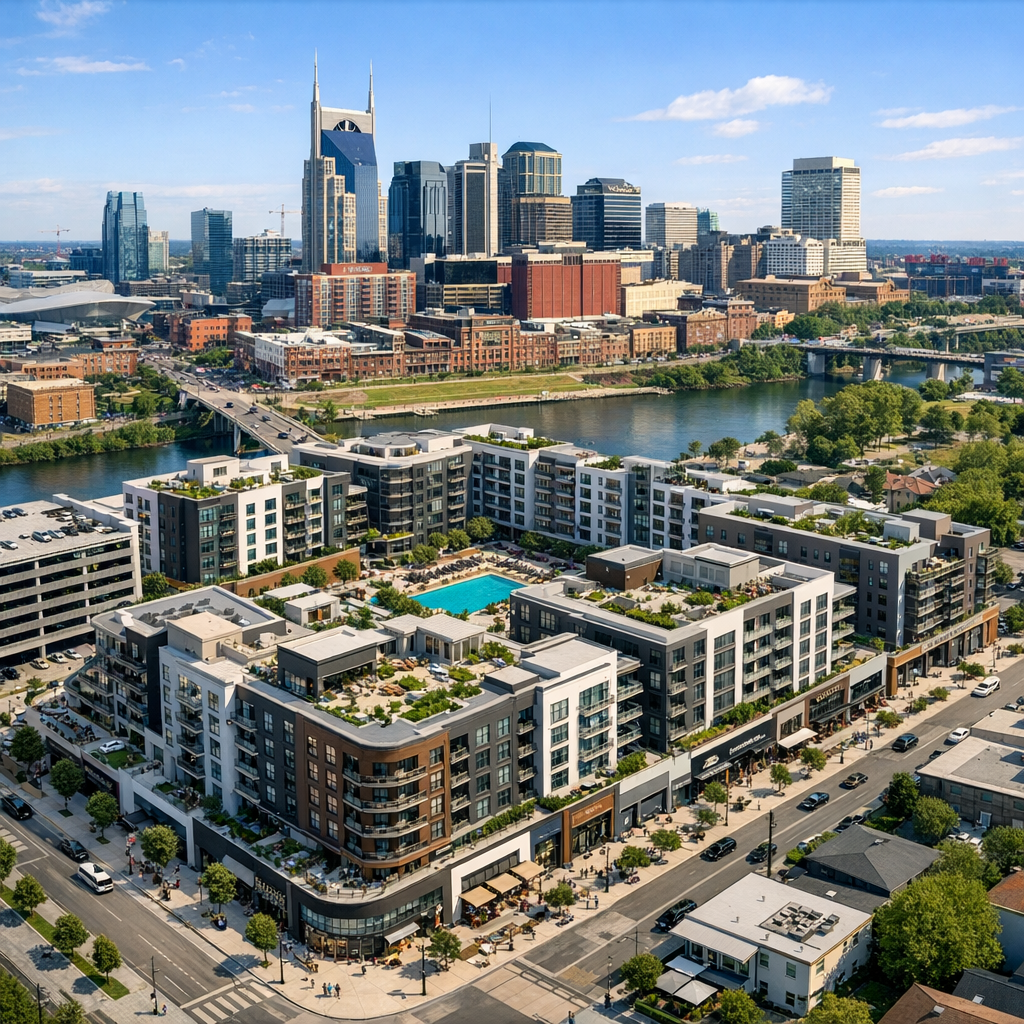
New mixed-use and large residential projects are underway or approved across the city, especially in and around downtown and close-in suburbs. Examples include a three-tower mixed-use development in Rutledge Hill and a 233-unit mixed-use project at Evermere at Trinity.
Citywide infrastructure initiatives—such as “Choose How You Move”—are also in progress. These include sidewalk expansions, transit improvements, signal upgrades, and safer street designs to help neighborhoods connect more easily.
What to Keep in Mind If You’re Planning a Move
- For renters: Explore neighborhoods where newer supply is increasing—especially in close-in suburbs—so you can take advantage of vacancy and lower asking rents.
- For buyers: Plan for higher upfront costs—not just in down payments and mortgage payments, but also taxes, insurance, and upkeep. Waiting for inventory to stabilize could help get more options.
- If neighborhood character matters: Look into the Housing & Infrastructure Study, which is guiding rules on zoning, building types, and design to make sure new housing fits in with existing areas.
- Stay informed on infrastructure investments and public projects—they can affect commute times, neighborhood amenities, and long-term property value.
As Nashville continues to grow, both renters and buyers are getting more room to assess their options. Prices are high, but the market is loosening. Keep tabs on new inventory, transportation planning, and zoning changes—they may be just the factor that shifts your decision.