

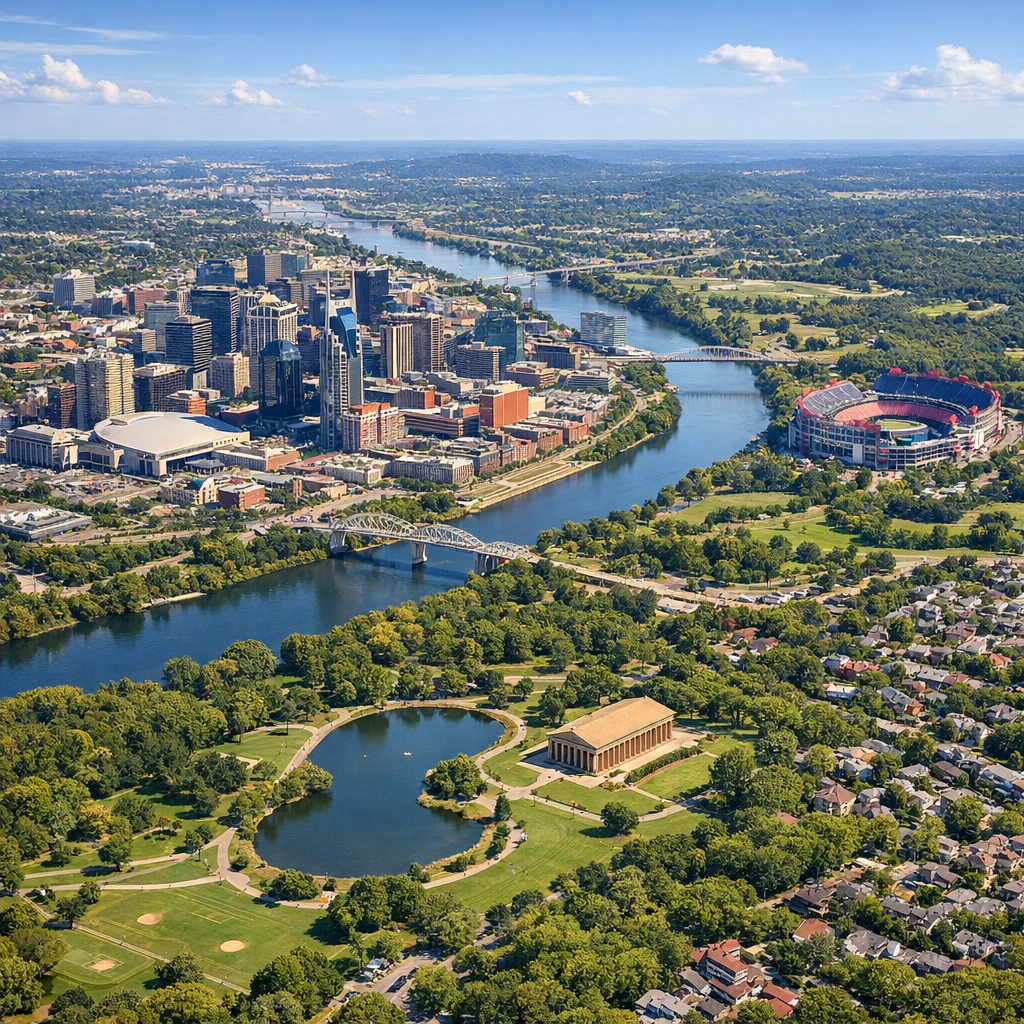
Nashville’s rapid urbanization has led to a phenomenon known as the Urban Heat Island (UHI) effect, where city areas experience higher temperatures than surrounding rural regions. This temperature disparity arises from factors such as extensive concrete surfaces, reduced vegetation, and heat generated by human activities.
Causes of the Urban Heat Island Effect
Several elements contribute to the UHI effect in Nashville:
- Impermeable Surfaces: Materials like asphalt and concrete absorb and retain heat, leading to elevated temperatures.
- Reduced Green Spaces: Urban development often replaces trees and vegetation, eliminating natural cooling through shade and evapotranspiration.
- Human Activities: Vehicles, industrial operations, and air conditioning units emit heat, further warming the urban environment.
Impacts on the Community
The UHI effect has several implications for Nashville residents:
- Health Risks: Increased temperatures can exacerbate heat-related illnesses, particularly among vulnerable populations.
- Energy Consumption: Higher temperatures lead to increased use of air conditioning, resulting in higher energy bills and greater strain on the power grid.
- Environmental Concerns: Elevated temperatures can worsen air quality and contribute to the formation of ground-level ozone.
Mitigation Strategies
To combat the UHI effect, Nashville can implement several strategies:
- Enhancing Green Spaces: Planting trees and creating parks can provide shade and cool the air through evapotranspiration.
- Cool Roofing and Pavement: Using reflective materials for roofs and pavements can reduce heat absorption.
- Urban Planning: Designing buildings and streets to improve airflow can help dissipate heat.
Community involvement is crucial in these efforts. Residents can participate in local tree-planting initiatives and advocate for sustainable urban development practices.
Conclusion
Addressing Nashville’s Urban Heat Island effect requires a collaborative approach involving city planners, environmental organizations, and the community. By implementing strategic measures, we can create a cooler, healthier urban environment for all residents.